10 Gray Living Room Designs Trending Strong in 2026
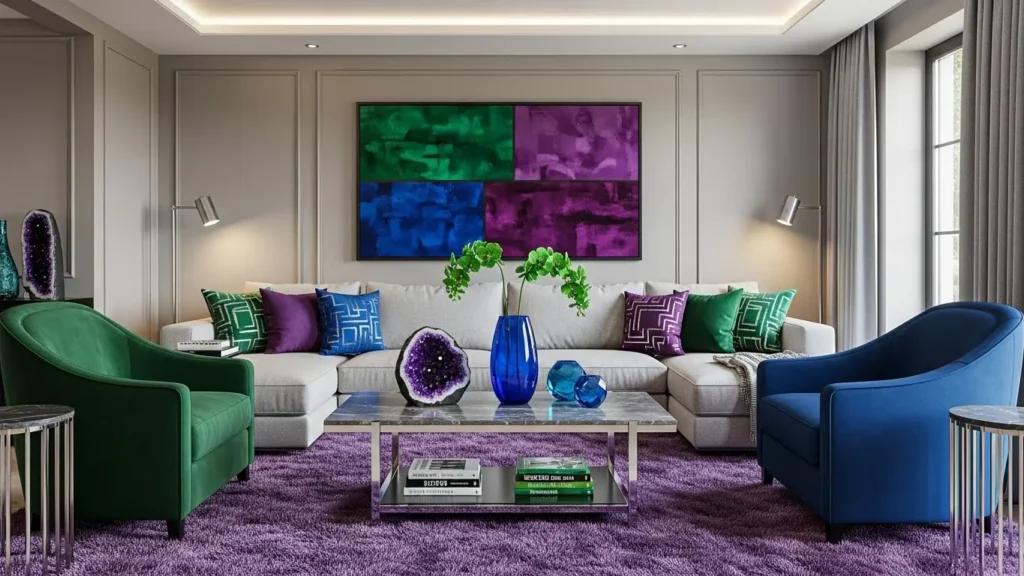
Warm Gray with Layered Textures
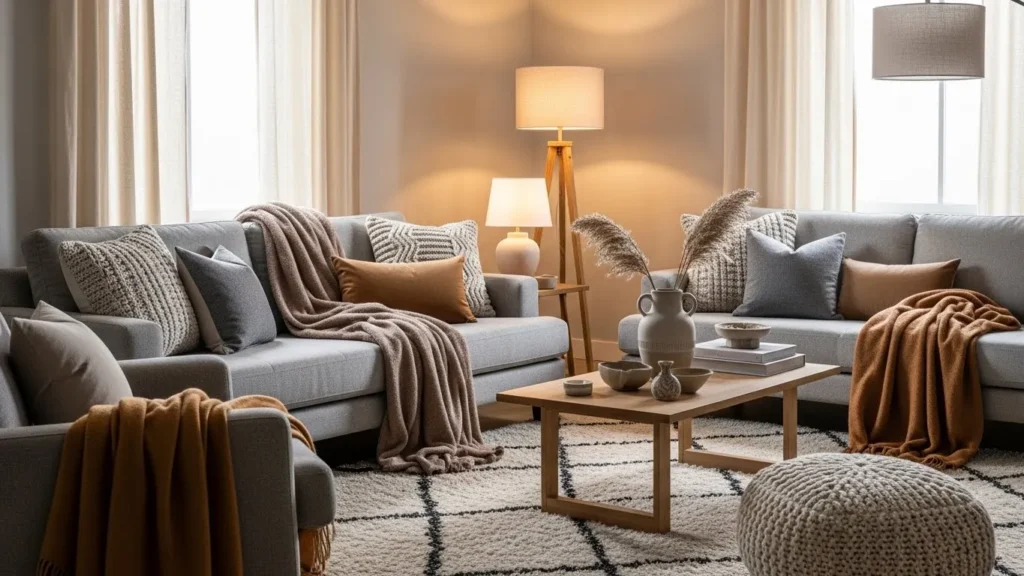
Warm gray tones are dominating living room spaces this year. Instead of cool, sterile grays, designers are embracing warmer undertones that feel inviting and cozy. When you combine warm gray walls with layered textures like linen, wool, and knit fabrics, you create a space that feels both elegant and lived-in.
This approach works beautifully because it softens the modern aesthetic. You can add soft throws, textured area rugs, and cushions in cream or beige to complement your warm gray palette. The key is mixing different fabric types so your living room doesn’t feel flat or one-dimensional.
Charcoal Gray Statement Walls
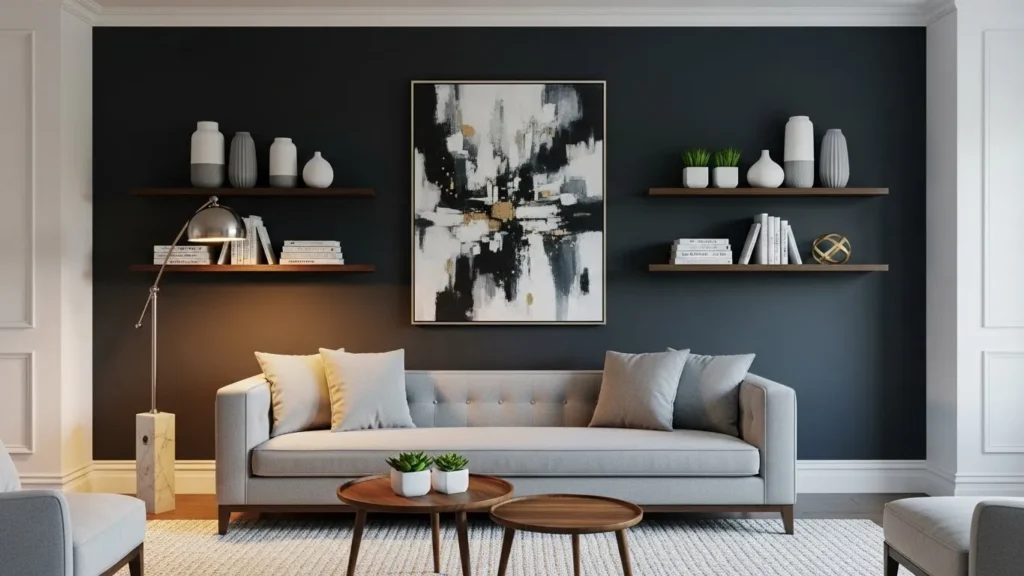
Bold charcoal gray is making a serious comeback in 2026 living room designs. Instead of painting all four walls, many homeowners are choosing to create a dramatic statement wall in deep charcoal. This trend adds visual interest without overwhelming your space.
A charcoal accent wall works particularly well behind a sofa or as a backdrop for shelving. You can balance this dark tone by keeping the other walls light or using white trim. This contrast creates depth and draws the eye exactly where you want it. Add artwork, mirrors, or floating shelves to your statement wall to make it even more striking.
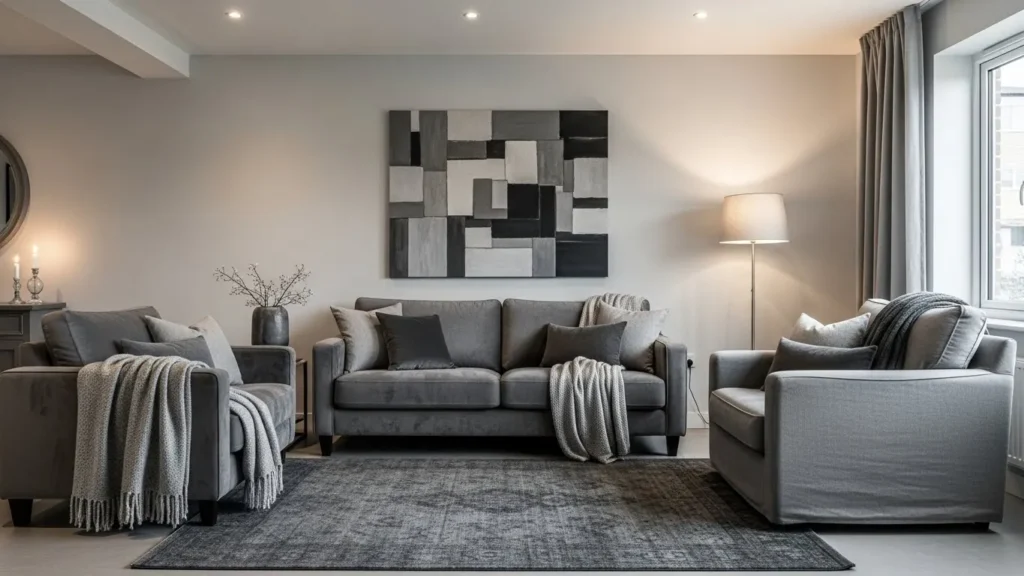
Light Gray with Monochromatic Styling
Monochromatic gray living rooms are trending because they feel serene and intentional. This design approach uses different shades of gray throughout the space, from pale gray walls to medium gray upholstery to darker gray accents. The beauty of this trend is its sophisticated simplicity.
When you go monochromatic, you’re not fighting color clashes. Everything harmonizes naturally. You can introduce visual interest through patterns, finishes, and textures rather than relying on multiple colors. Gray plush velvet paired with gray linen and gray wool creates a luxurious, cohesive look that feels curated and polished.
Gray with Warm Metal Accents
Mixing gray walls with warm metallic accents like brass, copper, and gold is a major trend in 2026. These warm metals contrast beautifully with cool gray tones, creating a modern yet welcoming atmosphere. You’ll see this style in lighting fixtures, picture frames, coffee tables, and decorative accessories.
The warmth of these metals prevents your gray living room from feeling cold or impersonal. A brass floor lamp, copper wall art, or gold-trimmed mirror can completely transform how your space feels. These metallic touches add glamour and personality to an otherwise neutral palette.
Gray and White Contemporary Design
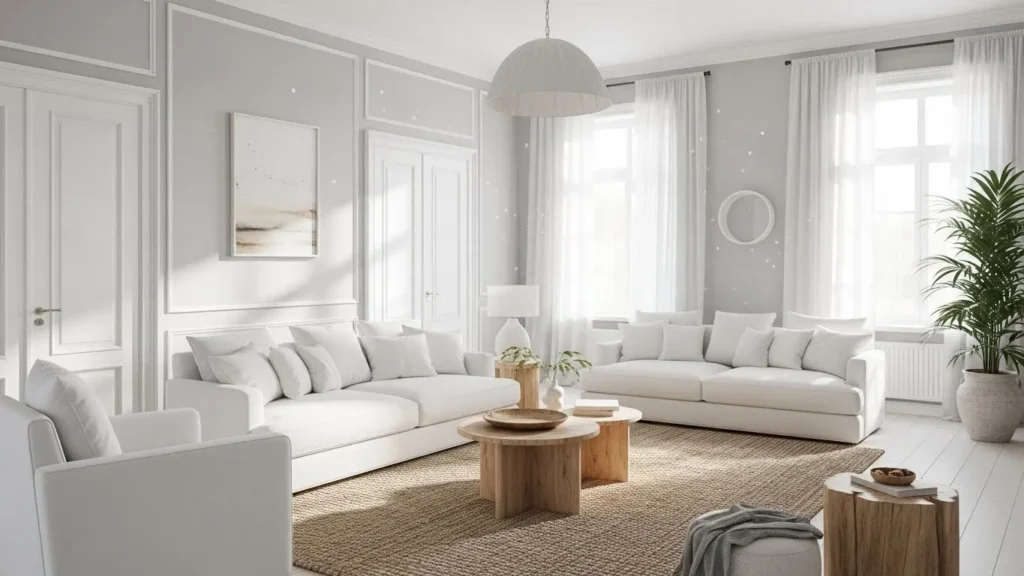
The timeless combination of gray and white continues to dominate contemporary living rooms in 2026. This pairing creates a clean, fresh aesthetic that never feels dated. White trim, white furniture, and light gray walls work together to make spaces feel larger and more open.
This trend is especially popular in modern and minimalist living rooms. You can add subtle texture through natural materials like jute, linen, and untreated wood. Keep accessories minimal and focused on quality over quantity. The result is a calm, uncluttered space where you can truly relax.
Sage Green and Gray Combinations
Pairing soft sage green with gray walls is an emerging trend that brings nature indoors. This combination feels fresh and organic while maintaining the sophisticated edge that gray provides. The green tones complement gray beautifully and add a calming element to your living room.
You can achieve this look through paint color choices, throw pillows, plants, and artwork. A gray accent wall paired with one sage green wall creates visual interest. Alternatively, keep walls gray and introduce sage through furniture and decor. Either approach works wonderfully for creating a balanced, nature-inspired space.
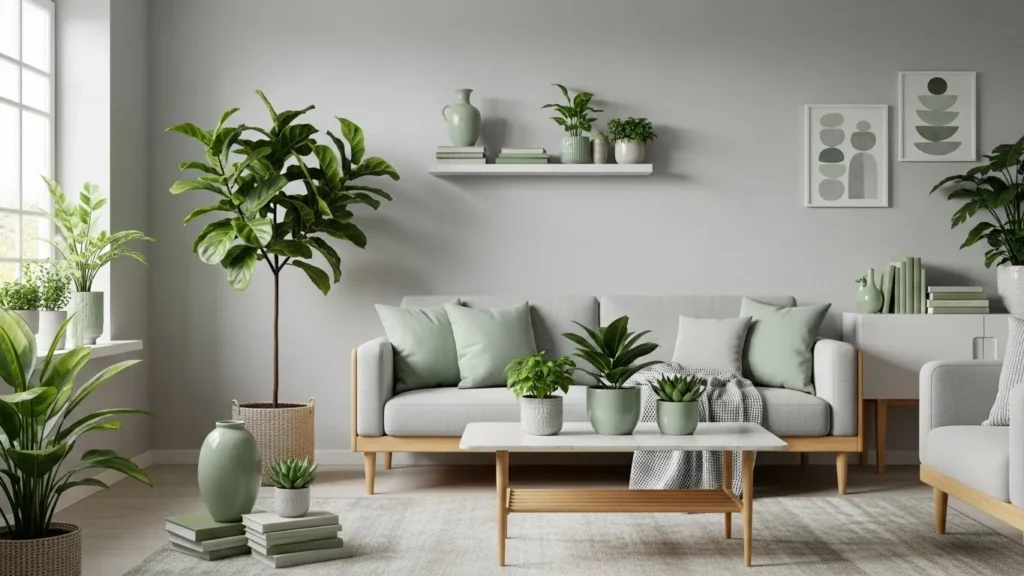
Gray with Bold Black Accents
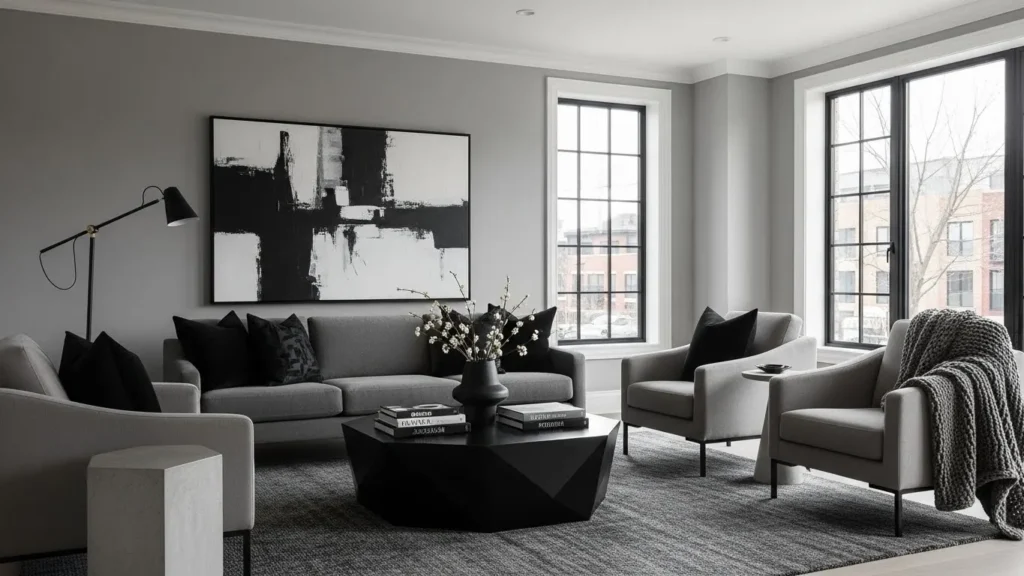
High contrast design is trending strongly, and gray paired with black creates a striking, modern aesthetic. Black window frames, black furniture legs, and black artwork pop against gray walls. This combination feels edgy yet refined, making it perfect for contemporary living rooms.
The key to pulling off this look is balance. You don’t want your space to feel too dark or heavy. Use black strategically through accent pieces rather than large furniture. Black shelving, black picture frames, and black throw pillows add drama without overwhelming your gray base.
Textured Gray Wall Finishes
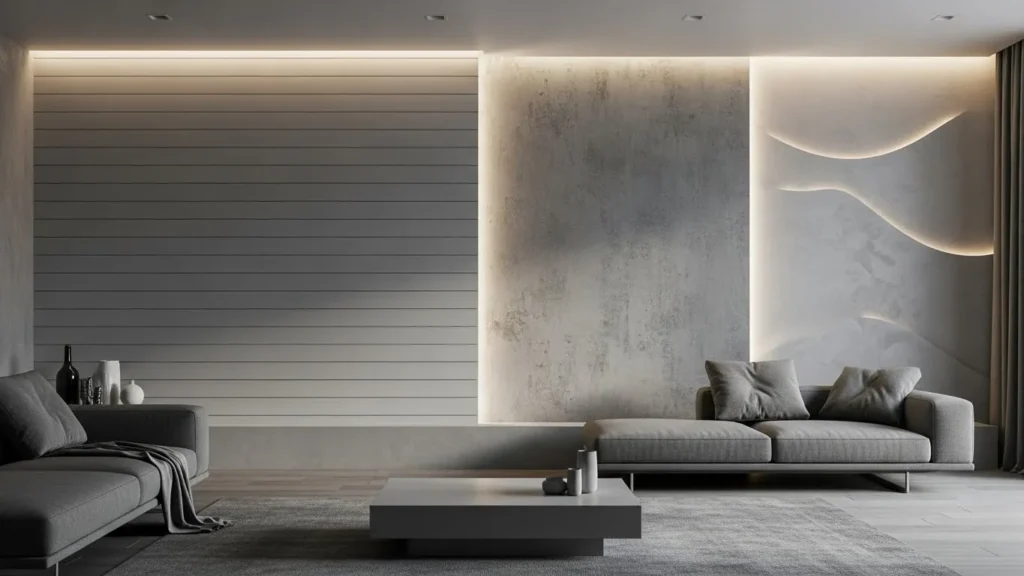
Rather than simple flat gray paint, textured finishes are gaining popularity in 2026 living room designs. Shiplap, faux concrete, linen-textured wallpaper, and plaster effects add depth and character to gray walls. These finishes catch light differently, creating subtle movement and visual interest.
Textured finishes work especially well in gray because the neutral tone lets the texture shine. You don’t need additional patterns or colors to make your walls stand out. The texture itself becomes the design feature. This approach creates sophisticated, high-end looking spaces without excessive decoration.
Gray with Warm Wood Elements
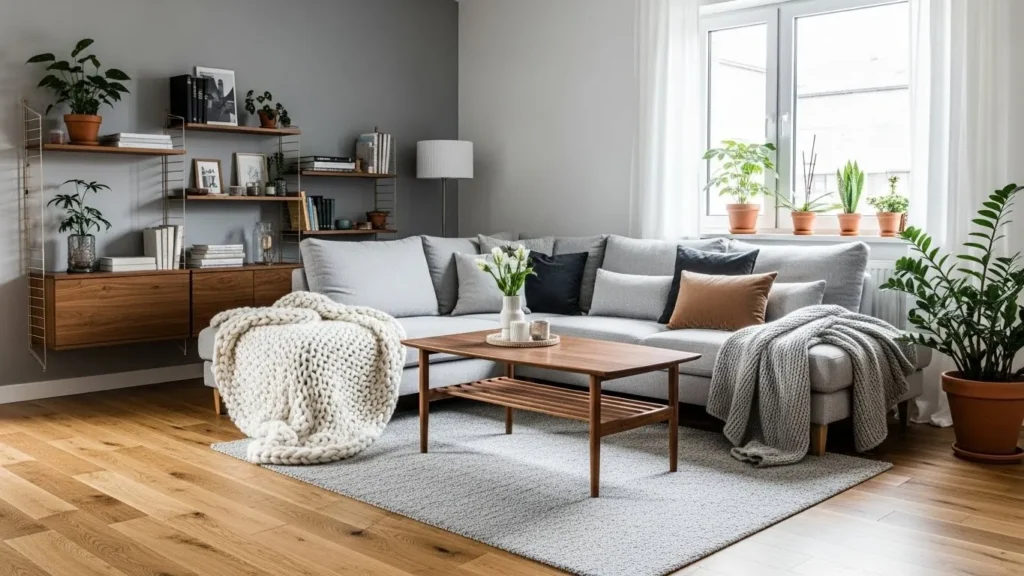
Combining gray with warm wood tones creates a balanced, organic living room design. Honey-toned wood floors, walnut furniture, and natural wood shelving complement gray walls beautifully. This pairing brings warmth to what could otherwise feel cool and sterile.
The wood tones prevent your gray living room from feeling too modern or clinical. Instead, you get a space that feels both contemporary and naturally inviting. Coffee tables with wood bases, wooden wall art, and wood accent pieces tie the design together cohesively.
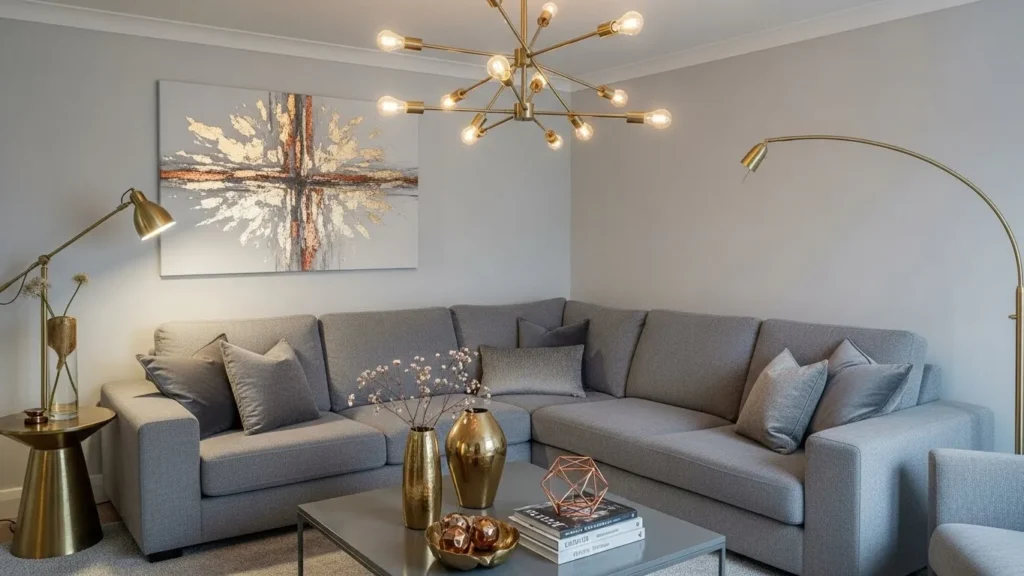
Gray Living Rooms with Jewel Tones
Adding jewel tones like emerald, sapphire, and amethyst to gray living rooms is a luxurious trend gaining momentum. These rich, deep colors provide stunning visual contrast against soft or medium gray walls. The combination feels both bold and sophisticated.
You can incorporate jewel tones through accent chairs, area rugs, throw pill
How to Choose the Right Shade of Gray for Your Living Space
Gray has become one of the most popular colors for living rooms, and it’s easy to understand why. This versatile neutral offers sophistication, calm, and endless design possibilities. However, walking into a paint store and facing hundreds of gray options can feel overwhelming. Each shade tells a different story in your space, from warm taupe tones to cool blue-grays. Finding the perfect gray living room design means understanding how different shades work with your home’s natural light, existing furniture, and personal style.
The key to selecting the right gray shade lies in recognizing that not all grays are created equal. What looks stunning on a paint chip might appear completely different when applied to all four walls. Gray can lean warm, cool, or neutral depending on its undertones. Some grays have hints of brown and beige that create warmth, while others contain blue, purple, or green undertones that feel cooler and more modern. Understanding these undertones helps you make a choice that complements your space rather than clashing with it.
Understanding Gray Undertones and What They Mean
Every gray shade carries hidden undertones that dramatically affect how it appears in your living room. Warm grays incorporate hints of brown, taupe, or even yellow, making them feel cozy and inviting. These shades work beautifully with traditional furniture, warm wood tones, and brass or gold accents. Cool grays, on the other hand, contain blue, purple, or green undertones. These create a modern, contemporary feel and pair wonderfully with silver, chrome, and cool-toned metals.
To identify undertones, place paint samples on different walls in your living room and observe them at various times of day. Morning light, afternoon sunlight, and evening artificial light all reveal different aspects of a gray’s true undertone. A gray that looks perfect at noon might seem too blue or too brown under your evening lamp. Spending a few days with samples on your walls prevents the disappointment of painting your entire space only to discover the color doesn’t work as expected.
Evaluating Your Home’s Natural and Artificial Lighting
Lighting plays an enormous role in how gray appears in your living space. Rooms with northern exposure typically receive cool, consistent light that can make certain grays look cold or washed out. Southern-facing rooms get warm sunlight that brings warmth to cooler gray tones. Eastern and western exposures create dynamic lighting that changes throughout the day, requiring careful consideration of gray shades that work across multiple light conditions.
Your artificial lighting matters just as much as natural light. Warm white bulbs enhance the coziness of warmer grays, while cool white or daylight bulbs complement cooler gray tones. Many people make the mistake of choosing gray in daylight without testing it under their actual home lighting. If you primarily use warm lamps in your living room, a cool gray might feel uncomfortable and distant after sunset. This disconnect between day and night appearance can leave you unsatisfied with your choice.
Consider conducting a lighting test in your living room. Paint large samples and observe them with your lights on during the evening. Move the samples to different walls to see how light reflects off each surface. This practical approach reveals whether your chosen gray will feel right throughout your day, not just at the paint store.
Matching Gray to Your Existing Furniture and Decor
Your current furniture pieces significantly influence which gray shade will look best. If you have warm-toned wood furniture, upholstery in warm colors, or brass accessories, choosing a gray with warm undertones creates harmony and cohesion. Conversely, if your space features modern furniture with sleek lines, stainless steel accents, or cool-toned artwork, a cooler gray allows everything to work together seamlessly.
Think about the colors already present in your living room. Consider your curtains, throw pillows, artwork, and area rugs. Gray should enhance these elements, not compete with them. A gray that coordinates with these pieces creates a polished look that feels intentional and well-designed.
If you’re planning to bring in new furniture, you have more flexibility in choosing your gray shade. However, if you’re working with beloved pieces you want to keep, selecting a gray that complements them ensures your living room feels cohesive and comfortable.
Testing Multiple Gray Options in Your Space
Never commit to a single gray without testing alternatives. Most paint stores offer small sample bottles that cost just a few dollars. Purchase samples of three to five different grays that appeal to you. These should include at least one warmer gray and one cooler gray to help you understand your preferences.
Paint large swatches on different walls in your living room using a foam board or painting directly on small sections. This allows you to see how each gray performs in various lighting conditions and against your existing décor. Live with these samples for several days before making your final decision. Gray’s appearance shifts subtly as you spend time with it, and what initially seems appealing might feel wrong after extended exposure.
Considering the Psychology of Gray in Living Spaces
Gray carries psychological associations that influence how you feel in your living room. Lighter grays promote feelings of peace, openness, and simplicity, making them ideal for smaller spaces or rooms where you want to encourage relaxation. Darker grays create sophistication, coziness, and intimacy, perfect for larger living rooms where you want to establish a cozy gathering space.
Think about the mood you want your living room to evoke. Do you want a serene retreat where you unwind after work? A lighter gray serves this purpose well. Do you prefer a dramatic, sophisticated space for entertaining guests? A deeper gray provides this atmosphere. Your emotional response to gray shades matters as much as their technical properties.
Using Paint Samples to Compare Side by Side
When you have your gray samples on your walls, compare them in various conditions. Photograph them in morning light, afternoon light, and evening light. These photos help you remember how each shade appeared at different times. Sometimes the camera captures details your eye misses, revealing undertones and qualities you might otherwise forget.
Ask family members or friends for their impressions. Others might notice aspects you’ve overlooked. However, remember that your opinion matters most since you’ll be living with this color
Modern Gray Living Room Furniture and Styling Tips
Understanding Gray Tone Variations
Gray isn’t simply one color—it’s a spectrum of possibilities. Warm grays lean toward beige and taupe undertones, creating cozy atmospheres that feel welcoming. Cool grays carry blue or purple undertones, lending a contemporary edge that feels crisp and refreshing. Neutral grays sit between these extremes, providing flexibility when pairing with other colors and textures.
When choosing gray furniture pieces, consider your room’s natural lighting. North-facing rooms benefit from warm grays that counteract cool daylight, while south-facing spaces can handle cooler gray tones without feeling cold. Test paint samples and furniture swatches in your actual room before committing to major purchases.
Selecting the Right Gray Sofa
Your sofa typically anchors a living room, making it the perfect starting point for gray design. Modern gray sofas come in various styles, from minimalist sectionals to tufted designs that add visual interest. A light gray sofa works beautifully in smaller spaces, reflecting light and creating an airy feel. Medium gray sofas offer practicality, hiding wear better than lighter options while maintaining brightness.
Consider the sofa’s legs and frame style. Metal legs enhance industrial aesthetics, while wooden legs add warmth. Fabric choice matters too—linen provides a relaxed look, while velvet introduces luxury and sophistication. Don’t overlook performance fabrics designed to resist staining, especially if you have children or pets.
Layering Textures and Materials
The key to preventing gray spaces from feeling flat or boring lies in texture variation. Mix materials throughout your living room to create visual depth and tactile interest. Pair smooth gray upholstered pieces with woven elements like jute or sisal rugs. Add knitted throws draped over your sofa, creating cozy focal points that invite relaxation.
Incorporate different furniture finishes that complement your gray palette. Polished metal side tables create sleek contrasts, while reclaimed wood coffee tables add warmth and character. Stone, concrete, or ceramic accents bring industrial edge to contemporary gray schemes. These varied textures prevent monotony and make your space feel intentionally designed rather than bland.
Accent Colors That Enhance Gray
Gray serves as an excellent backdrop for accent colors that energize your space. Navy blue creates sophisticated contrast, pairing beautifully with medium to light grays. Emerald green introduces nature-inspired elegance, while mustard yellow adds cheerfulness and warmth. Blush pink and soft terracotta tones work wonderfully for those seeking gentler color pops.
Incorporate accent colors through pillows, wall art, and decorative accessories rather than large furniture pieces. This approach gives you flexibility to refresh your design seasonally without major investments. A gray sofa paired with jewel-tone pillows and a patterned area rug creates dynamic interest while maintaining sophistication.
Styling Gray Walls Effectively
Gray walls serve as neutral canvases for showcasing furniture and decor. Light gray walls expand rooms visually and work in any style, from farmhouse to minimalist. Darker gray walls create intimate environments perfect for cozy reading nooks or entertainment spaces. Consider matte finishes for walls, as they feel more contemporary than glossy alternatives.
Balance monochromatic gray with strategic pops of color and pattern. Gallery walls featuring black-framed artwork provide visual interest without overwhelming your space. Floating shelves in contrasting wood tones display books and decorative objects, breaking up solid wall space. Mirrors with interesting frames reflect light and create depth, making gray rooms feel more expansive.
Functional Gray Storage Solutions
Modern living rooms benefit from integrated storage that maintains clean sightlines. Gray media consoles and shelving units organize electronics and books while blending seamlessly with wall color. Upholstered ottomans in complementary gray shades provide seating and hidden storage—practical solutions for busy households.
Coffee tables with built-in storage compartments maximize functionality without visual clutter. Credenzas and sideboards in various gray finishes offer display space for decorative pieces while keeping daily items organized. These pieces demonstrate that practical design doesn’t compromise on aesthetics.
Lighting Choices for Gray Spaces
Proper lighting transforms gray rooms from drab to dimensional. Pendant lights suspended from ceiling fixtures create focal points and define seating areas. Floor lamps with sculptural bases add artistic elements while providing task lighting for reading. Table lamps on side tables contribute to layered lighting schemes that feel warm and inviting.
Consider your light fixtures’ finishes carefully. Brushed nickel and matte black create modern aesthetics, while brass and copper introduce warmth. Warm-toned LED bulbs prevent gray spaces from feeling cold, creating ambiance that encourages relaxation and social gathering.
Gray Flooring Considerations
Gray flooring anchors your living room design while providing practical durability. Light gray tile or luxury vinyl resembles marble, adding elegance and easy maintenance. Dark gray wood or laminate creates dramatic statements that contrast beautifully with light gray walls and furniture. Gray stone looks sophisticated and timeless, perfect for Mediterranean or Scandinavian inspired spaces.
Area rugs define seating zones and introduce pattern and warmth. Gray rugs with geometric patterns add visual complexity, while solid options in complementary gray shades create cohesive designs. Natural fiber rugs in jute or sisal provide organic texture against gray furnishings, grounding your space with earthy elements.
Creating Visual Interest with Artwork
Wall art injects personality into gray living rooms without compromising the sophisticated palette. Large-scale black and white photography creates striking focal points above sofas. Abstract paintings in coordinating accent colors enliven neutral walls while maintaining contemporary aesthetics. Botanical prints introduce natural elements that soften gray’s modern edge.
Consider mixing frame styles and sizes for dynamic gallery arrangements. Floating shelves display both art and decorative objects, creating three-dimensional interest. Mirrors with decorative frames function as both functional
Combining Gray with Accent Colors for Maximum Visual Impact
The beauty of using gray as your primary color lies in its incredible versatility. Gray acts as a sophisticated mediator, allowing accent colors to shine without overwhelming the senses. Whether you prefer warm or cool tones, bold or subtle hues, gray provides the perfect foundation. This quality has made gray living room designs increasingly popular in 2026, with homeowners and designers recognizing its ability to complement virtually any accent color palette.
Understanding Gray as Your Foundation Color
Before you introduce accent colors, it’s essential to choose the right shade of gray for your living room. Gray comes in numerous variations, ranging from cool undertones that lean toward blue and purple to warm undertones that incorporate beige and taupe elements. Your choice of gray base will significantly influence which accent colors will work best in your space.
Cool grays pair exceptionally well with jewel tones, navy blue, emerald green, and even soft pastels. These combinations create a contemporary, fresh atmosphere that feels both calming and energizing. If you select a warmer gray with beige or golden undertones, you’ll find that warm accent colors like terracotta, warm gold, burnt orange, and rust create a cozy, inviting ambiance that feels like home.
Understanding your gray’s undertones helps you avoid clashing colors and ensures that your accent colors enhance rather than compete with your base palette. This foundational knowledge is crucial for creating one of the most popular gray living room designs trending in 2026.
Popular Accent Color Combinations for Gray Living Rooms
The combination of gray with deep jewel tones represents one of the most striking trends you’ll see in contemporary living spaces. Emerald green, sapphire blue, and rich plum create dramatic focal points while maintaining the sophisticated feel that gray provides. These colors work beautifully on accent walls, furniture pieces, or decorative accessories like throw pillows and artwork.
Warm accent colors offer a different approach that emphasizes comfort and welcoming energy. When you pair gray walls with mustard yellow, warm coral, or golden amber tones, you create spaces that feel inviting and vibrant. These combinations work particularly well in living rooms where you want to encourage conversation and relaxation. The warmth of these accent colors prevents the room from feeling cold or sterile, which is a common concern with gray-dominant spaces.
Neutral accent colors like cream, ivory, and soft taupe create layered, sophisticated looks that appeal to those who prefer understated elegance. This approach involves varying the shades and textures within your color family, creating visual interest through subtle gradations rather than bold contrasts. Many of the trending gray living room designs in 2026 utilize this technique for a refined, timeless appearance.
Strategic Placement of Accent Colors
How you distribute your accent colors throughout the room is just as important as which colors you choose. One effective approach involves using the 60-30-10 design rule, where gray occupies sixty percent of your space, your secondary color takes up thirty percent, and your accent color provides the remaining ten percent of visual interest.
Your walls typically form the sixty percent base in this formula. By keeping walls in gray, you establish a calm, neutral environment. Your secondary color might appear in larger furniture pieces like sofas or curtains, while your true accent color shines through in smaller elements such as throw pillows, artwork, plants, or decorative objects. This method prevents your space from feeling chaotic while ensuring that your accent colors remain impactful.
Consider placing accent colors in areas where they naturally draw the eye. Above a sofa, accent pillows in jewel tones create an immediate focal point. A gallery wall featuring artwork with your accent colors adds personality without overwhelming the space. Even a single accent chair in a bold hue can anchor a room and provide visual interest that energizes the entire living area.
Using Texture and Pattern with Accent Colors
Texture plays a vital role in making gray living room designs feel dynamic and layered. When you introduce accent colors through textured elements, you add depth that flat color alone cannot achieve. A plush velvet throw in emerald green, a woven basket in warm terracotta tones, or linen curtains with subtle patterns create tactile interest alongside visual appeal.
Patterns offer another dimension to explore. Geometric designs in your accent colors can work beautifully on area rugs, while botanical patterns featuring your chosen accent hues add organic movement to the space. Striped or chevron patterns in accent colors can define areas without requiring an accent wall, giving you flexibility in how you implement these design elements.
The interaction between texture, pattern, and color creates a multi-sensory experience in your living room. Running your hand across a soft material in your accent color feels as satisfying as seeing the visual impact, making your space more memorable and enjoyable.
Accent Color Ideas for Different Gray Living Room Styles
Modern gray living rooms benefit from accent colors with clean lines and minimalist application. Black accent pieces, whites, and cool jewel tones complement contemporary gray spaces beautifully. Metallic accents in gold, silver, or copper add sophistication without detracting from the modern aesthetic.
Traditional gray living room designs work exceptionally well with warm accent colors like burgundy, forest green, and rich golds. These colors evoke classic elegance while the gray base keeps the space feeling current. Ornate mirrors, brass fixtures, and patterned textiles in these warm tones enhance the traditional appeal.
Industrial-style gray living rooms shine when paired with accent colors like burnt orange, rust, and warm steel tones. These combinations echo the raw materials and earthy qualities inherent to industrial design while the gray keeps everything feeling refined.
Scandinavian gray living room designs often feature soft accent colors like pale blue, blush pink, or muted sage green. These combinations maintain the minimalist philosophy while introducing warmth and personality. Natural wood elements combined with these soft accent colors enhance the cozy Scandinavian feel.
Lighting Considerations with Gray and Accent Colors
Lighting dramatically affects how colors appear in your living room throughout the day. Natural light, warm incandescent bulbs
Budget-Friendly Ways to Achieve a Trending Gray Living Room Design
The appeal of gray living rooms lies in their versatility. This neutral color works beautifully with virtually any design style, from minimalist to industrial, traditional to eclectic. Gray serves as the perfect backdrop for personal expression through furniture, artwork, and accessories. When you’re working with a limited budget, starting with gray walls gives you endless possibilities for layering in other elements over time.
Paint Your Way to Gray Excellence
One of the most affordable ways to transform your living room is through a fresh coat of paint. Gray paint costs significantly less than replacing furniture or making major renovations. Choose a gray shade that complements your lighting—warm grays with beige undertones work well in rooms with yellow or warm light, while cool grays suit spaces with natural or blue-toned lighting.
Test paint samples on your walls before committing. Many paint stores offer small containers at reduced prices, allowing you to see how different grays look in your specific room throughout the day. This small investment prevents costly mistakes and ensures you select the perfect shade for your space.
Maximizing Budget-Friendly Furniture Choices
Finding affordable furniture that matches trending gray living room aesthetics is entirely possible. Thrift stores, online marketplaces, and discount furniture retailers offer quality pieces at a fraction of retail prices. Look for simple, clean-lined furniture in neutral colors that complement gray walls. A basic gray or neutral sofa becomes a statement piece when paired with interesting throw pillows and blankets.
Consider purchasing one or two investment pieces new while sourcing other items secondhand. A well-made sofa serves as the foundation of your living room and justifies a slightly larger budget allocation. Fill in other seating and surface areas with budget-friendly finds that you can easily swap or update as trends evolve.
Smart Shopping for Gray Living Room Accessories
Accessories offer the most economical way to enhance your gray living room design. Throw pillows in various textures and patterns add visual interest without significant expense. Mix solid gray pillows with patterned options featuring white, black, or accent colors to create depth and dimension.
Area rugs define spaces and add warmth to gray rooms. Look for budget-friendly options in gray, cream, or neutral tones that anchor your seating area. Layering rugs creates a designer look—place a smaller patterned rug over a larger solid one for added texture and style without the designer price tag.
Wall art and decorative items complete the look affordably. Frame black and white photographs, create a gallery wall with mixed frames and artwork, or display floating shelves with styled books and objects. These elements add personality while costing minimal money.
Lighting Solutions for Gray Spaces
Proper lighting enhances gray living rooms and can be achieved economically. Table lamps from discount home stores provide functional lighting while adding visual appeal. String lights, fairy lights, or affordable pendant fixtures create ambient lighting that makes gray spaces feel warm and inviting rather than cold and sterile.
Natural light through windows is free and transforms gray walls beautifully. Simple, affordable curtains or sheer panels allow light in while maintaining your design aesthetic. During evening hours, layering different light sources prevents your gray room from feeling gloomy or uninviting.
DIY Projects That Save Money
Tackle simple DIY projects to customize your gray living room affordably. Paint existing furniture to match your color scheme, refinish thrifted pieces, or create custom wall art using inexpensive materials. These hands-on projects add character while keeping costs down and making your space uniquely yours.
Creating an attractive gray living room in 2026 doesn’t require extensive financial investment. By strategically allocating your budget toward paint, key furniture pieces, and thoughtfully selected accessories, you’ll achieve a modern, sophisticated space that aligns with current design trends. Start with the basics and build your room gradually, allowing your personal style to shine through while maintaining smart spending habits throughout the process.
Conclusion
Gray living rooms have solidified their position as one of the most versatile and timeless design choices for 2026. Whether you’re drawn to soft, calming neutrals or bold charcoal statements, gray offers something for every style preference and lifestyle. The beauty of this trending color lies in its remarkable ability to serve as a perfect canvas for your personal creativity and expression.
Finding the right shade of gray for your space doesn’t have to be complicated. By understanding the undertones and how different grays interact with your lighting and existing décor, you can create a living room that feels authentically yours. Combined with thoughtful furniture selection and strategic accent colors, gray becomes more than just a background—it becomes the foundation for a sophisticated, cohesive design.
The good news? Creating a stunning gray living room aligned with 2026 trends doesn’t require breaking your budget. From investing in one quality statement piece to shopping secondhand finds and refreshing your space with affordable accessories, plenty of paths lead to design success. Small touches like throw pillows, artwork, and plants can transform a basic gray palette into something truly special.
As you embark on your gray living room journey, remember that trends are meant to inspire, not restrict. The designs trending strong in 2026 work because they balance current aesthetics with timeless appeal. Your living room should reflect what makes you comfortable and happy. Whether you incorporate all the trending elements or simply cherry-pick the ideas that resonate with you, a well-designed gray living room becomes the heart of your home—a welcoming space where style meets comfort in perfect harmony.