Your small bedroom doesn’t have to feel like a cramped afterthought. With the right bedroom ideas and strategic planning, even the tiniest space can become a serene sanctuary that rivals larger rooms in both function and style.
The secret lies in understanding that successful small bedroom design isn’t about fitting everything in—it’s about making smart choices that multiply your space while reflecting your personal aesthetic. These proven strategies will transform your compact room into an organized, beautiful retreat that feels surprisingly spacious.
Whether you’re working with a 100-square-foot studio corner or a modest 10×10 bedroom, these expert-approved solutions will help you maximize every precious inch without sacrificing comfort or style.
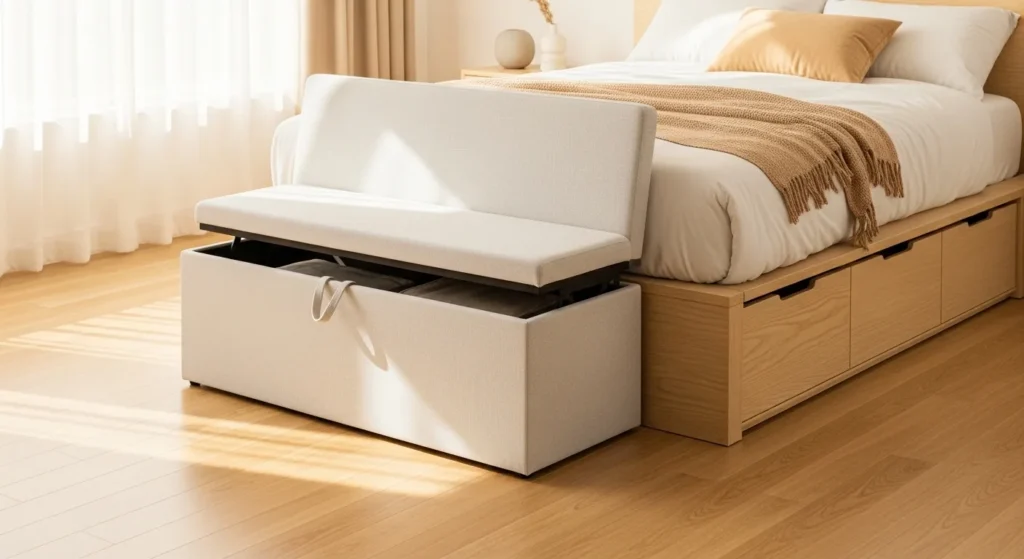
1. Strategic Vertical Storage Solutions
Vertical space represents your greatest untapped resource in small bedrooms. Most people focus solely on floor space, missing the opportunity to utilize walls from floor to ceiling effectively.
Floor-to-Ceiling Shelving Systems
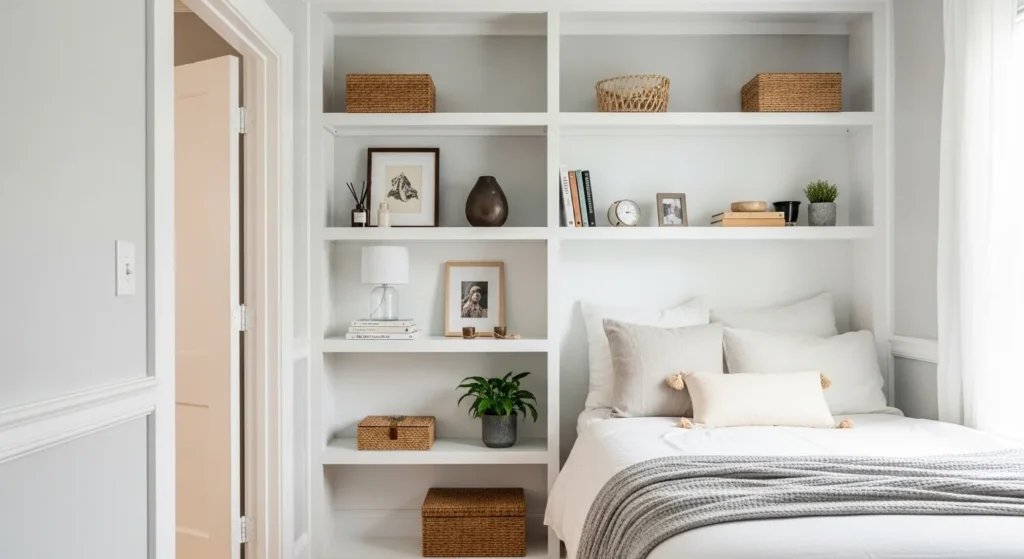
Custom floor-to-ceiling shelving systems can transform empty walls into powerful storage zones. Install shelving units that reach 8-9 feet high, using the top shelves for seasonal items or decorative storage boxes. Budget-conscious options include IKEA’s IVAR system ($150-300), while luxury custom built-ins range from $800-2000.
Choose shelving depths of 8-12 inches to avoid overwhelming the room. Paint shelves the same color as walls to create seamless integration that doesn’t visually fragment the space.
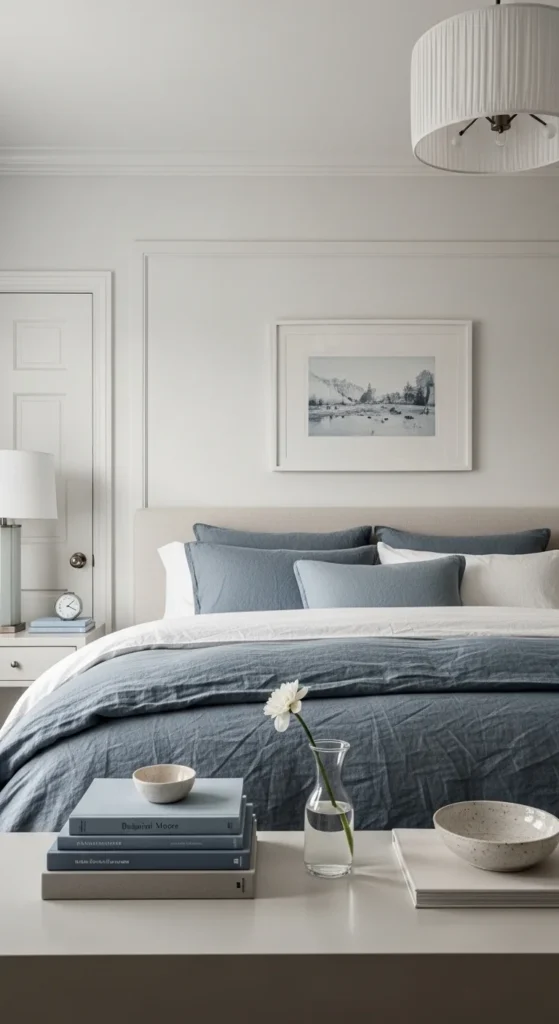
Built-In Storage Nooks
Identify underutilized corners and alcoves for built-in storage solutions. A corner nook measuring just 24″ x 24″ can accommodate a custom storage bench with cubbies underneath, perfect for shoes, linens, or out-of-season clothing.
Floating Shelves with Purpose
Install floating shelves 18-24 inches above your headboard to create a practical bedside storage area. This eliminates the need for bulky nightstands while providing space for books, plants, and personal items. Use shelves with hidden brackets for the cleanest look.
2. Multi-Functional Furniture That Works Double Duty
Every piece of furniture in a small bedroom must justify its footprint by serving multiple purposes. Smart furniture choices can effectively double your storage capacity while maintaining clean aesthetics.
Ottoman Storage Benches
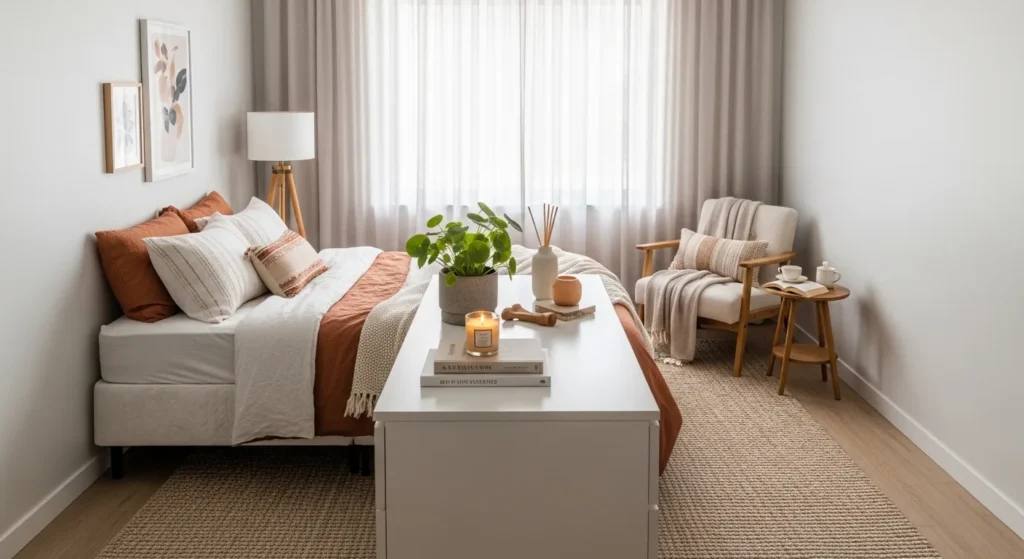
Position a storage ottoman at the foot of your bed to serve as seating, storage, and even a makeshift desk surface. Look for ottomans with dimensions around 36″ x 18″ x 18″ that can hold bedding, clothes, or personal items while supporting up to 250 pounds for seating.
Budget options start at $80-150, while premium upholstered versions with quality hardware range from $300-600.
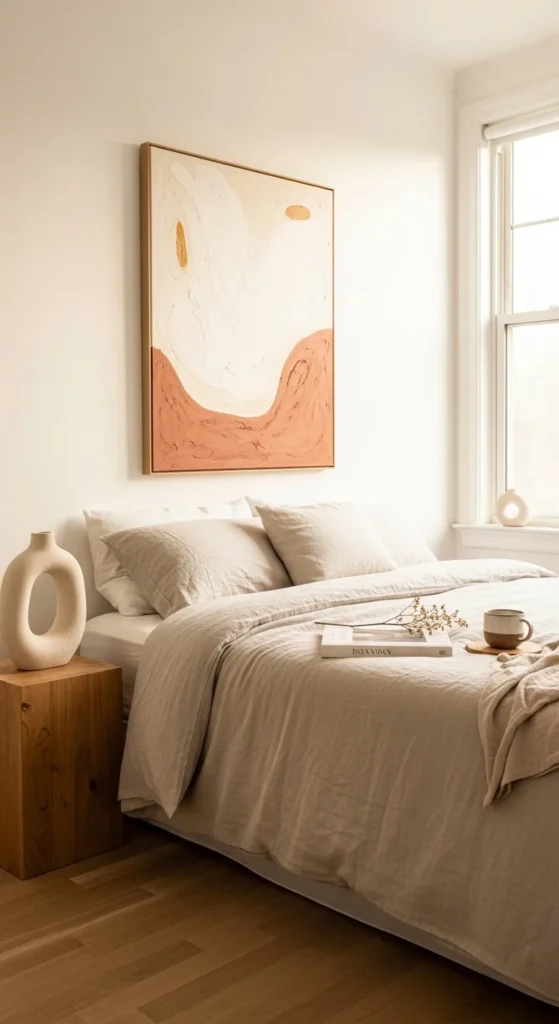
Expandable Desks and Tables
Invest in expandable or fold-down desk solutions that disappear when not needed. Wall-mounted drop-leaf desks occupy just 6 inches of wall space when folded but expand to provide a full 24-inch workspace. Perfect for remote work setups or vanity areas.
Convertible Bed Frames
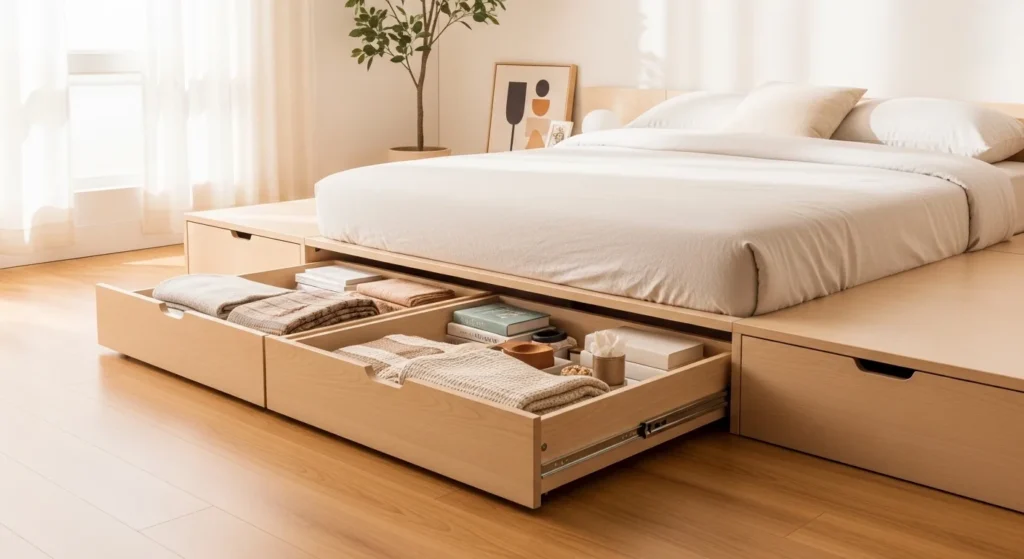
Platform beds with built-in storage drawers eliminate the need for separate dresser space. Look for bed frames with 4-6 deep drawers that can accommodate clothing, linens, and personal items. High-quality options range from $400-1200 and typically add 12-16 inches of storage depth under your mattress.
3. Color Psychology for Space Expansion
Strategic color choices can dramatically impact how spacious your bedroom feels. Understanding color psychology allows you to manipulate visual perception and create the illusion of expanded space.
Light Color Palettes That Open Rooms
Embrace light, airy color schemes built around whites, soft grays, and pale neutrals. Benjamin Moore’s Cloud White or Sherwin Williams’ Pure White reflect maximum light and create seamless transitions between walls and ceiling. These colors make walls appear to recede, visually expanding room dimensions.
Pair white or light gray walls with crisp white trim and ceiling to eliminate visual breaks that can make rooms feel choppy and smaller.
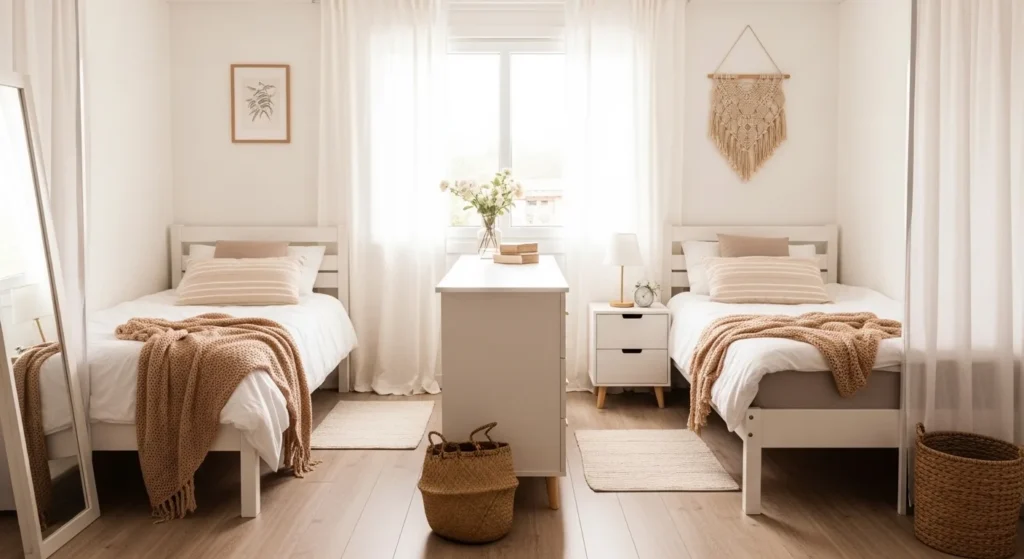
Monochromatic Schemes with Depth
Develop monochromatic color schemes using varying shades of the same hue. A palette built around soft blues—from powder blue to slate gray—creates visual continuity while adding sophisticated depth. This approach prevents the visual fragmentation that occurs with too many contrasting colors.
Accent Walls That Add Dimension
When used strategically, a single accent wall can actually make rooms feel larger by creating depth. Choose the wall behind your headboard for a subtle wallpaper pattern or paint color that’s 2-3 shades deeper than surrounding walls. This draws the eye and creates the illusion of extended space.
4. Smart Lighting Techniques
Proper lighting can make or break the spacious feeling in small bedrooms. Layer different types of lighting to eliminate dark corners and create an open, airy atmosphere.
Task Lighting Essentials
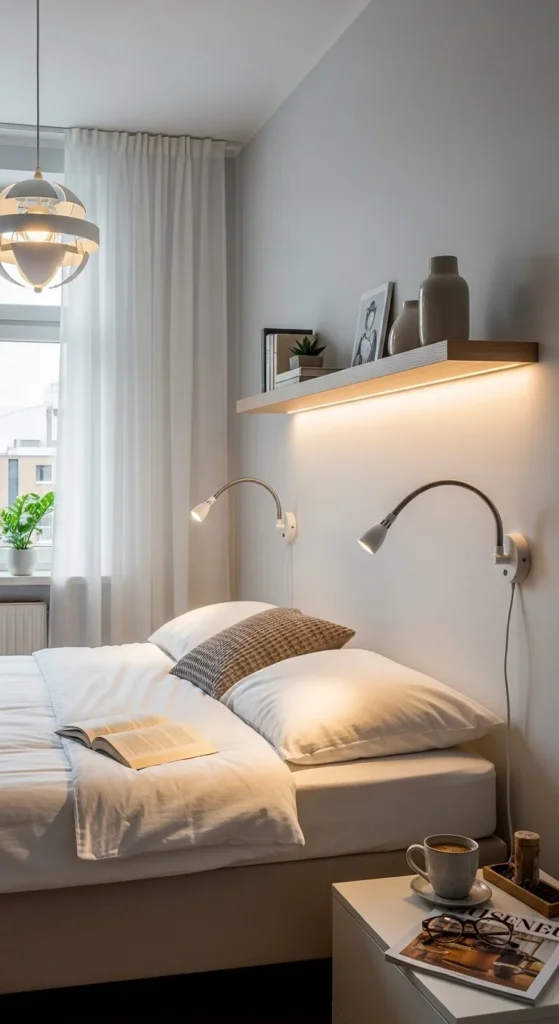
Install adjustable wall-mounted reading lights instead of table lamps to free up surface space. Swing-arm wall sconces positioned 60-66 inches from the floor provide perfect bedside lighting without requiring nightstand space.
LED strip lights under floating shelves create subtle task lighting while making walls appear to float, adding visual depth to the room.
Ambient Lighting Layers
Create ambient lighting through multiple sources rather than relying on a single overhead fixture. Combine recessed ceiling lights with wall sconces and perhaps a statement pendant light to distribute illumination evenly throughout the space.
Dimmer switches on all light sources allow you to adjust ambiance from bright and energizing to soft and relaxing.
Natural Light Maximization
Maximize natural light by keeping window treatments minimal and light-colored. Choose sheer curtains or light-filtering cellular shades that provide privacy while allowing maximum light penetration.
Position mirrors strategically to reflect natural light deeper into the room, effectively doubling the impact of available sunlight.
5. Creative Under-Bed Storage Systems
The space beneath your bed represents prime real estate for storage solutions. Maximize this area with organized systems that keep items accessible yet hidden.
Rolling Drawer Systems
Install rolling drawer systems that slide completely under your bed frame. Custom drawer systems measuring 70″ x 20″ x 8″ can hold substantial amounts of clothing, linens, or seasonal items while remaining easily accessible.
Look for systems with quality ball-bearing slides that operate smoothly even when fully loaded. Mid-range options cost $200-400, while custom solutions range from $500-1000.
Vacuum-Sealed Storage Bags
Vacuum-sealed storage bags can compress bulky items like comforters, winter coats, or out-of-season clothing to a fraction of their original size. A queen-sized comforter typically compresses from 20 cubic feet to just 3-4 cubic feet.
Store compressed bags in labeled containers under your bed for organized seasonal storage that maximizes space efficiency.
Seasonal Rotation Strategies
Implement a seasonal rotation system where only current-season items remain easily accessible. Store off-season clothing, bedding, and accessories in under-bed containers, rotating items twice yearly during spring and fall transitions.
6. Wall-Mounted Everything Strategy
Free up valuable floor space by mounting functional items on walls wherever possible. This strategy creates clean sight lines that make rooms appear larger while maintaining full functionality.
Bedside Caddies and Organizers
Replace traditional nightstands with wall-mounted bedside caddies that provide storage for phones, books, water bottles, and personal items. These organizers typically measure 12″ x 8″ x 4″ and mount directly to the wall beside your bed.
Premium leather or fabric options range from $50-150 and add sophisticated style while eliminating furniture footprint.
Floating Nightstands
Install floating nightstands that appear to hover beside your bed, creating clean lines and open space underneath. Choose designs with hidden storage compartments or drawers to maintain the minimalist aesthetic while providing functionality.
Position floating nightstands 24-27 inches above floor level for comfortable access from bed height.
Wall-Mounted Desks
Wall-mounted desks that fold flat against the wall when not in use provide a full workspace that disappears completely when needed. Look for designs that support 50+ pounds and include integrated storage for supplies and electronics.
7. Mirror Magic for Visual Space
Mirrors represent one of the most powerful tools for creating the illusion of expanded space. Strategic mirror placement can effectively double the visual size of your bedroom.
Strategic Mirror Placement
Position a large mirror directly across from your main window to reflect natural light and outdoor views back into the room. This creates the illusion of a second window and dramatically brightens the space.
A mirror measuring 36″ x 48″ or larger provides maximum impact. Lean oversized mirrors against walls rather than hanging them to create a more relaxed, spacious feeling.
Mirrored Furniture Options
Incorporate mirrored furniture pieces like nightstands, dressers, or wardrobe doors to reflect light and create visual continuity. Mirrored surfaces appear to disappear, making furniture feel less imposing in tight spaces.
Choose pieces with beveled edges and quality silver backing for durability and optimal reflection. Budget mirrored nightstands start around $150, while custom mirrored wardrobes range from $800-2500.
8. Minimalist Decor Approaches
Embrace minimalist principles that prioritize quality over quantity, creating serene spaces that feel open and uncluttered.
Quality Over Quantity Philosophy
Select fewer, higher-quality decor pieces rather than filling surfaces with multiple small items. One stunning piece of artwork or a single sculptural object creates more impact than several smaller decorative elements while maintaining visual calm.
Focus your budget on 2-3 exceptional pieces rather than spreading resources across many mediocre items.
Curated Decor Collections
Limit decorative objects to a carefully curated collection that reflects your personal style. Display items in groups of odd numbers (3 or 5) and vary heights for visual interest without creating clutter.
Rotate seasonal decorative items rather than displaying everything simultaneously, keeping your space fresh while maintaining the minimalist aesthetic.
9. Clever Closet Alternatives
Traditional closets can monopolize precious square footage. Explore alternative storage solutions that provide equivalent functionality while taking up less room.
Open Clothing Racks
Replace bulky wardrobes with sleek clothing racks that display your wardrobe while taking up minimal floor space. Choose racks with both hanging space and lower shelving for shoes and folded items.
Industrial pipe racks or modern metal designs measuring 48″ x 18″ x 65″ provide substantial storage while maintaining an open, airy feeling. Quality options range from $150-500.
Armoire Alternatives
Consider narrow, tall storage cabinets instead of wide armoires. A cabinet measuring 24″ x 18″ x 84″ provides similar storage capacity to a traditional armoire while occupying a much smaller footprint.
Look for designs with adjustable shelving and hanging rods to customize storage for your specific needs.
10. Room Layout Optimization
Strategic furniture placement can make the difference between a cramped room and a comfortable retreat. Understanding traffic flow and sight lines helps maximize both space and functionality.
Traffic Flow Optimization
Maintain clear pathways of at least 24-30 inches around your bed and to key areas like closets or windows. Position your bed to allow easy access to both sides, even if one side has less clearance.
Float furniture away from walls when possible to create the illusion of more space and improve traffic flow throughout the room.
Furniture Placement Rules
Follow the 60-30-10 color rule and similar proportional guidelines for furniture placement. Your bed should occupy approximately 25-30% of floor space, leaving adequate room for movement and other essential furniture.
Position the longest wall for your bed placement to create the most efficient layout and maintain balanced proportions throughout the space.
11. Technology Integration for Small Spaces
Modern technology offers innovative solutions for small bedroom challenges, from entertainment systems to climate control and organization tools.
Smart Home Integration
Install smart lighting systems that eliminate the need for multiple light switches and table lamps. Voice-controlled smart bulbs can adjust brightness and color temperature throughout the day while freeing up surface space.
Smart thermostats and air purifiers with compact, wall-mounted designs provide comfort control without consuming valuable floor or furniture space.
Compact Tech Solutions
Choose space-efficient technology like wall-mounted TVs with articulating arms, wireless charging stations built into furniture, and compact sound systems that deliver quality audio without bulk.
Invest in furniture with integrated USB ports and wireless charging surfaces to eliminate cord clutter while keeping devices powered and accessible.
Frequently Asked Questions
Q: What’s the ideal furniture scale for a 10×10 bedroom?
A: Choose furniture that’s proportionally smaller but still functional. A queen bed (60″ x 80″) works in most 10×10 rooms, leaving 24-30 inches on at least two sides. Select nightstands no wider than 18-20 inches and dressers under 48 inches wide to maintain proper scale and traffic flow.
Q: How can I make a windowless bedroom feel larger?
A: Focus on artificial lighting with multiple sources, including LED strip lights, wall sconces, and overhead fixtures with dimmer controls. Use light colors exclusively, incorporate large mirrors to reflect light, and consider a faux window with LED panels that mimic natural light patterns.
Q: What’s the most cost-effective way to add storage to a small bedroom?
A: Start with vertical solutions like floating shelves ($20-50 each) and under-bed storage containers ($30-80). Add over-door organizers ($15-40) and wall-mounted hooks or racks ($25-75). These budget-friendly options can add significant storage for under $300 total.
Q: Should I choose a platform bed or traditional bed frame for small spaces?
A: Platform beds with built-in storage offer better space utilization, providing 8-16 cubic feet of hidden storage while eliminating the need for a box spring. However, traditional frames work if you need under-bed access for cleaning or prefer a more elevated sleeping position.
Q: How do I create privacy in a studio apartment bedroom area?
A: Use room dividers like tall bookcases, hanging curtains on ceiling tracks, or folding screens to define the bedroom zone. Strategic furniture placement can also create natural boundaries—position a dresser or desk to separate sleeping and living areas while maintaining functionality.
Q: What colors should I avoid in very small bedrooms?
A: Avoid dark colors like deep navy, charcoal, or black on walls, as they absorb light and make spaces feel smaller. Also skip busy patterns, high-contrast color combinations, and too many different colors, which can create visual chaos and make the space feel cramped and overwhelming.
Key Takeaways
• Maximize vertical space with floor-to-ceiling storage solutions and wall-mounted furniture to free up valuable floor area while maintaining full functionality.
• Choose multi-functional furniture like storage ottomans, platform beds with drawers, and expandable desks to get double duty from every piece in your small bedroom.
• Use light colors strategically with whites, soft grays, and pale neutrals to reflect light and create the visual illusion of expanded space throughout your room.
• Layer lighting sources including task, ambient, and natural light to eliminate dark corners and create an open, airy atmosphere that feels larger than actual square footage.
• Implement smart storage systems under beds, behind doors, and in unused corners to organize belongings without cluttering visible surfaces or compromising style.
• Apply minimalist principles by selecting fewer, higher-quality decor pieces and maintaining clean sight lines that allow the eye to move freely throughout the space.