Why Compact Living Rooms Need Smarter Design in 2026
Homes may be getting smaller, but expectations haven’t shrunk at all. We still want living rooms that feel comfortable, welcoming, stylish, and flexible enough for real life. After more than 15 years working with compact apartments, studio flats, and small family homes, I can say this with confidence:
A compact living room doesn’t need more space , it needs better decisions.
In 2026, the focus isn’t on forcing small rooms to behave like large ones. It’s about using light, layout, proportion, and visual calm to make a space feel open, relaxed, and modern. The ideas below aren’t theoretical, they’re practical strategies I’ve used again and again to help compact living rooms breathe.
1. Light Color Palette to Expand Visual Space
Why Light Colors Work in Compact Living Rooms
Light colors bounce light around a room instead of absorbing it. That simple effect makes walls feel farther apart and ceilings feel higher, a quiet trick that works especially well in tight spaces.
Reliable color choices for compact living rooms in 2026:
- Warm white
- Soft beige
- Light greige
- Muted taupe
If your living room doesn’t get much natural light, avoid stark whites. They often feel cold and flat instead of fresh. A warmer neutral creates softness without closing the space in.
2. Low-Profile Furniture for Visual Height
How Furniture Height Affects Space Perception
Furniture height has a huge impact on how spacious a room feels. Lower pieces expose more wall and window area, which tricks the eye into reading the room as taller and more open.
Look for:
- Low-back sofas
- Slim armrests
- Exposed legs
Bulky furniture blocks sightlines and weighs a room down. In compact spaces, lighter silhouettes almost always win.
3. Use One Primary Seating Piece Instead of Many
Simplifying Seating Improves Flow
In small living rooms, too many seating pieces break the room into visual fragments. One well-scaled sofa keeps the layout calm and easy to navigate.
When extra seating is needed, choose flexible options:
- Poufs
- Ottomans
- Stackable stools
They provide function when needed and disappear when they’re not, which is exactly what compact spaces require.
4. Float Furniture Slightly Away From Walls
The Psychology Behind This Trick
This idea surprises a lot of people, but pushing everything hard against the walls can actually make a room feel smaller.
Leaving even a few inches behind the sofa:
- Creates depth
- Improves circulation
- Makes the layout feel intentional
It’s a subtle adjustment, but it changes how the room is perceived.
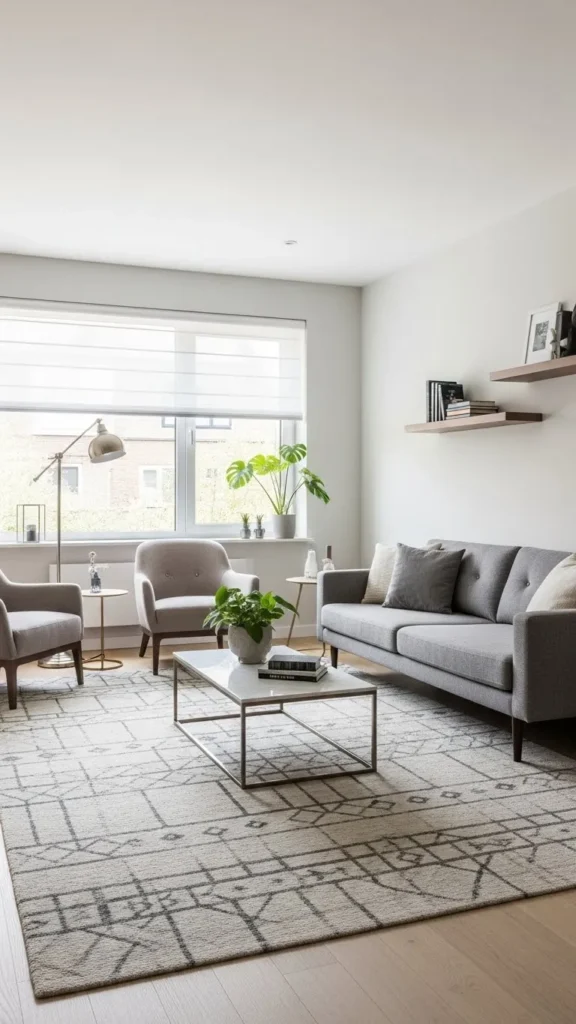
5. Oversized Rugs to Unify the Space
Rug Size Matters More Than Pattern
A rug that’s too small visually chops a room into pieces, one of the most common mistakes in compact living rooms.
The right approach:
- Front legs of the sofa sit on the rug
- Rug extends beyond the furniture edges
This creates a single visual zone, making the room feel larger and more cohesive.
6. Vertical Storage Instead of Floor Storage
Use Height, Not Width
In compact living rooms, floor space is precious. Clutter at ground level makes the room feel crowded almost instantly.
Smart vertical solutions include:
- Floating shelves
- Tall bookcases
- Wall-mounted TV units
Keep styling minimal. Vertical storage should feel light, not like a wall of visual noise.
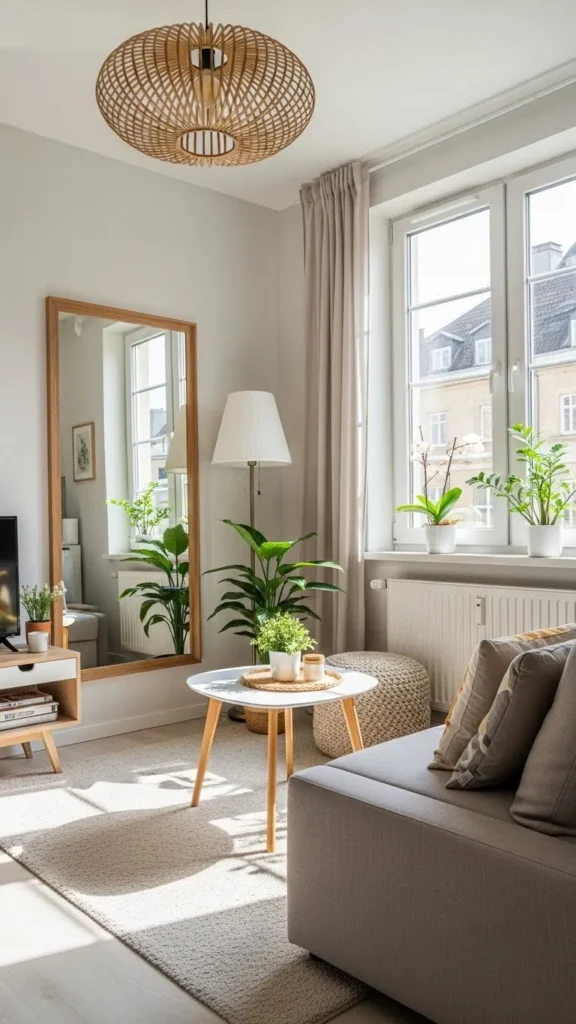
7. Mirrors to Multiply Light and Depth
Strategic Mirror Placement for Small Rooms
Mirrors don’t just decorate — they reshape perception.
Best placements:
- Opposite windows
- Behind sofas
- On narrow or awkward walls
A mirror should reflect light or openness, not clutter. When used thoughtfully, it can almost double the sense of space.
8. Consistent Color Scheme for Visual Calm
Why Too Many Colors Shrink a Room
Too many contrasting colors interrupt visual flow. In compact living rooms, that interruption reads as chaos, not character.
A calm 2026 formula:
- 1 base color
- 1 accent tone
- 1 neutral material (wood, black, stone)
Consistency allows the eye to move freely, which is what creates openness.
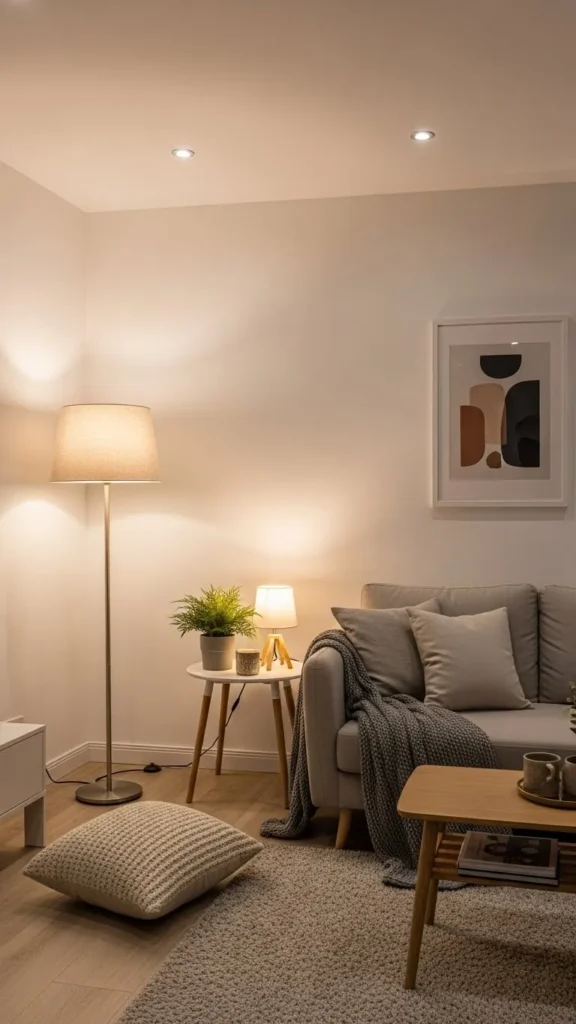
9. Layered Lighting Instead of One Ceiling Light
Lighting Creates Depth
A single overhead light flattens a room and emphasizes its size. Layered lighting creates shadows, depth, and atmosphere.
Use a mix of:
- Ambient ceiling light
- Floor or table lamps
- Accent lighting (wall lamps, LED strips)
Warm lighting (2700K–3000K) adds softness and comfort — especially important in compact rooms.
10. Minimal Decor With One Focal Point
Fewer Objects, Bigger Impact
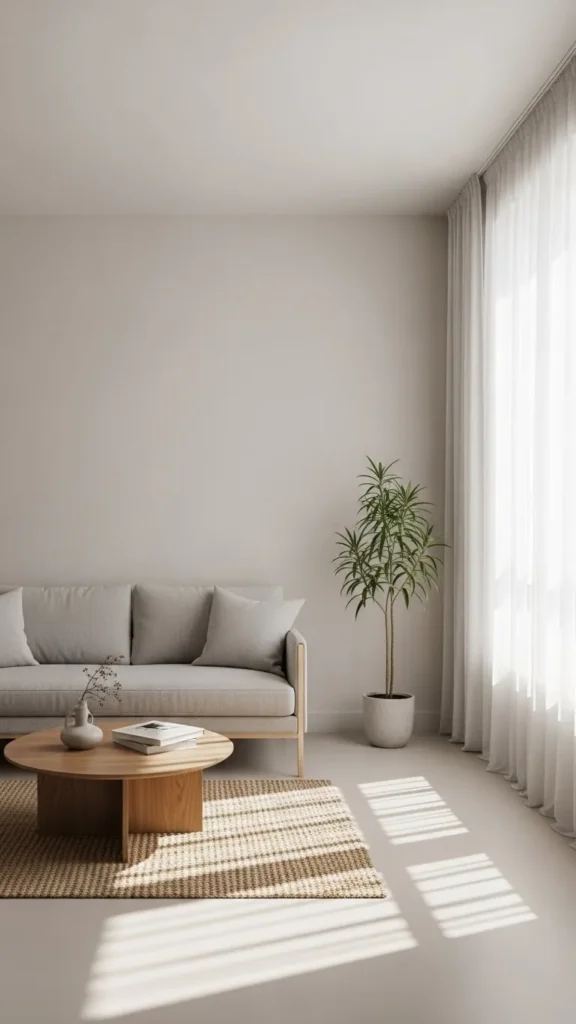
Small rooms don’t benefit from lots of decor. They benefit from clear focus.
Choose one:
- Large artwork
- Sculptural lamp
- Statement plant
Let empty space exist around it. Negative space isn’t wasted — it’s what makes the room feel breathable.
11. Transparent or Visually Light Furniture
See-Through Design Expands Space
Furniture that doesn’t visually block the room helps it feel open.
Good options:
- Glass coffee tables
- Open-leg chairs
- Slim metal frames
These pieces do their job without visually crowding the space.
12. Regular Editing Keeps Compact Rooms Spacious
Maintenance Is Part of Design
Compact living rooms show clutter fast. No design works if it isn’t maintained.
Every 2–3 months:
- Remove unused decor
- Clear surfaces
- Reassess furniture placement
Spaciousness is something you maintain, not something you achieve once.
Common Mistakes That Make Compact Living Rooms Feel Smaller
❌ Oversized furniture
❌ Dark walls without strong lighting
❌ Too many accessories
❌ Small rugs
❌ Poor lighting
Avoiding these mistakes is just as important as choosing the right ideas.
FAQs : Compact Living Room Ideas 2026
Q1: Can a compact living room really feel spacious?
Yes. Smart layout, light colors, proper lighting, and minimal clutter dramatically change perception.
Q2: What’s the biggest compact living room trend in 2026?
Warm minimalism, clean layouts layered with texture and comfort.
Q3: Are sectionals good for compact spaces?
Only if scaled correctly. Compact L-shaped sofas can work very well.
Q4: Should I avoid dark colors completely?
No. Use them sparingly as accents, not dominant surfaces.
Q5: What’s the fastest upgrade for small living rooms?
Lighting and rug size, both have immediate impact.
Conclusion : Spaciousness Is a Design Choice, Not a Size Issue
Every one of these 12 compact living room ideas that feel spacious in 2026 comes back to one principle: intentional design.
When layout, light, scale, and simplicity work together, even the smallest living room can feel open, calm, and modern.
Start with one idea.
Implement it thoughtfully.
Let the space breathe.