The Gentle Power of Minimalism
There’s a particular kind of calm that washes over you when you step into a home that feels intentionally edited — soft light drifting through sheer curtains, simple furniture that doesn’t fight for attention, open surfaces, and just one or two meaningful objects quietly holding space. That sense of exhale doesn’t happen by accident. It’s created, layer by layer, through choices that honor both function and feeling.
After more than 15 years helping people transform cluttered apartments, busy family houses, and “I don’t know where to start” spaces, I’ve come to see minimalism not as austerity but as clarity. It’s the art of letting what matters be seen — and letting everything else move aside.
Below, you’ll find 21 of my most trusted minimalist home decor ideas strategies. They’re approachable, warm, and easy to tailor to your home, whether you favor crisp simplicity or a cozy, lived-in feel. Think of these ideas as your foundation, your inspiration, your permission to create space that finally feels like you.
Core Minimalist Foundations (Ideas 1–7)
These are the principles I reach for in nearly every project. Without them, minimalism can lean too sterile — but when used well, they create calm, grounded, beautiful rooms.
1. Adopt a Restrained, Neutral Colour Palette
Think of soft whites, warm greys, muted beiges, gentle earth tones. These shades aren’t bland — they’re comforting. They act like a quiet backdrop, allowing your natural light, textures, and chosen objects to shine without competition.
The goal isn’t monotony; it’s peaceful cohesion. Neutrals whisper, rather than shout.
2. Declutter Ruthlessly — Keep Only What You Need or Love
Minimalism thrives on intentional editing. Let surfaces stay clear. Allow floors to breathe. Keep only the items you genuinely use or adore. Clutter steals space — visually and emotionally.
One rule I often give clients: if something doesn’t have a home, it shouldn’t live on the counter.
3. Embrace Clean Lines & Simple Furniture Silhouettes
Think slim profiles, soft edges, elevated legs, and unfussy details. A sofa with a smooth silhouette, a coffee table with clean geometry — these create spaciousness even in small rooms.
Simple forms feel effortless and help the rest of the room flow.
4. Let Light & Air Play — Prioritize Natural Light & Simple Windows
Light is one of the most powerful minimalist tools. Sheer curtains, uncovered windows, and uncluttered sills allow daylight to become part of your décor.
In the evenings, soft ambient lighting — table lamps, floor lamps, wall sconces — warms the room without harsh glare.
Light shouldn’t fight the space. It should guide it.
5. Use Textures — Not Clutter — to Add Depth & Warmth
Minimal doesn’t mean cold. Textures bring soul: linen curtains, boucle cushions, wool rugs, wooden bowls, stone vases. These tactile moments add dimension without adding noise.
Texture is the minimalist’s version of pattern — subtle, comforting, grounding.
6. Prioritize Hidden or Functional Storage — Keep Surfaces Clean
Minimalism isn’t about owning nothing. It’s about storing well. Closed cabinets, built-in drawers, baskets, and multifunctional furniture allow your essentials to exist without announcing themselves.
A calm room is often just a well-managed one.
7. Create Negative Space — Let Rooms Breathe
Resist the urge to fill every corner. Allow blank walls, empty floor areas, open sightlines. Negative space is intentional — it’s the pause that lets the rest of the room speak.
In minimalism, what you don’t add is as important as what you do.
14 Practical Minimalist Decor Ideas to Try (Ideas 8–21)
These ideas translate the minimalist philosophy into tangible, everyday styling choices you can implement room by room.
8. Use Natural Materials — Wood, Stone, Linen, Organic Textiles
Natural materials introduce warmth and authenticity. Light wood furniture, linen curtains, wool or cotton rugs, matte ceramics — these pieces breathe with the room.
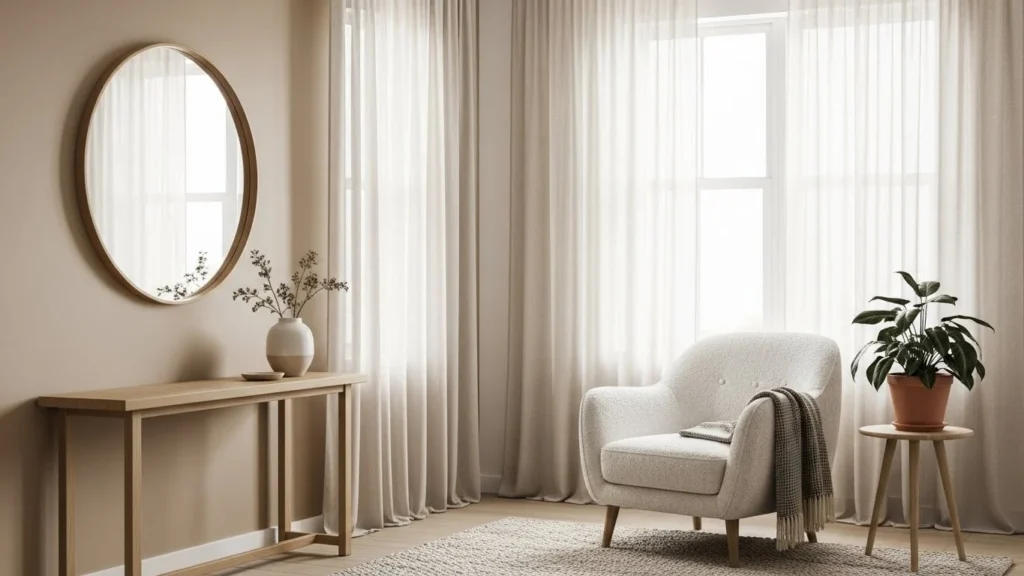
Nature’s palette calms without trying.
9. Let One Statement Piece Breathe — Mirror, Artwork, or a Sculptural Lamp
Minimalism isn’t anti-art — it’s pro-impact. Choose one standout piece and give it the space to shine. A large mirror. A single oversized artwork. A sculptural lamp.
Let it be the room’s quiet anchor.
10. Bring in Greenery — Minimal Plants, Thoughtfully Placed
One or two well-chosen plants soften minimal spaces instantly. A single tall plant or a leafy accent on a console brings life without disrupting the calm.
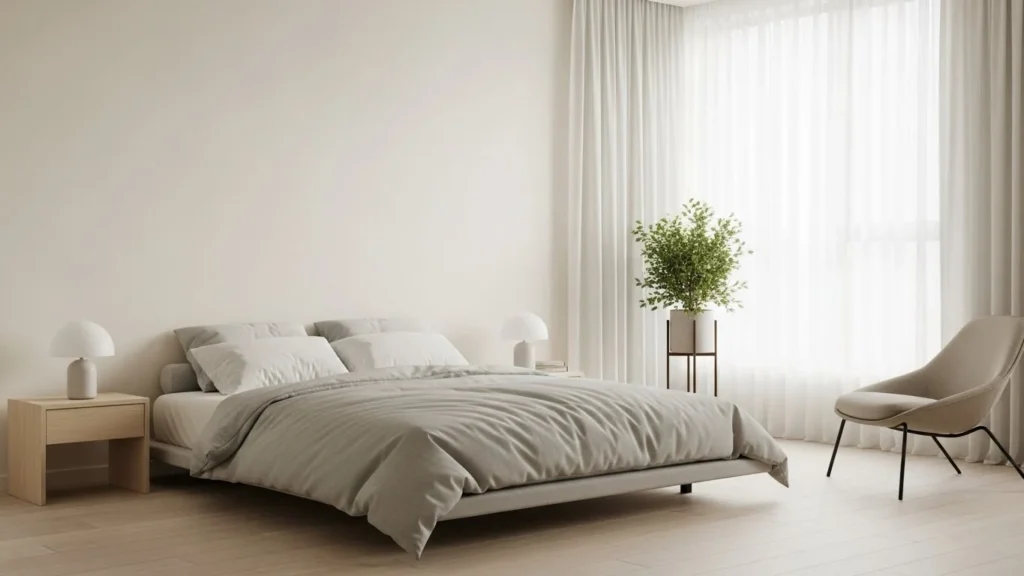
Green feels luxurious in a neutral palette.
11. Define Zones with Rugs & Simple Layouts — Not Baroque Floorplans
Use rugs to mark where life happens — the lounge zone, reading nook, dining area. Keep pathways intuitive and uncluttered.
Minimalism is spatial clarity, not furniture abundance.
12. Use Muted Accent Colours — Soft Earth Tones or Pastels
A neutral base loves a gentle accent: sage, dusty terracotta, clay, muted blush. These tones add personality without pulling focus.
This is the heart of warm minimalism — the modern evolution of the style.
13. Embrace “Hidden Tech” — Keep Gadgets Out of Sight or Subtle
Minimalism isn’t allergic to technology — it just prefers it quiet. Hide cables. Use closed media units. Choose slim devices. Let tech support your life, not dominate your décor.
14. Combine Curved & Straight Lines — Visual Softness Without Chaos
Sleek lines can feel stark if overdone. Soften them with curves: a round coffee table, a curved-edge sofa, a soft-edged rug, a sculptural lamp.
This creates cozy minimalism — the refined softness that’s defining interiors today.
15. Layer Light — Natural + Warm Ambient + Soft Task Lighting
Daylight by morning, warm lamps by evening. Layered lighting adds depth and mood while keeping the space intentionally minimal.
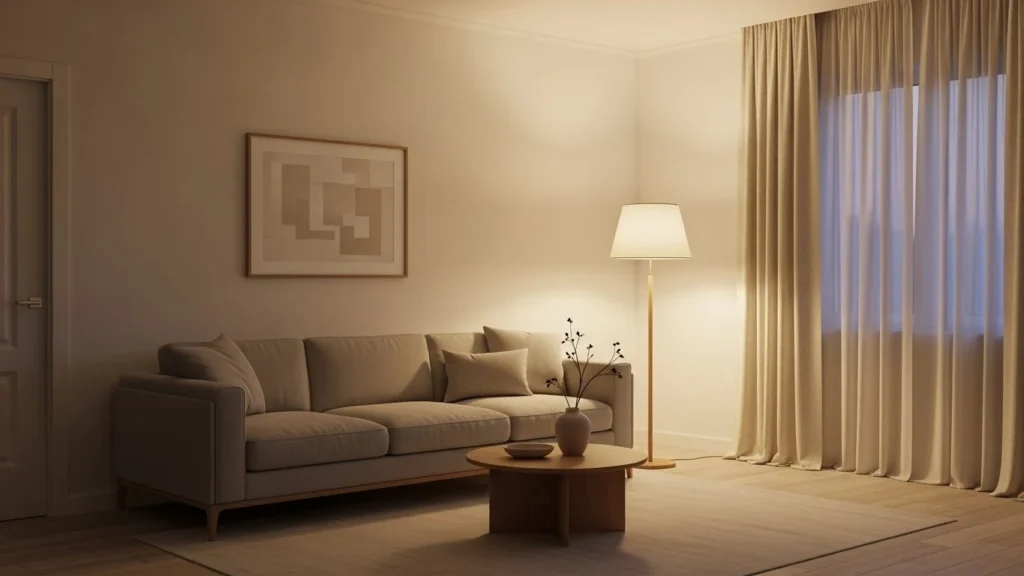
Light is décor — and emotion.
16. Keep a Minimal Collection of Meaningful Objects (Not Knickknacks)
Instead of shelves filled with items you barely notice, choose a small collection of meaningful pieces: a handmade bowl, a favorite photo, a piece of pottery from a trip.
Minimal doesn’t mean impersonal — it means curated.
17. Use Open Space on Walls — One Large Art or Mirror, Not Many Frames
One commanding piece reads as intentional. A cluster of small frames can feel busy. Give your walls breathing room.
Minimalism celebrates simplicity, not emptiness.
18. Prioritize Function + Comfort + Quality Over Quantity
Fewer pieces — better made. A comfortable sofa, a solid table, a lamp you adore. Minimalism rewards longevity.
Choose things that feel good, not just look good.
19. Let Each Room Have One ‘Emotion’ — Calm, Light, Warmth, or Focus
Design with intention.
Bedroom: calm.
Living room: warmth and openness.
Study: clarity.
Dining room: softness and connection.
Let these emotional anchors guide your décor choices.
20. Keep Storage Out of Sight — Closed Cabinets, Minimal Shelves, Multi-functional Furniture
Visible clutter breaks the minimalist spell. Tuck things away. Keep counters and tables light. Embrace furniture that does double duty.
A minimalist home functions because it’s organized, not because it has less.
21. Review Periodically — Minimalism Is a Habit, Not a One-Time Project
Objects accumulate — even in minimalist homes. Every few months, walk room to room. Notice what feels right, what feels excessive, what no longer sparks usefulness or joy.
Minimalism is maintenance, not a finished product.
Minimalist Decor in Different Rooms: Where Ideas Work (With Visual Inspiration)
Minimalism adapts beautifully to every corner of the home. Here’s how to use these ideas in specific spaces.
Living Room: Calm Social Hub
Furniture: simple sofa with open legs, slim coffee table
Colors: neutral base, one muted accent
Décor: one artwork or mirror, minimal table objects
Lighting: natural by day, soft layered by night
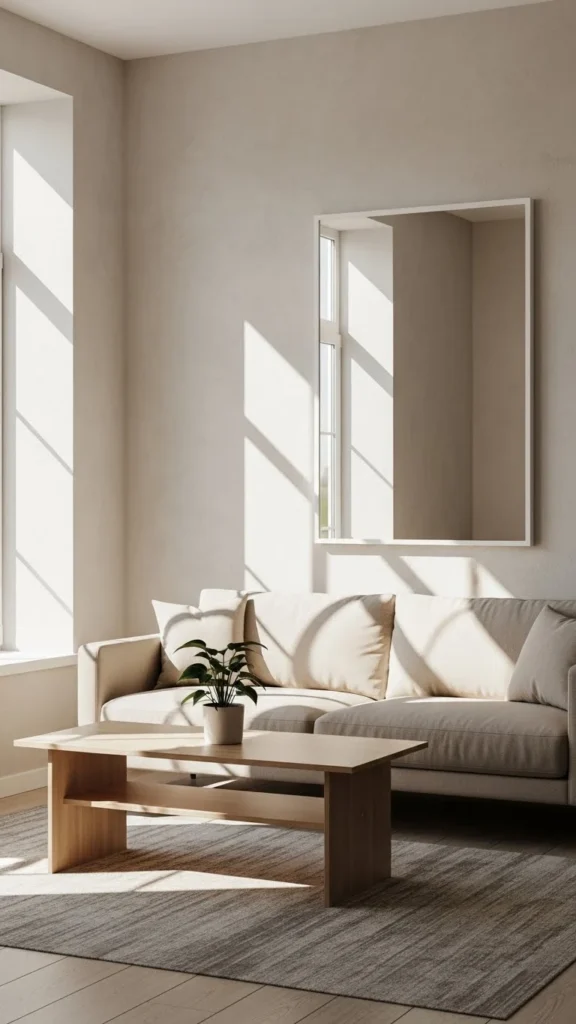
This room should feel like an exhale.
Bedroom: Serene & Restful
Soft linens, minimal bedside table, simple headboard, and just a few calming accents.
Warm lighting and hidden storage keep the room peaceful.
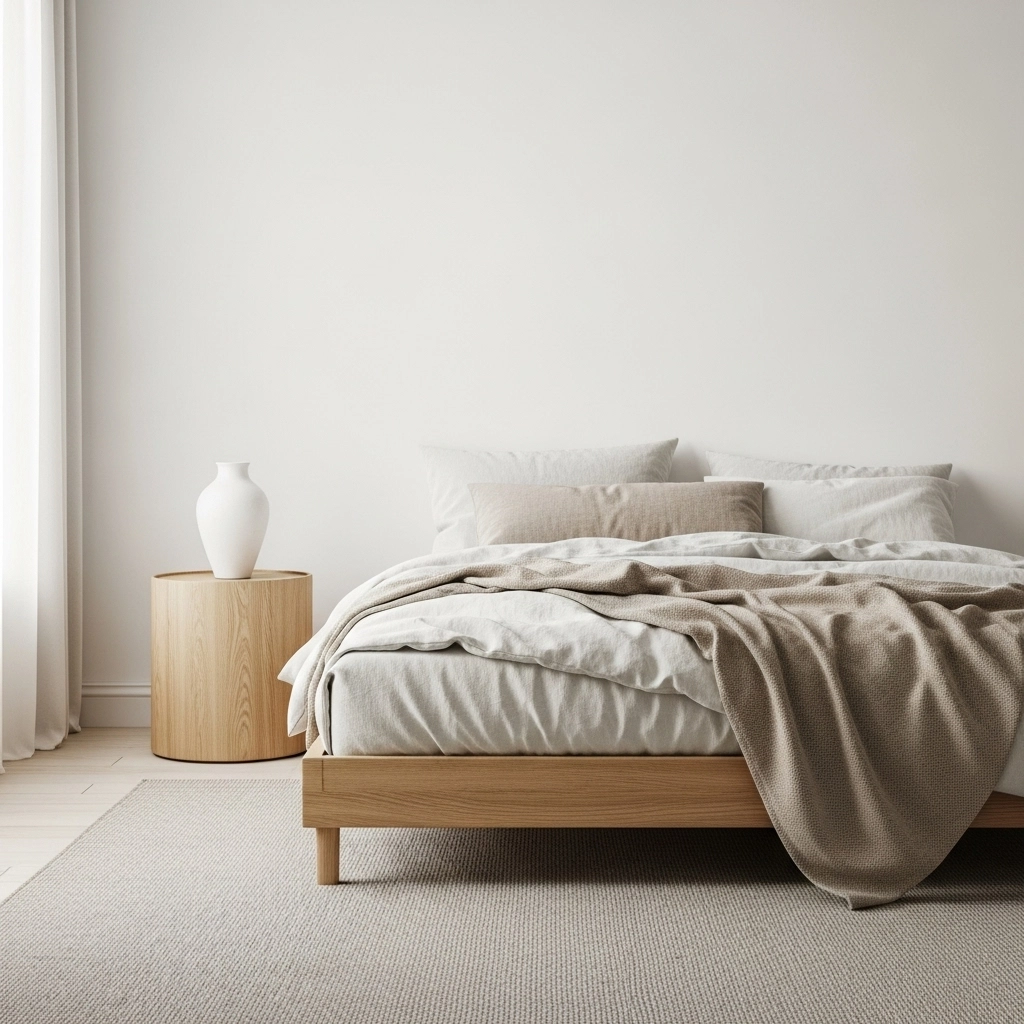
A bedroom should soften the edges of your day.
Entryway / Hall: Simple Welcome, No Clutter
A slim console, a mirror for reflection and light, one or two hooks, and a clean visual line.
Everything unnecessary goes elsewhere.
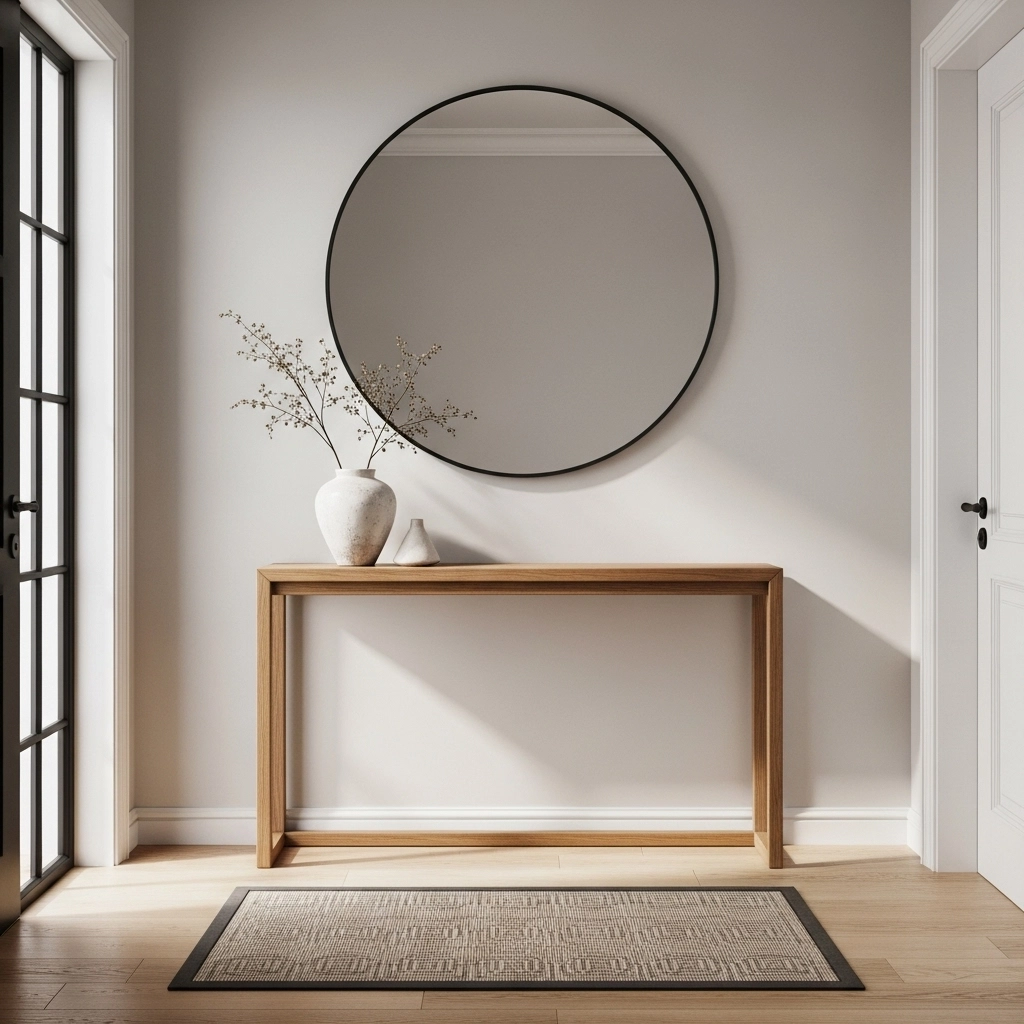
A minimalist entryway sets the tone for the entire home.
Kitchen / Dining: Function-First Minimalism
Keep counters clear. Choose streamlined cabinetry.
A wooden dining table, simple chairs, warm pendant lighting, and one meaningful centerpiece go a long way.

Why Minimalist Decor Is Still Fresh (and What’s Evolving)
The Shift from “Sterile Minimalism” to “Warm Minimalism”
Minimalism has matured. The icy, ultra-sparse look of a decade ago has softened into warm minimalism — natural tones, organic textures, and personal touches woven into clean spaces.
It’s minimalism with heart.
Balance Between Simplicity and Personal Expression
Today’s minimalism isn’t about erasing personality. It’s about curating it thoughtfully. The result? Spaces that look refined but feel lived-in.
A balance of clarity and soul.
Minimalism + Functionality + Wellness — The New Home Philosophy
Minimalism supports well-being. Fewer distractions. Clearer surfaces. Easier cleaning. More mental clarity. Homes that help you breathe, not overwhelm you.
In a busy world, simplicity becomes a kind of self-care.
FAQs — Common Questions About Minimalist Decor
Q1: Will minimalist decor make my home look cold or empty?
Not when done thoughtfully. Texture, natural light, warmth, and intentional décor keep minimalism inviting and personal.
Q2: How do I stay minimal with kids, hobbies, or busy family life?
Smart storage, daily tidying habits, and choosing what truly needs to stay visible make all the difference.
Q3: Can minimalism work in both small and large homes?
Absolutely. In small spaces, minimalism opens up the room. In large homes, it brings cohesion and calm.
Q4: Do I have to give up color?
Not at all. Neutrals are common, but muted accents and gentle patterns fit beautifully into minimalist design.
Q5: How often should I reassess my home?
Every few months. Minimalism is ongoing — a gentle recalibration, not a one-time purge.
Conclusion — Minimalism as Calm, Intentional Living
Minimalist home décor isn’t about having less — it’s about choosing wisely, creating space for calm, and shaping a home that supports your best life. When you combine clean lines, natural textures, functional storage, and light-driven design, your home becomes a sanctuary — inviting, comfortable, and deeply personal.
Start small: declutter a single shelf, swap heavy curtains for lighter ones, or introduce one natural texture. Let the transformation unfold gradually.
Minimalism grows quietly — but its impact is profound.