Your bedroom should be a sanctuary, not a storage unit with a bed squeezed in the middle. The minimalist bedroom movement has evolved beyond stark white boxes into sophisticated spaces that prioritize intentional design, quality materials, and genuine tranquility—creating rooms that actually help you sleep better and wake up refreshed.
The secret lies in understanding that minimalism isn’t about having less for the sake of less. It’s about curating every element to serve both function and beauty, eliminating decision fatigue, and creating visual calm that translates into mental peace.
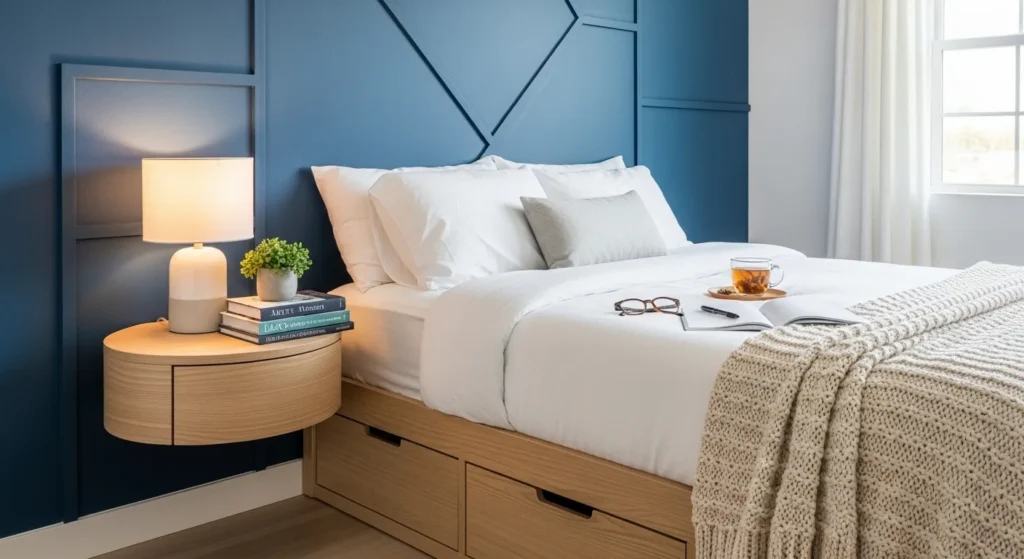
The Neutral Foundation: Creating Your Minimalist Color Story
Your color palette forms the backbone of any successful minimalist bedroom. The right neutral foundation creates instant sophistication while allowing natural light to bounce beautifully throughout your space.
Warm vs. Cool Neutral Palettes
Warm neutrals like Sherwin Williams’ Accessible Beige (SW 7036) or Benjamin Moore’s White Dove (OC-17) create cozy, hotel-inspired atmospheres perfect for north-facing rooms or spaces lacking natural warmth. These colors pair beautifully with natural wood tones and brass hardware.
Cool neutrals such as Benjamin Moore’s Classic Gray (OC-23) or Farrow & Ball’s Pavilion Gray offer crisp, spa-like serenity. These work exceptionally well in south-facing bedrooms or spaces with abundant natural light.
Budget Breakdown:
- Budget: Use premium paint (Sherwin Williams ProClassic) for walls only: $80-120
- Mid-range: Add accent wall in textured paint or limewash: $200-350
- Luxury: Professional color consultation plus designer paint (Farrow & Ball): $500-800
The key is selecting one primary neutral and one slightly deeper tone from the same color family. This creates subtle depth without visual chaos.
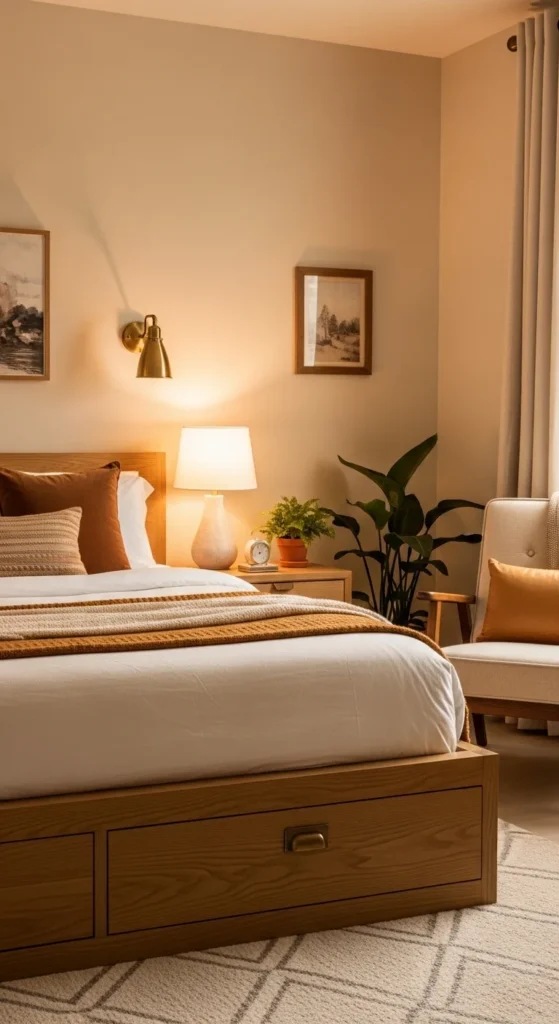
Essential Minimalist Bedroom Furniture That Actually Works
Minimalist furniture succeeds when each piece serves multiple purposes while maintaining clean, uncluttered lines. Quality trumps quantity every time.
Multi-Functional Furniture Essentials
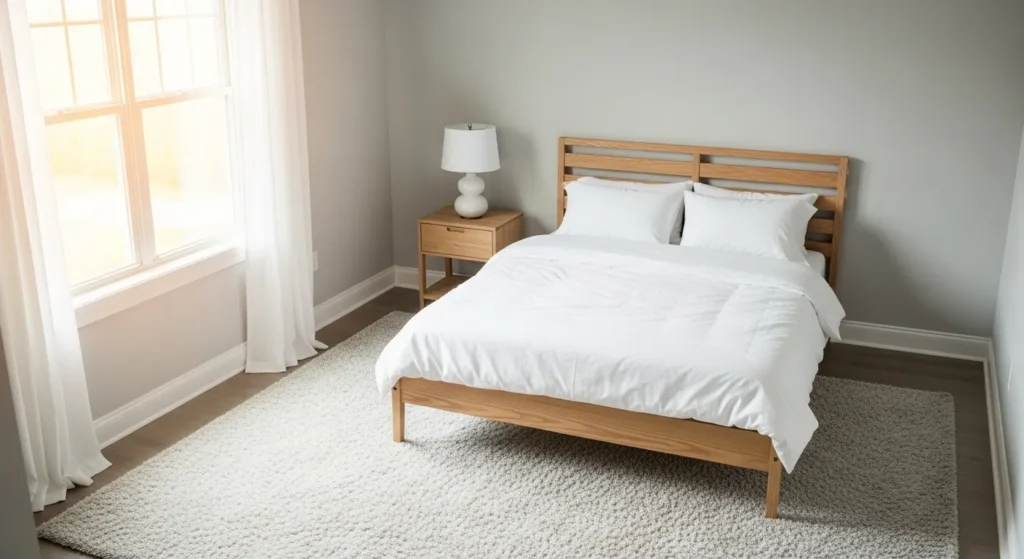
Your bed frame should be the room’s anchor point. Platform beds (14-16 inches high) with built-in storage eliminate the need for bulky dressers while maintaining clean sight lines. The West Elm Andes Platform Bed or CB2’s Drommen Bed exemplify this principle perfectly.
A streamlined nightstand (24-26 inches wide) with both open and closed storage keeps essentials accessible but hidden. Look for pieces with integrated charging stations or cord management.
Room Application Tips:
- Master Bedrooms: Choose a king platform bed as the focal point, flanked by matching floating nightstands
- Guest Rooms: Opt for a queen bed with under-bed storage and a single streamlined dresser
- Teen Rooms: Select a twin or full platform bed with built-in desk integration
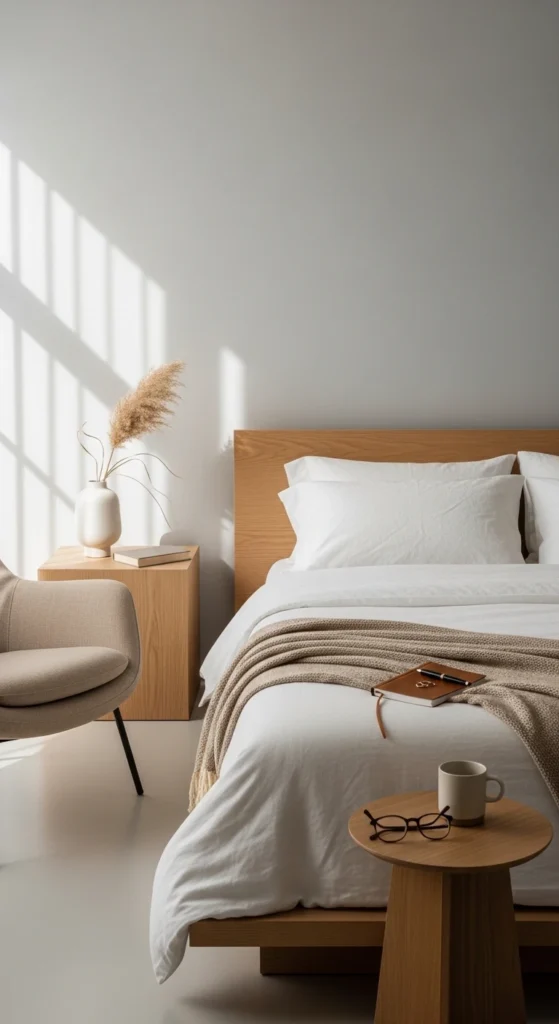
Statement Pieces That Don’t Break Minimalist Rules
One carefully chosen statement piece prevents minimalist bedrooms from feeling cold or impersonal. Consider a live-edge wood headboard, a sculptural reading chair in bouclé fabric, or a single oversized piece of abstract art.
The rule: If you add something bold, everything else should whisper.
Strategic Storage Solutions That Disappear Into Design
Clutter is minimalism’s enemy, but storage doesn’t have to be visible to be functional. The most successful minimalist bedrooms hide storage in plain sight.
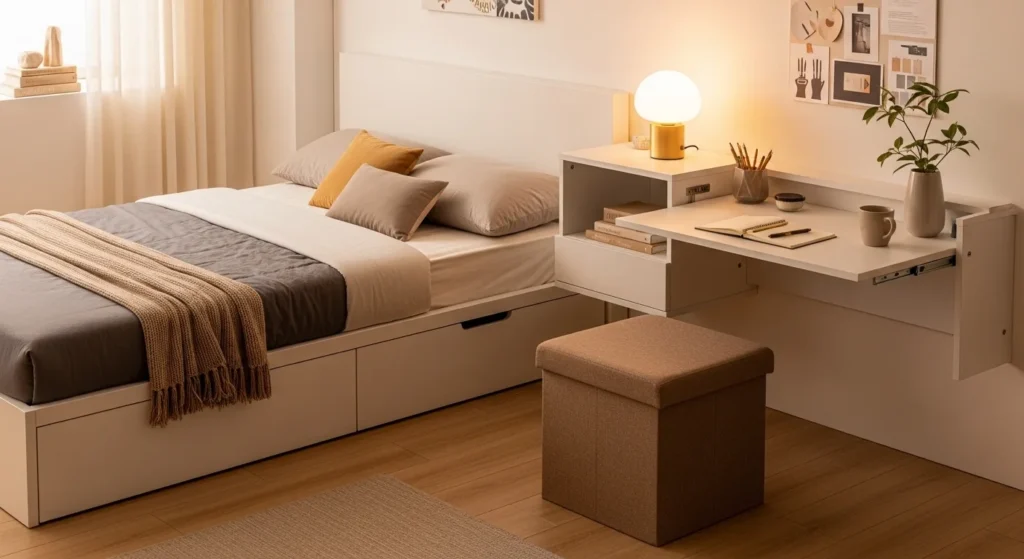
Hidden Storage Integration
Built-in wardrobes with handleless doors create seamless wall integration. If custom isn’t in your budget, IKEA’s PAX system with Semihandmade fronts delivers similar results at a fraction of the cost.
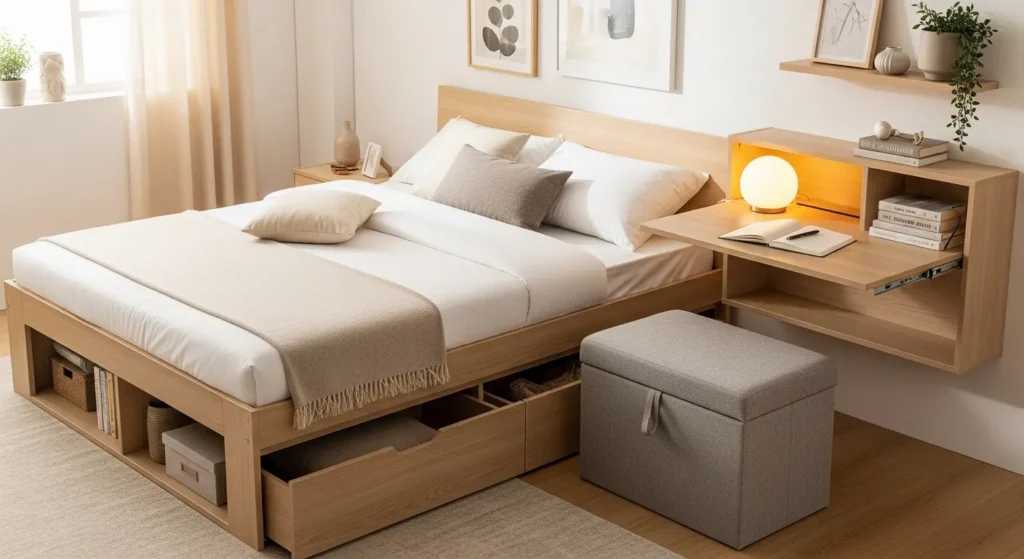
Under-bed storage works best with lift-up mechanisms rather than pull-out drawers. This keeps floor space visually clear while maximizing storage capacity.
Small Space Adaptations:
- Use ottoman storage benches at the foot of the bed
- Install floating shelves in recessed wall areas
- Choose beds with hydraulic lift storage systems
Open Storage That Stays Organized
When storage is visible, it must be curated like a gallery display. Use matching containers, limit color palettes, and group similar items together.
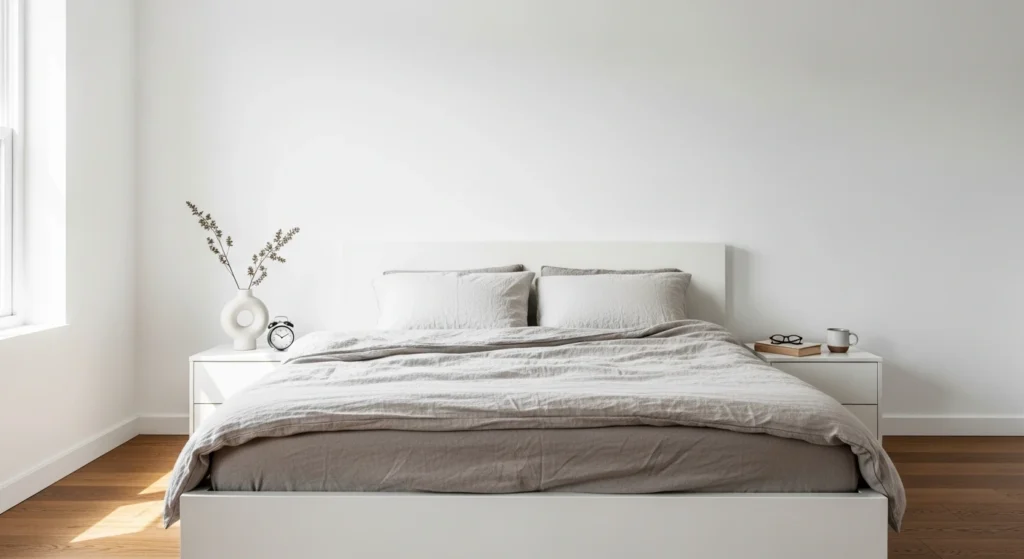
Floating nightstands with single drawers keep surfaces clear while providing essential storage. Mount them 24-26 inches from the floor for optimal proportion.
Lighting Design for Maximum Serenity and Function
Layered lighting creates ambiance while serving practical needs. Minimalist lighting design emphasizes clean lines and hidden technology.
Ambient Lighting Layers
Recessed ceiling lights (4-inch LED cans spaced 6 feet apart) provide general illumination without visual interruption. Add dimmer switches to control brightness throughout the day.
Wall-mounted sconces flanking the bed eliminate nightstand clutter while providing reading light. Choose swing-arm designs for adjustable positioning.
Budget-Friendly Options:
- IKEA’s FOTO pendant lights: $25-40 each
- Cord management clips to hide electrical wires: $15-25
- Smart dimmer switches: $30-50 each
Task Lighting Without Visual Clutter
Hidden LED strip lighting under floating nightstands or behind the headboard creates soft, indirect illumination perfect for evening routines. This technique adds depth without introducing additional fixtures.
Table lamps should be selected sparingly—one per side of the bed maximum, with clean geometric shapes and neutral tones.
Textile Choices That Elevate Without Overwhelming
Quality textiles add warmth and personality to minimalist bedrooms without creating visual noise. Focus on texture variety within a limited color palette.
Choosing Quality Over Quantity in Bedding
Invest in organic cotton or linen sheets in white, cream, or soft gray. Parachute’s Percale or Brooklinen’s Classic Core sets offer hotel-quality comfort that improves with each wash.
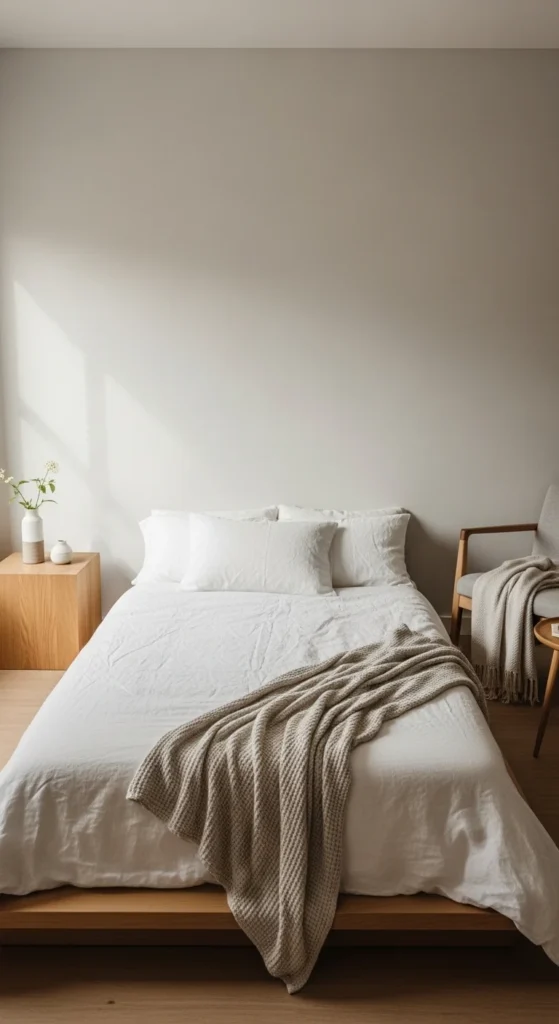
Layer textures through a chunky knit throw, linen duvet cover, and cotton percale sheets. This creates visual interest while maintaining the serene color story.
Fabric Recommendations by Budget:
- Budget: IKEA’s organic cotton sets ($40-60)
- Mid-range: Parachute or Brooklinen ($150-250)
- Luxury: Frette or Sferra ($400-800)
Window Treatments for Clean Lines
Roman shades in natural linen or motorized roller shades create clean lines while controlling light and privacy. Avoid heavy curtains or busy patterns that compete with the minimalist aesthetic.
For privacy without blocking light, consider cellular shades in white or cream. These provide insulation benefits while maintaining the clean, uncluttered look.
Small Space Minimalist Bedroom Adaptations
Minimalism works especially well in small bedrooms because it maximizes both visual and functional space. Strategic planning makes even tiny rooms feel spacious.
Studio Apartment Bedroom Zones
Create a distinct bedroom zone using a platform bed as a room divider. Position it perpendicular to the wall to create separation without blocking light flow.
Use a large area rug (8×10 feet minimum) to define the sleeping area. This creates visual boundaries while maintaining the open feeling essential to small spaces.
Tiny Bedroom Maximization Tricks
Wall-mounted everything: nightstands, lighting, even the headboard. This keeps floor space clear and creates the illusion of more square footage.
Choose a bed frame in the same color as your walls. This visual trick makes the bed appear to float, creating a sense of spaciousness.
Space-Saving Dimensions:
- Nightstands: 12-15 inches deep maximum
- Bed frames: Platform style, 6-8 inches off the ground
- Dressers: Tall and narrow (18-24 inches deep) rather than wide and low
Budget-Friendly Minimalist Bedroom Transformations
Creating a minimalist bedroom doesn’t require a complete overhaul. Strategic updates deliver maximum impact at every price point.
DIY Minimalist Projects Under $50
Paint existing furniture in matching neutral tones to create a cohesive look. Sherwin Williams’ ProClassic in Pure White transforms mismatched pieces into a coordinated set.
Create floating nightstand shelves using simple wood brackets and a solid wood board. Sand smooth and finish with natural wood stain or white paint.
Replace cabinet hardware with sleek, handleless options or simple brass pulls. This instant update modernizes existing furniture without major investment.
Mid-Range Investment Pieces Worth Buying
Quality mattresses and bedding transform sleep quality while supporting the minimalist aesthetic. Invest in organic materials that improve over time.
A single statement light fixture—perhaps a pendant light or pair of sconces—elevates the entire room’s sophistication level.
Smart Shopping Strategy:
- Buy one high-quality piece per season
- Focus on items you interact with daily (mattress, pillows, sheets)
- Choose classic designs that won’t look dated in five years
Advanced Minimalist Design Techniques for 2026
The evolution of minimalist design embraces technology integration and biophilic elements while maintaining clean, serene aesthetics.
Biophilic Elements in Minimal Spaces
Single statement plants—a large fiddle leaf fig or architectural snake plant—add life without clutter. Choose planters in materials that match your overall design scheme.
Natural materials like reclaimed wood, stone, or rattan introduce organic textures that prevent minimalist spaces from feeling sterile.
Technology Integration Done Right
Hidden charging stations built into nightstands keep devices accessible but out of sight. Motorized window treatments and smart lighting create luxury convenience without visual clutter.
Choose technology in colors that blend with your palette. White or black devices integrate better than colorful options that compete for attention.
2026 Tech Trends:
- Invisible wireless charging surfaces built into furniture
- Voice-controlled lighting and temperature systems
- Motorized storage solutions that respond to voice commands
Frequently Asked Questions
Q: How do I make a minimalist bedroom feel cozy instead of cold?
A: Layer different textures within your neutral palette—linen sheets, wool throws, and natural wood elements add warmth while maintaining clean lines. Warm lighting (2700K-3000K) creates ambiance that cool overhead lights can’t match.
Q: What’s the biggest mistake people make with minimalist bedroom design?
A: Choosing white everything. True minimalist design uses varying shades of neutrals to create depth and interest. A monochromatic white room often feels more sterile than serene.
Q: Can I have decorative objects in a minimalist bedroom?
A: Yes, but follow the “one beautiful thing” rule. Choose single statement pieces—a sculptural vase, piece of art, or interesting book—rather than multiple small decorative items.
Q: How do I deal with necessary items that aren’t aesthetically pleasing?
A: Hidden storage is key. Use drawer organizers, under-bed containers, and closed wardrobes to keep functional items accessible but invisible. Everything should have a designated home.
Q: Is minimalist design more expensive than traditional decorating?
A: Initial investment can be higher because you’re buying fewer, higher-quality pieces. However, the total cost is often lower because you’re not constantly adding new items or replacing poor-quality furniture.
Q: How do I maintain a minimalist bedroom with a partner who isn’t minimalist?
A: Create designated spaces for each person’s essentials and agree on shared storage solutions. Focus on keeping surfaces clear while providing adequate hidden storage for individual needs.