Bedroom Furniture Ideas That Will Transform Your Space in 2026
Your bedroom should be more than just a place to sleep—it’s your personal sanctuary, a reflection of your style, and the room where you spend a third of your life. Yet many people overlook bedroom furniture decisions, defaulting to whatever matches or fits the budget at that moment. Here’s the truth: the right bedroom furniture can completely transform not just how your room looks, but how you feel when you step into it.
In 2026, bedroom furniture trends are moving toward more intentional, personalized choices that blend comfort with aesthetic appeal. Whether you’re working with a tiny apartment bedroom or a sprawling master suite, there are proven furniture solutions that designers are using across residential projects nationwide.
This ultimate guide covers 9 bedroom furniture ideas that interior designers are absolutely loving right now—complete with color palettes, budget tiers, space-saving solutions, and actionable advice you can implement today.
Why Bedroom Furniture Is Trending in 2026
Before diving into specific furniture ideas, let’s understand why bedroom design has become such a hot topic. The pandemic shifted how we view our homes. No longer are bedrooms just sleeping quarters; they’re now home offices, workout spaces, meditation rooms, and personal retreats all rolled into one.
According to recent interior design surveys, 73% of homeowners are investing more in their bedroom furniture than they did five years ago. People are recognizing that quality bedroom pieces don’t just improve aesthetics—they impact sleep quality, mental health, and overall home value.
The shift toward remote work has also changed bedroom furniture priorities. In 2026, functional bedroom furniture that serves multiple purposes is King. Designers are moving away from ornamental pieces toward well-crafted items that balance beauty with practicality.
What most people don’t realize is that investing in bedroom furniture is one of the smartest home decisions you can make. A quality bed frame, for example, can last 15-20 years, making the cost-per-use remarkably affordable compared to trendy fast furniture.
Benefits of Choosing the Right Bedroom Furniture
Beyond the obvious aesthetic improvements, strategic bedroom furniture choices deliver measurable benefits:
Better Sleep Quality: A supportive, well-designed bed frame and quality mattress foundation improve sleep posture and comfort. Studies show that environments with intentional furniture arrangement reduce nighttime stress and improve sleep duration by an average of 45 minutes per night.
Increased Storage & Organization: Smart bedroom furniture with built-in storage—like platform beds with drawers, ottomans with compartments, and wall-mounted shelving—eliminates clutter and creates a calming environment. A clutter-free bedroom reduces cortisol levels and promotes relaxation.
Enhanced Room Functionality: Multifunctional bedroom furniture maximizes small spaces. A desk that doubles as a vanity, or a bench that provides seating plus storage, makes your room work harder without feeling cramped.
Boosted Home Value: Quality bedroom furniture and thoughtful design can increase your home’s appeal to future buyers. Real estate data shows that well-designed master bedrooms contribute significantly to overall home valuation.
Personal Style Expression: Your bedroom furniture tells your story. Whether you prefer modern minimalism, classic elegance, or eclectic bohemian vibes, curated furniture choices create a cohesive, intentional space that feels uniquely yours.
Mental Health Benefits: A beautifully designed bedroom with quality furniture reduces anxiety, supports relaxation, and creates a space where you actually want to spend time. Environmental psychology research confirms that thoughtfully designed bedrooms positively impact mood and emotional well-being.
How to Get Started with Your Bedroom Furniture Refresh
Before shopping for bedroom furniture, follow this strategic process to ensure your choices work together cohesively:
Step 1: Assess Your Space and Measure Everything
Start with precise measurements. Measure your room’s length, width, and ceiling height. Note window locations, doors, closets, and any architectural features. This prevents the heartbreak of ordering a gorgeous bedroom furniture piece only to discover it won’t fit through your door or overwhelms your space.
For standard bedroom furniture: queen beds typically need rooms at least 10×12 feet. King beds require 12×14 feet for comfortable movement. Small bedroom furniture should prioritize vertical storage and multifunctional pieces.
Step 2: Define Your Style and Color Palette
Browse Pinterest, Instagram, and design magazines for bedroom furniture inspiration. Create a mood board identifying patterns, colors, and styles that appeal to you. You’ll likely notice common threads—this reveals your authentic style preference.
Step 3: Establish Your Budget
Bedroom furniture pricing varies dramatically. Budget tier ($50-$300 per piece) offers functional basics from retailers like IKEA and Wayfair. Mid-tier ($300-$1,200 per piece) provides better construction and design from brands like West Elm and Article. Luxury tier ($1,200+) features high-end craftsmanship from designers and luxury furniture houses.
Step 4: Plan Your Layout
Sketch your bedroom layout before purchasing. Typically, the bed is the focal point and largest piece. Position it to serve as a visual anchor, usually opposite the entry door or on the main wall. This creates visual balance and improves traffic flow.
Step 5: Shop with Your Priority List
Decide which furniture pieces matter most to your lifestyle. If you work from home, invest in quality bedroom furniture office solutions. If you have limited closet space, prioritize storage furniture. This prevents overspending on pieces that don’t serve your actual needs.
9 Best Bedroom Furniture Ideas Designers Love in 2026
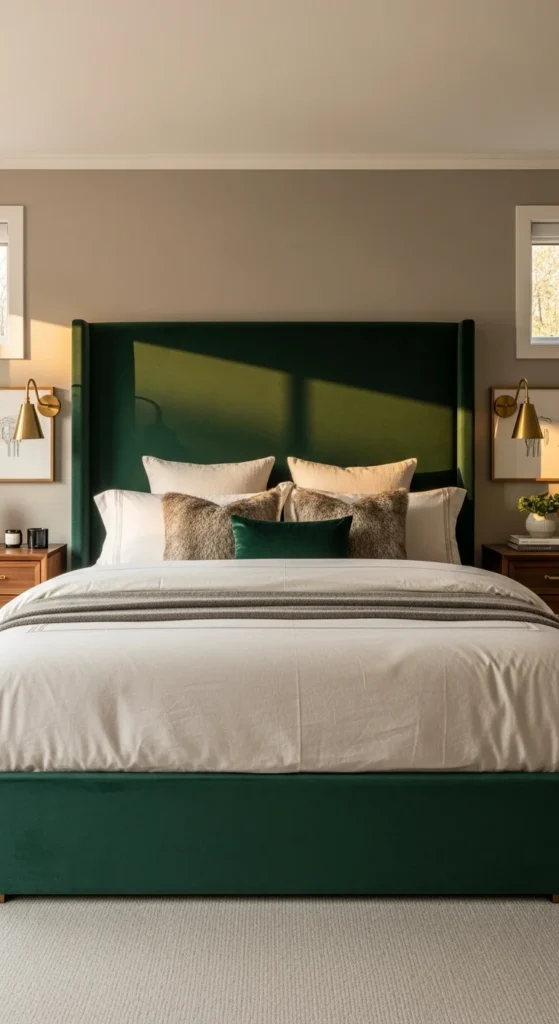
Idea 1: Upholstered Statement Headboards (The Focal Point)
Why it’s trending: An upholstered headboard instantly elevates bedroom furniture from ordinary to designer-curated. This single piece draws the eye, anchors your layout, and adds textural interest without clutter.
Designer secret: The proportions matter immensely. Your headboard height should be 48-54 inches (roughly eye-level when seated), extending 6-12 inches beyond the mattress on each side. This creates visual weightiness that balances the bed’s horizontal spread.
Color palette recommendations:
- Luxury Tier: Emerald green, deep charcoal, or warm taupe upholstered headboards (these pair beautifully with gold or brass hardware)
- Mid-Tier: Soft sage, warm gray, or soft blush (versatile, timeless, works with most décor styles)
- Budget-Friendly: Cream linen or natural cotton (affordable, easily updatable with seasonal styling)
Styling tips: Pair your upholstered statement headboard with simple nightstands and minimal wall décor to avoid visual overwhelm. Let the headboard be the star. Add layered throw pillows in complementary textures—velvet, linen, and faux fur work beautifully together.
Dimensions: Standard queen headboard: 60″ W × 50″ H. King: 80″ W × 50″ H. Measure your wall space before purchasing.
Investment level: Quality upholstered headboards range from $400 (mid-tier) to $2,500+ (luxury custom pieces). Worth the investment if your bedroom is your primary relaxation space.
Idea 2: Low-Profile Platform Beds with Storage (Space-Maximizing Genius)
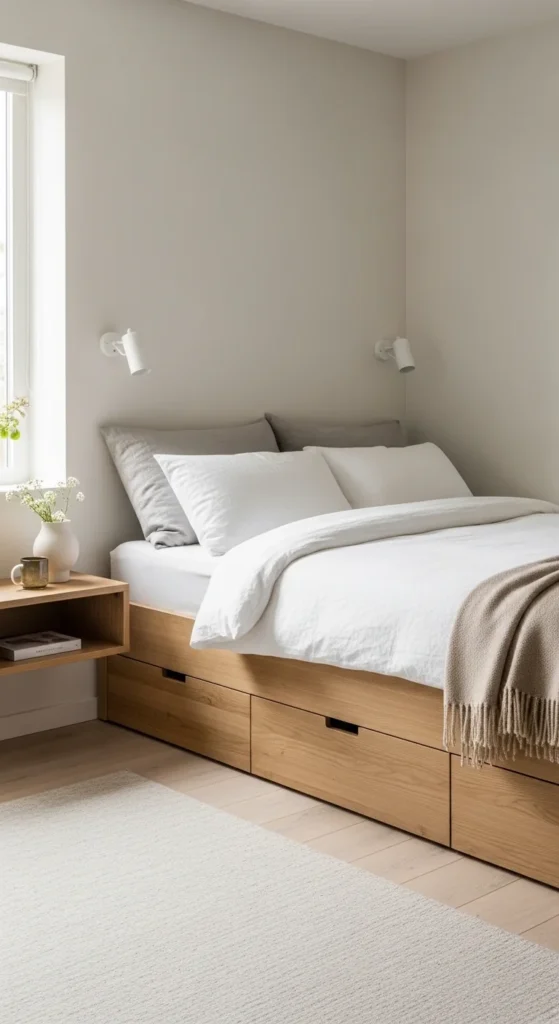
Why it’s trending: Designers are obsessed with platform beds because they eliminate the need for box springs, reduce visual weight in small bedrooms, and often include built-in storage—addressing two furniture needs simultaneously.
How it works: A platform bed has a solid base (wood slats or plywood) instead of a traditional box spring. This creates a cleaner silhouette, appears more contemporary, and lasts longer because mattresses don’t sink into springs over time.
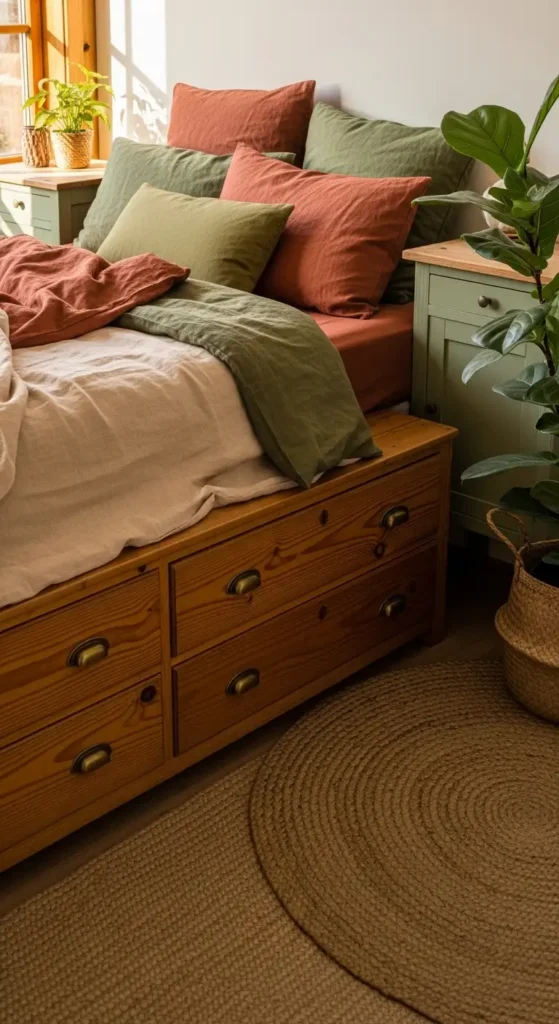
Built-in storage advantages: Drawers underneath a platform bed provide hidden storage for seasonal items, extra bedding, and clothing—invaluable in small bedrooms. Some platform beds include shelving on the headboard end for nightstand-adjacent storage.
Best materials:
- Walnut or mid-tone wood: Warm, inviting, pairs with most styles ($600-$1,400)
- White lacquered or light oak: Contemporary, airy, works in minimalist designs ($400-$900)
- Upholstered platform beds: Premium option combining comfort and style ($800-$2,200)
Small bedroom hack: In bedrooms under 100 square feet, a low-profile platform bed with drawers can eliminate the need for a separate dresser, saving precious floor space.
Dimensions matter: Queen platform beds typically measure 60″ W × 80″ L (plus 2-4 inches for the frame). Height ranges from 18-30 inches depending on storage features. Measure your bedroom and account for at least 24 inches of space around the bed for comfortable movement.
DIY vs. Buy consideration: Building a basic platform bed is possible if you’re handy, but manufactured versions with storage mechanisms are engineered for durability and require professional assembly anyway.
Idea 3: Functional Dressers with Sculptural Forms (Storage + Sculpture)
Why it’s trending: Modern dressers have evolved beyond basic boxes. Today’s designer bedroom furniture dressers are architectural pieces featuring unique proportions, angled legs, unexpected materials, and visual interest that transforms them into sculptural room elements.
Why designers love this approach: A beautiful dresser serves as functional storage while contributing to your room’s aesthetic narrative. It’s furniture that earns its space through both purpose and design.
Material trends in 2026:
- Solid wood with tapered legs: Mid-century modern influence, works in transitional and contemporary bedrooms ($700-$1,600)
- Mixed materials (wood + brass/gold hardware + leather handles): Eclectic luxury aesthetic ($1,200-$2,500)
- Matte lacquered finishes: Ultra-contemporary, easier to maintain than glossy, available in every color ($500-$1,300)
Styling the top surface: Resist the urge to fill every inch. Designers recommend 40% empty space on dresser tops. Use this formula: 1 statement object (mirror, sculpture, or vase) + 1-2 smaller accessories + clear surface space. This creates visual breathing room and prevents a cluttered appearance.
Layout positioning: Place dressers on walls opposite windows when possible—this allows you to see the design details and reflects natural light. Avoid placing dressers directly under air vents or heating elements, which can damage wood finishes.
Small space solution: Tall, narrow dressers (often called “chests” or “chest-on-chests”) work better in small bedrooms than wide, squat designs. They maximize vertical storage without consuming precious floor space.
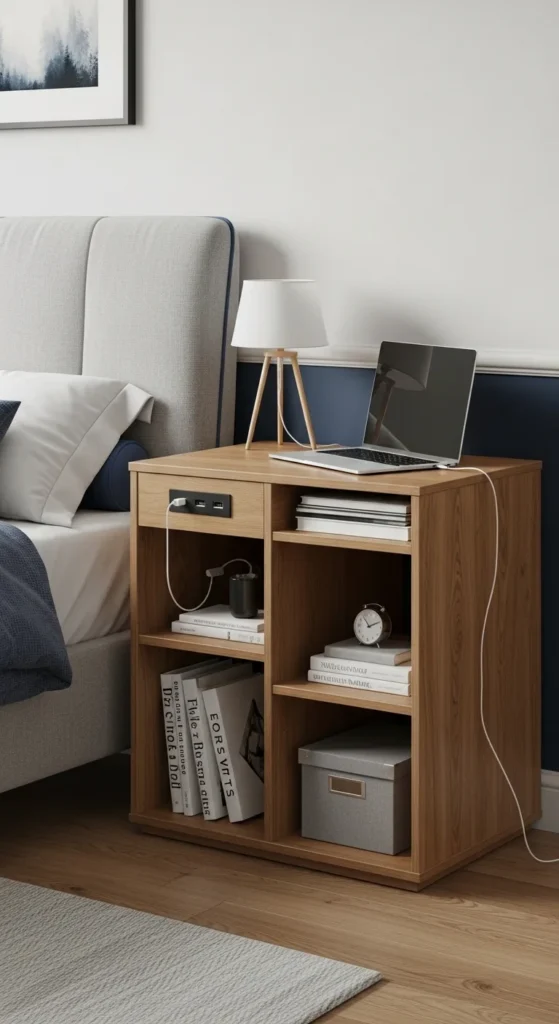
Idea 4: Nightstands That Double as Workspace (Multifunctional Magic)
Why it’s trending: Post-pandemic, bedroom furniture must be versatile. Nightstands designed with built-in desks or extended surfaces provide a place for both lamp and laptop—solving the “where do I work from home?” challenge.
Smart designs:
- Nightstands with USB charging: Built-in USB ports mean you never hunt for outlets; your phone charges right on the nightstand ($250-$650)
- Floating shelves with storage: Wall-mounted nightstand alternatives save floor space and create an airy appearance ($150-$450)
- Nightstands with adjustable surfaces: Tiltable or adjustable tops allow you to shift from sleep-mode to work-mode ($400-$900)
- Double-duty storage pieces: Nightstands with drawers for clothing storage plus open shelves for books and décor ($300-$800)
Dimension guidelines: Nightstands should align with bed height (typically 24-30 inches tall, matching mattress top height). Width should be 18-24 inches. Your lamp plus two personal items should comfortably fit the surface.
Color coordination: Match nightstands to your headboard or bed frame for cohesion, OR choose a contrasting color to create visual interest. Unexpected color choices (like navy nightstands with a cream upholstered bed) make designer-curated spaces.
Pro arrangement tip: Leave 12-18 inches of clear space on either side of the bed for nightstands. Cramping them too close makes the bedroom feel cluttered.
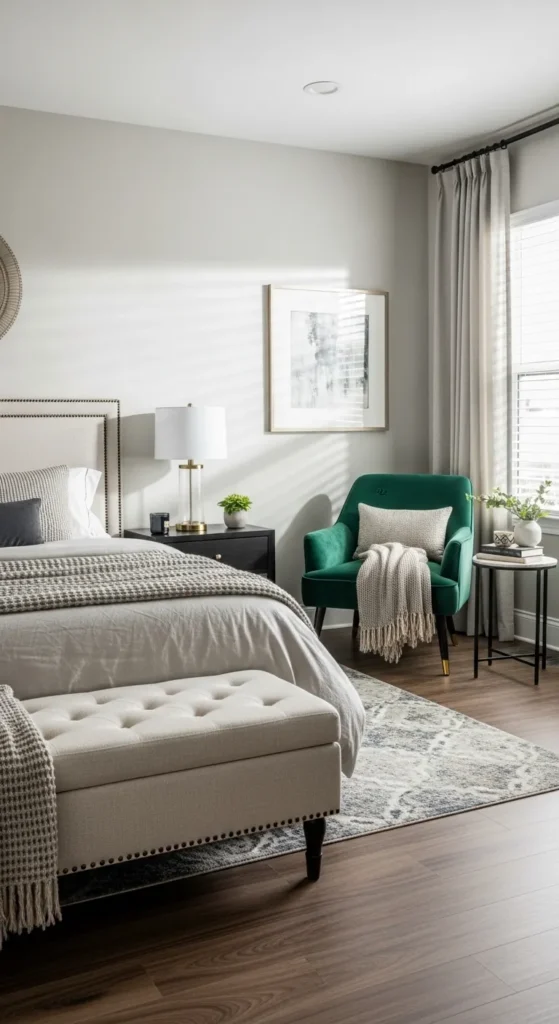
Idea 5: Layered Bedroom Seating (The Comfort Factor)
Why it’s trending: Designers are elevating bedrooms from sleeping spaces to multi-functional living areas. This means including proper seating—a chair, bench, or chaise that invites you to linger, read, or meditate.
Best seating options for bedrooms:
Accent Chairs ($400-$1,500): A sculptural chair in a corner creates visual interest and provides a reading nook. Look for designs in jewel tones (emerald, sapphire, burgundy) or neutrals depending on your style. Ensure your bedroom is at least 100 square feet for a full-size chair.
Upholstered Benches ($300-$900): Positioned at the foot of your bed, a bench provides seating, visual layering, and a surface for laying out tomorrow’s outfit. This works beautifully in larger bedrooms and master suites.
Chaise Lounges ($500-$2,000): Perfect for elongated master bedrooms, a chaise offers lounging comfort without taking up floor space like a chair does. Pair with a throw blanket and side table for a spa-like retreat.
Window Seats ($600-$1,800): If your bedroom has a window, custom-built window seats are a luxury bedroom furniture investment that creates a cozy reading nook and maximizes corner space.
Styling consideration: Don’t feel obligated to fill every empty space. In smaller bedrooms under 120 square feet, seating might be overkill. Instead, use a single accent chair in a strategic corner.
Color psychology for bedroom seating:
- Calming choices (lavender, sage, soft gray): Promote relaxation and better sleep
- Energizing choices (mustard, coral, teal): Add personality for people who spend daytime hours in their bedroom
- Neutral bases (cream, taupe, charcoal): Timeless, work with evolving décor
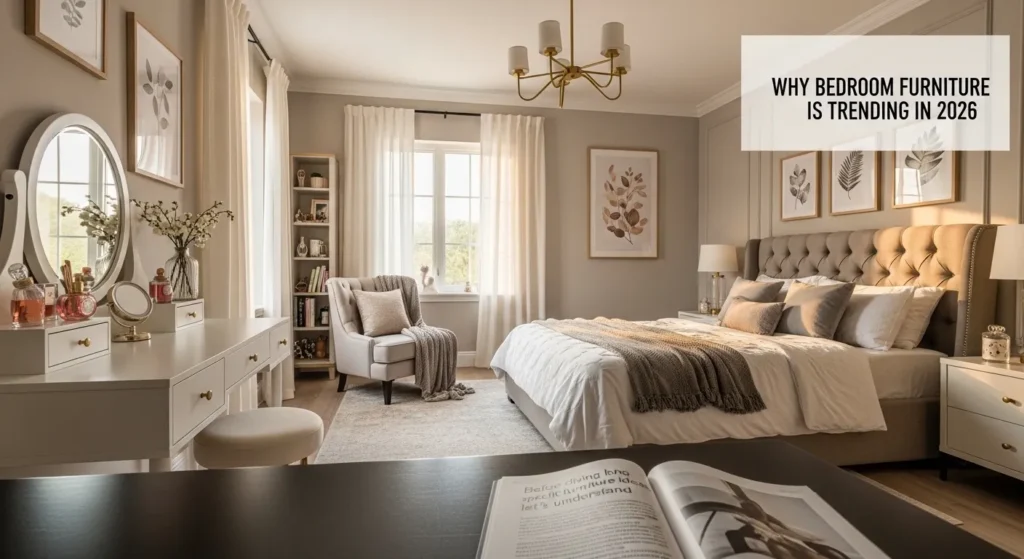
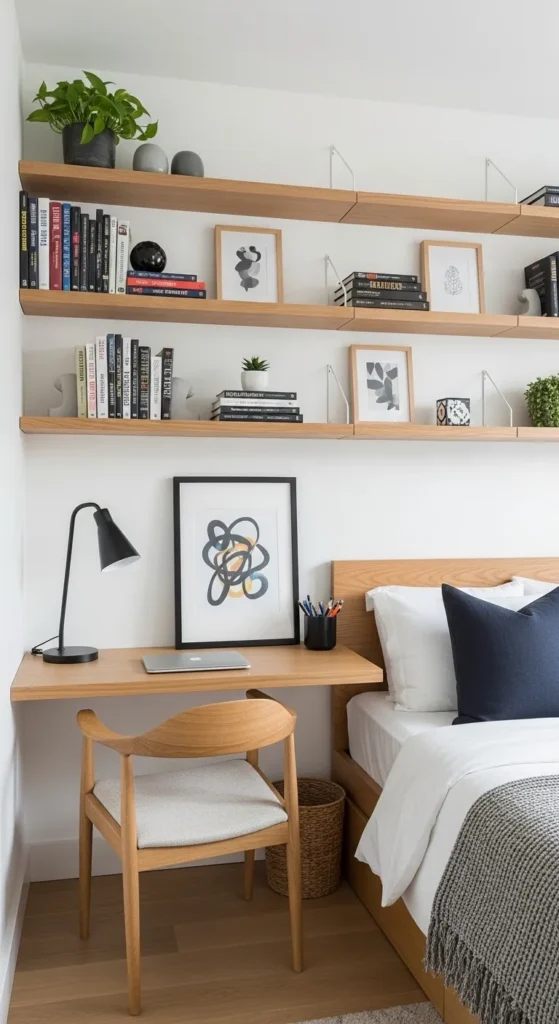
Idea 6: Floating Shelves and Wall-Mounted Storage (Vertical Thinking)
Why it’s trending: Small bedroom furniture solutions are no longer an afterthought—they’re design statements. Floating shelves and wall-mounted storage maximize vertical space while creating an open, airy aesthetic.
Designer advantages:
- Visual lightness: Wall-mounted storage doesn’t consume floor space, making rooms feel larger
- Flexibility: Easy to rearrange and reconfigure as your needs change
- Cost-effective: Often more affordable than floor-standing dressers or bookcases
- Style potential: Open shelving displays personality through books, plants, art, and decorative objects
Material and finish options:
- Wood shelves with metal brackets: Warm, versatile, works in farmhouse to contemporary styles ($100-$400 per shelf)
- Minimalist white shelves with hidden brackets: Contemporary, clean-lined, perfect for modern bedrooms ($80-$300 per shelf)
- Reclaimed wood shelves: Rustic, eco-conscious, adds character ($150-$450 per shelf)
Styling floating shelves: Use the “odd number rule”—group 3 or 5 objects per shelf rather than pairs. Mix heights: tall books, small plants, framed photos. Leave breathing room between objects. For bedrooms, keep the color palette cohesive—too many contrasting colors creates visual chaos.
Installation crucial point: Floating shelves must be properly installed into wall studs. Improper installation is dangerous. Hire a professional for shelves longer than 24 inches or bearing heavy books.
Small bedroom layout: Install shelves above desk areas, beside beds, or in corners to create storage without eating into floor space. This is invaluable in bedrooms under 80 square feet.
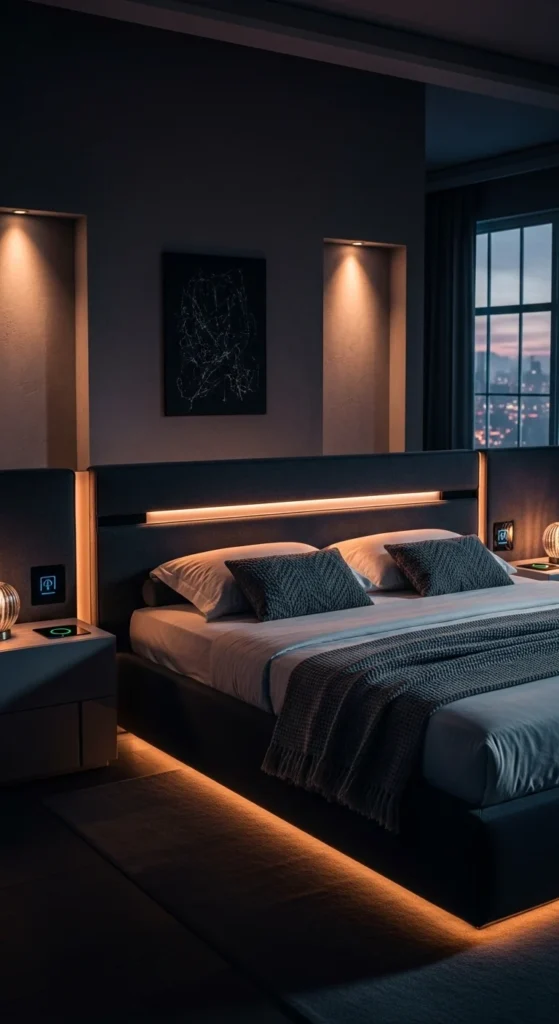
Idea 7: Luxury Bed Frames with Integrated Lighting (Tech Meets Comfort)
Why it’s trending: Bedroom furniture increasingly incorporates technology. Bed frames with built-in LED lighting, wireless charging, and adjustable bases redefine bedroom comfort and functionality.
Smart bed frame features:
- Built-in LED lighting: Soft, adjustable lighting integrated into the headboard eliminates the need for traditional nightstands lamps. Creates ambiance and serves practical purposes ($1,200-$3,500)
- Adjustable bases: Motorized bed bases elevate feet and head for comfort, reducing snoring and improving circulation ($1,500-$4,000)
- Wireless charging surfaces: Integrated charging pads mean you drop your phone on your nightstand to charge—no cables ($2,000-$4,500)
- Smart controls: App-controlled lighting, heating, and positioning managed from your phone ($2,500-$5,000+)
When to invest: These are long-term investments for people who spend significant time in bed (remote workers, early retirees, those with mobility challenges) and have budgets for luxury bedroom furniture.
Material considerations: Look for quality construction—solid wood frames with reinforced joints support adjustable mechanisms. Metal frames often flex, causing alignment issues with motorized components.
Budget alternative: If technology-integrated bed frames exceed your budget, purchase a quality bed frame and add wireless charging nightstands, USB-port lamps, and smart bulbs separately.
Idea 8: Mirror Furniture Pieces (Reflection and Light)
Why it’s trending: Mirrors are the secret weapon in small bedroom furniture design. They reflect light, create illusions of space, and add glamour without bulk.
Strategic mirror placement:
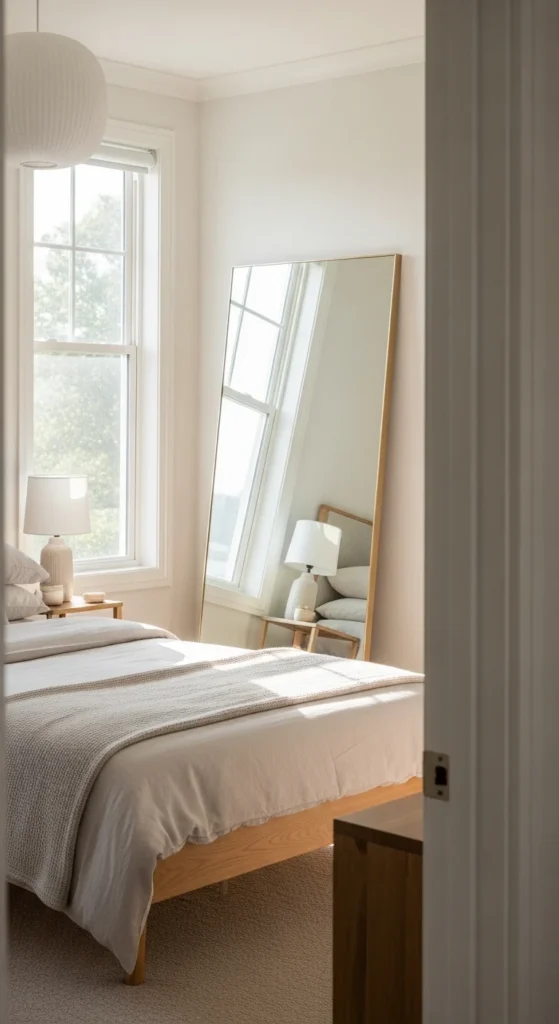
- Across from windows: Bounces natural light throughout the room, making small bedrooms feel brighter
- Above dressers: Creates a vanity moment and makes getting ready convenient
- On accent walls: Unexpected mirror placement becomes a design statement
Mirror frame styles: Your mirror’s design should complement your bedroom furniture aesthetic:
- Ornate gold or brass frames: Glamorous, luxury-forward, pairs with eclectic modern styles ($200-$1,200)
- Simple wood frames: Warm, natural, coordinates with traditional or transitional furniture ($150-$600)
- Metal industrial frames: Contemporary, works with modern and industrial bedroom furniture ($100-$500)
- Frameless mirrors: Minimalist, maximizes apparent size ($80-$400)
Pro layout hack: In narrow bedrooms, place a large floor mirror opposite a small window to multiply natural light and expand visual space. This is game-changing for dark bedrooms.
Dimension recommendation: Full-length mirrors (60″+ height) work best in larger bedrooms. In small rooms, use smaller mirrors (36-48″ height) positioned strategically.
Idea 9: Sustainable and Upcycled Bedroom Furniture (Eco-Conscious Luxury)
Why it’s trending: Designers and homeowners increasingly choose sustainable bedroom furniture. Whether vintage pieces, reclaimed wood furniture, or brands using eco-friendly practices, sustainable choices feel good aesthetically and ethically.
Sustainable bedroom furniture options:
- Vintage furniture pieces: Shopping estate sales, antique shops, and secondhand stores yields unique, quality-constructed furniture at fraction of retail prices. Vintage bedroom furniture often features superior wood and joinery ($100-$1,000 per piece, depending on rarity)
- Certified sustainable brands: Companies using FSC-certified wood, non-toxic finishes, and ethical manufacturing ($400-$2,500 per piece)
- Upcycled and customized pieces: Thrifted furniture refinished with new paint, hardware, or upholstery creates one-of-a-kind pieces ($50 for thrifted item + $200-$600 for customization)
DIY upcycling ideas:
- Paint a dresser a new color to match your new bedroom furniture scheme (budget: $30-$80 for supplies)
- Replace hardware on existing furniture pieces ($20-$100 for new knobs and pulls)
- Reupholster a chair seat or bench (budget: $100-$300 plus labor)
Investment perspective: Quality vintage pieces often appreciate in value, making them smarter long-term investments than fast furniture. A Victorian dresser purchased for $300 might be worth $500 five years later, whereas trendy bedroom furniture depreciates immediately.
Where to shop:
- Estate sales and auctions: highest quality but require searching
- Local antique shops: personal curation, immediate availability
- Online platforms (Facebook Marketplace, Craigslist, Etsy): largest selection, requires discernment
- Specialty vintage retailers: higher prices but vetted quality
Common Mistakes to Avoid When Selecting Bedroom Furniture
Mistake 1: Buying Furniture Before Measuring
This is the #1 regret among furniture buyers. That stunning bedroom furniture piece won’t feel stunning if it doesn’t fit your space. Always measure twice, order once.
Mistake 2: Prioritizing Looks Over Comfort
A gorgeous bedroom furniture piece that’s uncomfortable serves no purpose. Your bed should feel supportive, your chair should invite sitting, and your nightstand height should align with your mattress. Test furniture in-store when possible.
Mistake 3: Mismatched Scale and Proportions
Bedroom furniture should be proportional to your room size. Oversized pieces overwhelm small rooms; tiny pieces look lost in large spaces. A queen bed in a 9×10 room feels cramped; a twin bed in a 16×18 room looks lonely.
Mistake 4: Overcrowding Your Layout
More furniture isn’t better furniture. A bedroom crammed with pieces feels stressful and claustrophobic, regardless of quality. Leave at least 24 inches of walking space around major furniture items.
Mistake 5: Ignoring Traffic Flow
Before placing furniture, walk through your bedroom’s natural traffic pattern—entry to closet, entry to bathroom, bed to exit. Arrange furniture to support this flow rather than obstruct it.
Mistake 6: Cheap Construction Passing as Budget-Friendly
There’s a difference between budget-friendly and cheaply made. Budget-friendly bedroom furniture uses economical materials thoughtfully. Cheap furniture has flimsy construction that falls apart in months. Investing in mid-tier quality over the cheapest option saves money long-term.
Mistake 7: Neglecting the Ceiling and Vertical Space
Focusing only on floor space misses opportunities. Tall dressers, floating shelves, and wall-mounted storage maximize small bedrooms. Think vertically, not just horizontally.
Mistake 8: Matching Every Single Piece
Modern design embraces mixing styles, woods, and finishes. A walnut dresser paired with a white platform bed paired with brass nightstands creates sophisticated eclectic style. Matching bedroom furniture sets often feel dated and institutional.
Mistake 9: Forgetting Function in Pursuit of Fashion
Trendy bedroom furniture means nothing if it doesn’t serve your lifestyle. Work from home? You need a desk. Collect books? You need shelving. Have limited storage? You need pieces with built-in functionality.
Mistake 10: Failing to Account for Assembly and Delivery
Hidden costs add up: assembly fees ($150-$400), delivery charges ($50-$200), and haul-away fees for old furniture ($75-$250). Budget these into your total bedroom furniture investment.
Pro Tips Most People Don’t Know About Bedroom Furniture
Tip 1: The 60-30-10 Design Rule
Apply this professional design principle to your bedroom furniture color scheme: 60% dominant color (usually walls and larger pieces), 30% secondary color (bed linens, additional furniture), 10% accent color (pillows, décor). This creates visual harmony and prevents color chaos.
Tip 2: Anchor Your Layout with the Bed
Always position your bed first—it’s your bedroom furniture anchor and largest visual element. All other pieces should serve and complement the bed’s position. Trying to fit secondary furniture around an awkwardly placed bed creates clunky layouts.
Tip 3: Odd Numbers Rule for Styling
Arrange bedroom furniture accessories in odd numbers (3 pillows, 5 books on a shelf, 3 nightstand objects). Our brains find odd groupings more visually interesting than even numbers. This applies to nightstands, floating shelves, and bedroom styling.
Tip 4: Create Visual Balance with Different Heights
Mix tall (dresser), medium (nightstand), and short (ottoman) bedroom furniture pieces to create layered, sophisticated visual interest. All medium-height furniture feels monotonous and boring.
Tip 5: Use Dimmers for Bedroom Lighting
Quality bedroom furniture deserves quality lighting. Install dimmer switches for overhead lights and use adjustable bedside lighting. This supports better sleep (dimmed lighting in evening triggers melatonin production) and creates ambiance.
Tip 6: Scale Furniture to Room Size Methodically
Quick math: In a room under 100 square feet, avoid furniture larger than 36 inches wide (except the bed). In 100-150 square foot bedrooms, pieces up to 48 inches work. In larger rooms, standard bedroom furniture scales work perfectly. This prevents overwhelming small spaces.
Tip 7: Invest in Quality Where You Spend Time
If you spend 8 hours daily in your bed, splurge on a quality bed frame and mattress. If you work from a bedroom desk 6 hours daily, invest in a quality desk chair. Put budget furniture in areas you barely use.
Tip 8: Create Negative Space Intentionally
The space around bedroom furniture matters as much as the furniture itself. Intentional empty space (negative space) creates sophistication and calm. A nightstand with empty surface space feels designer-curated; a cluttered nightstand feels chaotic.
Tip 9: Coordinate Hardware Finishes
Your bedroom furniture hardware (drawer pulls, handles, brackets) should coordinate. Mixing too many finishes (brass, chrome, black, rose gold all together) creates visual discord. Stick to maximum two hardware finishes in any bedroom.
Tip 10: Account for Growth and Change
Choose foundational bedroom furniture pieces that transcend trends. A quality wooden bed frame lasts decades. Trendy pieces (velvet furniture in this year’s hottest color) might feel dated in three years. Balance trendy accents with timeless furniture bones.
Frequently Asked Questions About Bedroom Furniture
Q1: What’s the minimum bedroom size for a queen bed?
A queen bed requires a minimum room size of approximately 10×12 feet for comfortable movement. However, 12×14 feet provides more comfortable spacing. In smaller rooms (9×10), consider a full-size bed. Room height matters too—low ceilings make larger furniture feel cramped even if floor space permits it.
Q2: How often should I replace bedroom furniture?
Quality bedroom furniture lasts 15-20 years minimum. A well-constructed bed frame might last 25+ years. Replace pieces when: structural damage occurs, joint stability fails, wood develops pest damage, or your lifestyle fundamentally changes. Cosmetic updates (new paint, reupholstering) can extend furniture life.
Q3: Should my nightstands match my bed frame?
No. Modern design embraces mixing woods and styles. Coordinating nightstands to your bed’s material creates traditional cohesion, but mismatched (but intentional) nightstands create sophisticated eclectic style. The key is intentionality—don’t mix styles accidentally.
Q4: What’s the best bedroom furniture arrangement for a small room?
In small bedrooms: (1) Center the bed on the longest wall, (2) Place nightstands on shorter walls or use floating shelves instead, (3) Utilize vertical storage with floating shelves and tall dressers, (4) Keep pathways clear with minimum 24-inch walking space, (5) Choose low-profile pieces to avoid ceiling overwhelm.
Q5: Is it worth investing in a platform bed with storage?
Absolutely, especially in small homes or apartments. Platform beds with storage drawers eliminate the need for a separate dresser, saving floor space and money. Drawers keep seasonal items, extra bedding, and off-season clothing accessible but hidden. For small bedroom furniture needs, storage platforms are intelligent investments.
Key Takeaways: Bedroom Furniture Ideas You Can Implement Today
- Invest in quality bed frame construction first. Your bed is bedroom furniture that impacts your sleep quality, health, and mood. Prioritize budget here over decorative pieces. A $1,200 quality bed frame beats a $300 frame surrounded by trendy décor.
- Use upholstered headboards as your bedroom’s focal point. This single piece instantly elevates bedroom furniture aesthetics, anchors your layout, and requires zero additional styling to look designer-curated. Return on design investment is exceptional.
- Maximize vertical space with floating shelves and tall dressers. Small bedroom furniture challenges disappear when you think vertically. Wall-mounted storage and tall pieces dramatically increase functionality without eating floor space.
- Choose sustainable and quality pieces that last decades. Budget bedroom furniture depreciates immediately. Mid-tier and quality pieces hold value, feel better, and reduce long-term costs. Sustainability also increasingly matters to resale value.
- Mix styles, woods, and finishes intentionally. Modern bedroom furniture embraces eclectic style. A walnut dresser, white platform bed, and brass nightstands create sophisticated design. Matching sets often feel dated and uninspired.
- Prioritize multifunctional bedroom furniture for flexible living. Nightstands with charging, dressers doubling as workspace, and storage benches serve modern lifestyles. Bedroom furniture should earn its space through both beauty and purpose.
Final Thoughts: Transform Your Bedroom with Intentional Furniture Choices
Your bedroom deserves more attention than a last-minute furniture decision or impulse purchase. The ideas outlined in this guide—upholstered statement headboards, storage-optimized platform beds, sculptural dressers, multifunctional nightstands, strategic seating, vertical storage, luxury integrated technology, reflective mirrors, and sustainable choices—represent proven bedroom furniture solutions that designers implement across residential projects nationwide.
The secret isn’t having unlimited budget or magazine-worthy space. It’s making intentional choices aligned with your lifestyle, style preferences, room size, and functional needs. Whether you’re decorating a small apartment bedroom with budget constraints or designing a luxury master suite, these nine bedroom furniture ideas provide frameworks for success.
Start with one: Choose your bed style. Add quality foundational pieces. Layer in personal touches. Avoid common mistakes. Apply professional design principles. Your bedroom will transform.
Ready to redesign your bedroom? Use this article as your bedroom furniture bible. Save it