A Breath of Calm Above the City
If your top-floor terrace or rooftop feels like an underused slab of concrete, let me show you how a minimalist rooftop patio makeover can turn that empty space into a serene, modern outdoor retreat. With just a few smart choices — clean flooring, simple furnishings, minimal greenery, and no-fuss upkeep – you can create a rooftop haven that feels airy, elegant, and surprisingly easy to maintain.
In over 15 years of styling apartments and terraces across cities, I’ve seen how minimal design isn’t about cold sterility — it’s about thoughtful restraint. It’s about giving you space to breathe, unwind, and host without clutter or constant upkeep.
Let’s walk through how to achieve that clean, modern rooftop vibe — without breaking the bank or your back.
Why Minimalist Rooftop Patio Works (and Often Beats “Maximalist” Remodels)
Clarity, Calm & Simplicity — A Mental Reset Spot
Rooftops in busy cities often carry visual and emotional noise: buildings, wires, clutter. A minimalist rooftop patio is a deliberate counterpoint. By stripping down to essential, functional, and stylish elements — you give your eyes and mind a chance to rest.
In many of my past projects, clients told me they began using their rooftop not for dining or parties, but for quiet reading, sipping tea, or watching sunset without distractions. That clarity only comes when the space isn’t competing with itself.
Low Maintenance — The Real Luxury
Unlike lush rooftop gardens or boho patios with dozens of pots, a minimalist rooftop allocates fewer, but carefully chosen elements. That means less sweeping, less watering, less rearranging.
Design guides for balcony and rooftop spaces increasingly emphasize this: choose weather-proof materials, simple plantings, modular furniture.
In a busy life, a rooftop that looks good — and stays good — without constant effort becomes a rare kind of luxury.
Core Principles: What a Minimalist Rooftop Patio Needs
- Clean, cohesive flooring — Establishes a neutral base so everything else flows together.
- Simple, multifunctional furniture — Pieces that serve a purpose and don’t clutter.
- Subtle greenery — minimal but intentional — Adds softness and life, without creating a jungle.
- Soft layering for comfort — Rugs, cushions, small textiles to soften hard surfaces.
- Low-maintenance materials & layout — Weather-resistant, easy to clean, arranged for minimal upkeep.
These principles form a design backbone. If each decision aligns, the result feels harmonious — even serene.
Step-by-Step: How to Do a Minimalist Rooftop Patio Makeover
Step 1: Prep & Clear Out the Space
- Empty the rooftop completely — remove old pots, unused furniture, debris. Treat it as a blank canvas.
- Check the surface condition: concrete cracks, drainage, uneven slabs — if needed, repair or level before decorating.
- Consider weather exposure: wind, sun, rain — this will influence all material choices going forward (furniture, plants, rugs).
Step 2: Pick the Floor — A Unified, Clean Base
Your floor does more than hold furniture — it sets the visual tone. Based on experience and design best practices:
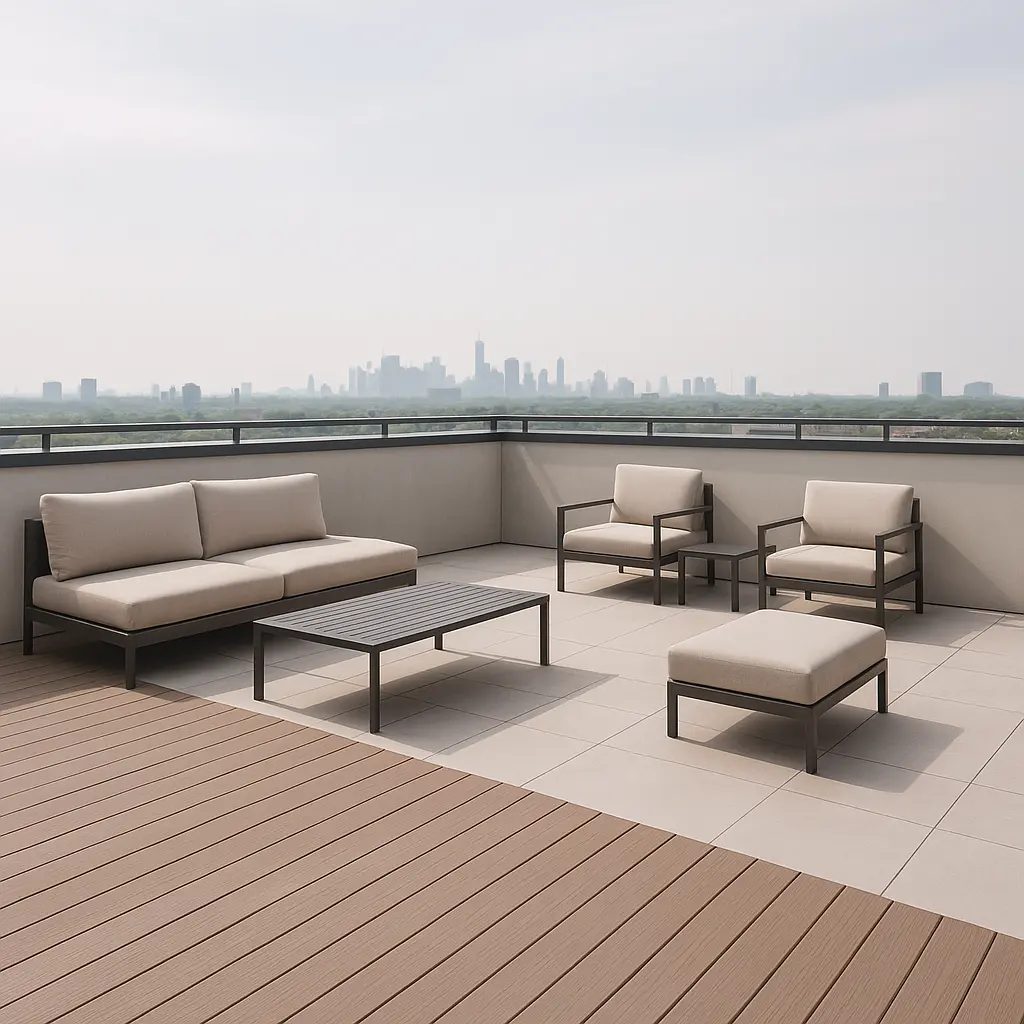
- Composite outdoor decking or treated wooden deck tiles: these bring warmth and a refined finish over bare concrete. Many rooftop-deck guides suggest wood or composite decking for clean, modern, low-maintenance patios.
- Large-format neutral outdoor tiles (grey, sand, slate tones): ideal for a minimalist look; easy to wipe clean, resistant to weather, and visually calm.
- Low-maintenance artificial turf or turf-style mats (optional): if you want a soft underfoot while avoiding gardening upkeep, this works especially well for rooftop patios.
Step 3: Furnish Strategically — Less Is More, But Useful
- Opt for minimalist, weather-resistant furniture: slatted metal chairs, powder-coated steel or aluminium tables, teak furniture, or synthetic wicker that resists sun and rain. These options are often recommended for balcony/rooftop use because they balance durability with aesthetics.
- Choose multifunctional, compact pieces: a small bistro set, foldable chairs, a bench with storage, or a narrow lounge bench along the railing. Avoid bulky furniture that crowds the space.
- Arrange furniture to preserve open space: place seating along edges or corners, leaving central area open for easy movement and air flow. This layout maximises usability even on small rooftops or terraces.
Step 4: Greenery & Soft Touches — Minimal but Meaningful
You don’t need many plants to bring life to your rooftop. The trick is selectivity and placement.
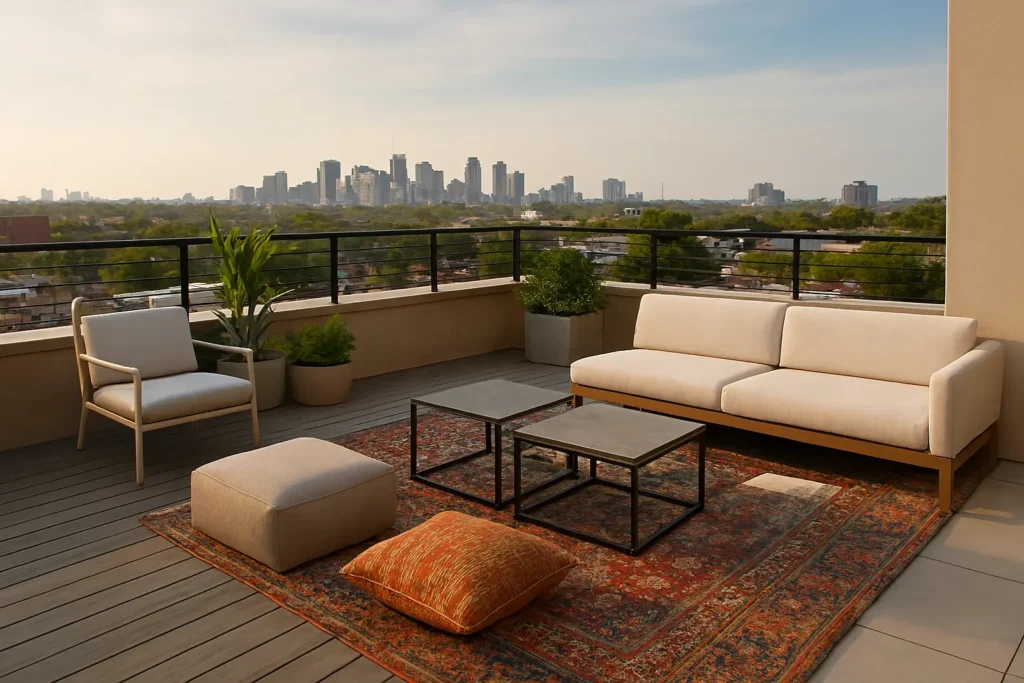
- Use a few well-chosen, low-maintenance plants: succulents, small shrubs, drought-tolerant potted plants, or a couple of small trees for shade/privacy. Rooftop-garden guides recommend small potted trees or plants to provide shade and soften rooftop concrete surfaces.
- Vertical planters or railing planters: if floor space is limited, use vertical planting to bring green up without cluttering the ground.
- Limit number of pots: instead of scattering 10+ small pots, pick 2–4 statement plants. That keeps the space clean and easy to maintain.
Step 5: Add Soft Layers — Rugs, Cushions, Lighting for Comfort & Mood
Concrete and metal can feel cold. To transform your rooftop into a lived-in, comfortable space:
- Outdoor-safe rugs or mats (neutral colours / subtle patterns) — soft underfoot, visually warms the space.
- Cushions and throws in muted, natural tones — add comfort to seating without breaking minimalism.
- Soft, subtle lighting: small lanterns, solar-powered LED lights, string lights (choose thin wire and warm light). These create ambience without clutter. Many rooftop design guides note that combining simple furniture, subtle lighting, and minimal greenery yields a clean yet welcoming terrace.
Common Mistakes (I’ve Seen Many!) — And How to Avoid Them
Mistake: Trying to Fill Every Corner “Just In Case”
Some people overload their rooftop with every furniture set they own, dozens of pots, lights, textiles — thinking more equals better. The result? A cluttered rooftop that’s hard to clean and never used.
Fix: Resist the urge to overfill. Choose only what serves a purpose — seating, a little greenery, and simple lighting. If you don’t use it regularly, don’t add it.
Mistake: Using Indoor Materials Outdoors
Indoor rugs, untreated wood, fabric cushions — these often fade, get moldy, or deteriorate fast under sun and rain.
Fix: Use outdoor-rated materials: composite wood decking or treated wood; outdoor tiles; weather-resistant metal or synthetic furniture; outdoor-safe textiles and rugs. Many rooftop makeover guides emphasise weather-proof materials and simple layouts for longevity.
Mistake: Ignoring Drainage and Weather Realities
A rooftop that doesn’t have proper drainage, or where water pools, can cause long-term problems — moss, slipping hazards, deterioration of materials.
Fix: Before laying flooring or placing pots, check rooftop drainage, slope, and water runoff. Use pots with drainage holes; consider a raised floor system or tiles with drainage gap; avoid heavy flooring if rooftop structure is weak.
Mistake: Over-planting and High-Maintenance Gardens
Trying to create a lush garden on rooftop without considering water, sun, maintenance — often leads to dead plants, constant watering, or abandonment.
Fix: Stick to a few hardy, drought-tolerant plants or minimal greenery. Keep maintenance expectations realistic: minimal watering, occasional cleaning. That’s the beauty of a low-maintenance rooftop patio.
Sample Layout Ideas (for Various Rooftop Sizes)
Depending on your rooftop size and shape — you can adapt this minimalist makeover. Here are a few layout ideas I often sketch with clients:
Small Rooftop / Terrace (≈ 8–12 ft wide)
- Composite deck or neutral tile floor
- Slim 2-person bistro table + two metal chairs, placed along railing
- One narrow bench with seat cushions against one wall
- Two medium potted plants (on floor or railing planters) — maybe a small tree + a shrub
- Outdoor rug + couple of cushions; simple solar lights strung along the railing
Medium-sized Rooftop (≈ 15–20 ft wide)
- Deck or tile floor covering entire area
- Small lounge bench + one chair + coffee table (compact) arranged for conversation or reading
- One vertical planter wall or a set of 3–4 large pots clustered for greenery
- Outdoor rug under seating area, soft floor pillows for flexibility
- Soft LED or solar-powered lighting around perimeter for ambience
These layouts prove that you don’t need a huge roof or expensive furniture — just proportionate, intentional design.
Frequently Asked Questions (FAQ)
Q1: I live in a windy city — will a minimalist rooftop patio work or will furniture/plants blow away?
A: Yes — but choose sturdy, heavy-base furniture, and choose plants in heavy pots or anchored planters. Avoid light plastic furniture or small pots that can tip. Also, avoid tall, top-heavy planters in open-air spots.
Q2: I don’t have a big budget. What’s the minimal cost way to get started?
A: Focus first on flooring (deck tiles or neutral tiles) + one small bistro set + two small pots + light strings. This simple setup already transforms the rooftop from “concrete slab” to “usable patio.” Over time, you can add more if you like.
Q3: How often does maintenance need to be done on a minimalist rooftop patio?
A: Very minimal. Sweep or hose once every 1–2 weeks; wipe furniture if dusty; check plant soil occasionally; store cushions or rugs if heavy rain is expected. The goal is low but consistent upkeep.
Q4: Is artificial turf a good substitute for flooring or greenery on rooftop patios?
A: Artificial turf can be a smart low-maintenance option — soft underfoot, always green, no watering needed. Many rooftop design sources suggest turf or turf-style mats especially for simple, low-maintenance rooftop patios.
Q5: How do I make the space private if neighbours’ rooftops overlook mine?
A: Use minimal but functional privacy solutions: narrow planters or tall potted plants along the edge; an open-slatted wooden or metal screen; tall railing-planters; or sheer outdoor curtains. With minimalist design, even privacy elements stay clean and elegant.
Conclusion — Your Rooftop, Simplified & Elevated
A minimalist rooftop patio makeover isn’t about emptiness — it’s about purposeful simplicity. By choosing clean flooring, compact furniture, a few plants, and subtle lighting, you give yourself a space that’s beautiful, functional, and effortlessly maintainable.
Think of it as giving your rooftop a calm breath — a place to unwind, reflect, or entertain — without the burdens of clutter or upkeep. The contrast between city chaos and rooftop calm becomes sharper when the design is simple.
If you’re ready — start small. Maybe just one deck tile roll, or a small bistro set. Witness how slowly, over cups of tea or evening light, your rooftop transforms into your personal urban haven.
Enjoy the light breeze. Enjoy the quiet. And welcome to your clean-modern rooftop patio. 🌙