From Bare Slab to Cozy Rooftop Retreat
I still remember standing on that bare rooftop seating for the first time: a wide slab of grey concrete stretching beneath my feet, walls stripped of character, a forgotten chair leaning awkwardly in a corner. Dust carried by the evening breeze skittered across the floor. Technically, it was usable — you could stand there, admire the skyline for a moment — but it held none of the charm that makes you want to stay.
One evening, almost on a whim, I dragged a few old rugs outside. I tossed down some cushions I had stored indoors, added two pillows for back support, and sat with a cup of tea to test the idea. Something subtle but profound happened: the rooftop didn’t change structurally, but the experience shifted instantly. The concrete felt less severe, the night sky seemed softer, and the space felt as though it finally exhaled.
That tiny experiment, born from curiosity rather than budget, taught me a lesson I’ve carried ever since: sometimes transformation begins with texture, comfort, and intention — not construction.
In this guide, I’ll show you exactly how a rooftop can go from “just a slab” to a warm, inviting seating area using nothing more than cushions, layered textiles, and a few simple touches. You’ll see the full “before → after” evolution — proof that small changes can deliver big emotional impact.
Why Cushions & Soft Textiles Work Magic for Rooftops
They Add Warmth, Comfort & Human Touch to Hard Surfaces
Rooftops are usually dominated by tough materials: concrete floors, metal railings, exposed pipes, sun-parched corners. They aren’t designed for comfort — they’re built for utility. Soft textiles act as a counterbalance to all that hardness. Rugs, floor pillows, seat cushions, throws — they add a sensory layer your body immediately responds to.
Suddenly, the surface beneath you isn’t cold or unyielding. It’s cushioned, cozy, and unmistakably human. That shift alone turns the rooftop from something you pass by into something you use.
Budget-Friendly & Easy to Update — No Heavy Lifting Needed
Unlike installing wooden decks, built-in benches, pergolas, or major outdoor furniture, cushions and rugs are refreshingly simple — and kind to your wallet. They’re portable, easy to rearrange, renter-friendly, and adaptable as seasons or moods change.
For anyone avoiding major construction or long-term investment, soft furnishings offer a surprisingly powerful way to redefine a rooftop without physical alterations. You can redo the entire look in an afternoon — no contractors, no tools, no stress.
They Encourage Flexible Use — Lounge, Talk, Read, Nap, Socialize
A cushion-based seating setup signals informality. It says: “Come as you are. Relax however you like.” This type of space invites everything from late-night conversations and stargazing to morning journaling, meditation, long phone calls, or sprawling out after a long day.
Because cushions can be stacked, shifted, or grouped as you go, the space naturally accommodates however you’re feeling — without demanding a fixed layout.
I’ve watched even the most underused rooftops transform into beloved hangout spots simply because they finally felt approachable.
Before & After: The Cushion-Only Rooftop Makeover — Step by Step
Here’s the exact process to recreate this transformation — no carpentry, no furniture sets, just thoughtful layers and layout.
Step 1: Clear, Clean & Observe — Start with an Empty Canvas
Before styling anything, strip the rooftop down to nothing: remove stray chairs, old pots, random clutter. Sweep away dust, wash any dirty corners, and give the space a moment to reset.
Now pause and observe:
- Where does the sun fall during morning and evening?
- Which corners catch the most breeze?
- Where does the view feel the most uplifting?
- Where might rugs or cushions stay cleaner or more stable?
These small observations help you design a layout that feels natural and comfortable.
Step 2: Choose Your Soft Layers — Rugs, Cushions, Floor Pillows
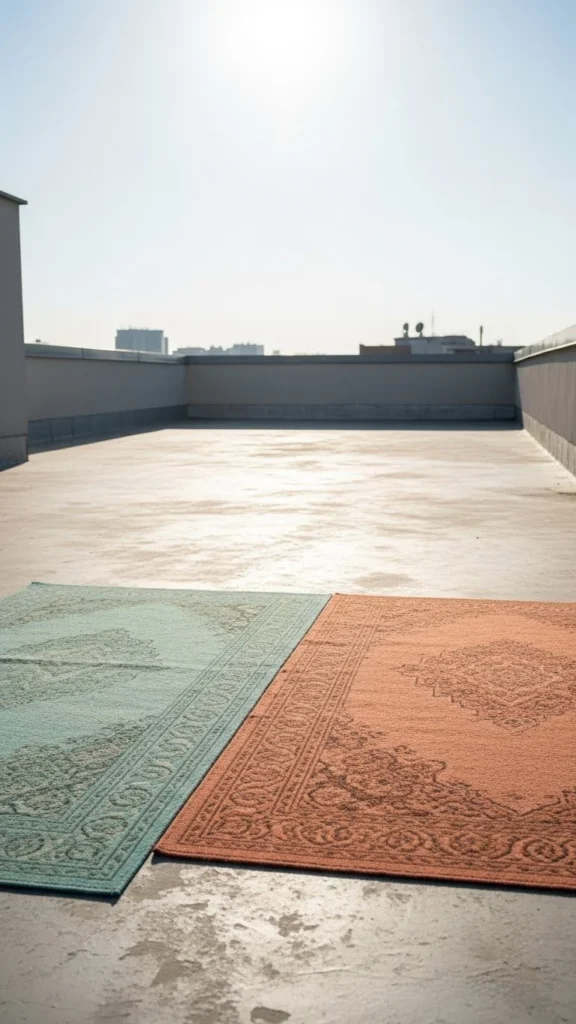
Now the fun begins.
Start with one or two outdoor-safe rugs — or layer older rugs creatively if you’re working with what you already have. Rugs establish the “seating zone,” define boundaries, and soften the concrete.
Then add cushions in multiple sizes:
- Large floor pillows
- Medium seat cushions
- Oversized backrest pillows
- A couple of throw blankets for cooler evenings
Mix fabrics, textures, and patterns that feel warm and inviting.

Step 3: Define Seating Zones & Layout — Cozy, Not Cluttered
With your textiles in place, begin shaping the seating areas.
A few ideas:
- Form a semicircle of cushions facing your favorite view.
- Create a “conversation pit” feel with pillows on three sides.
- Keep the center open so movement feels effortless.
- Use cushions near the walls or railings for natural backrests.
Add:
- Warm string lights draped gently along railings
- Battery-powered lanterns or LED candles
- A soft table lamp on a crate or stool
- Solar lights for eco-friendly ambience
Avoid harsh, bright floodlights — they disrupt the calm. Aim for glow, not glare.
Even a completely bare rooftop feels romantic under warm evening lights.
Step 5: Add Minimal Natural Touches — Plants, Planters, Soft Décor
Greenery creates an instant sense of grounding. A couple of well-placed potted plants — tall ones in corners, trailing ones near railings — soften the space and bring balance to all the textile layers.

The Dramatic “After”: What Changes — Emotion & Experience
Once cushions, rugs, lighting, and a few plants settle into place, the difference is astonishing. And it’s not just visual — it’s emotional.
People begin using the rooftop more.
They bring books, tea, headphones, or friends.
They sit barefoot, stretch out, unwind.
Suddenly, the rooftop becomes a lived-in part of the home rather than a forgotten overflow space.
The “after” isn’t just a design win — it’s a lifestyle shift. The rooftop becomes:
- A quiet nook for evening reflection
- A cozy social space
- A meditation or reading corner
- A simple escape from indoor routine
And the best part?
It takes minutes to set up — and barely anything to maintain.
Why Cushion-Based Makeovers Are Especially Smart for Rooftops & Rentals
Cost-Effective & Low-Investment — Big Impact for Little Expense
Cushion-based setups avoid the biggest costs in rooftop makeovers. No permanent furniture. No construction. No heavy hauling.
With a few inexpensive textiles, lights, and plants, you can create an atmosphere that feels thoughtful and intentional without draining your budget.
Flexible & Easy to Change — Ideal for Evolving Needs
Everything is movable. If you want to host more people, rearrange. If you want a quiet evening alone, shrink the layout. If the season changes, adjust accordingly.
This adaptability makes cushion-based designs incredibly renter-friendly and ideal for anyone who loves experimenting with their space.
Minimal Maintenance & Easy Cleanup — Rain, Dust & Wear-and-Tear Friendly
Soft furnishings can be rotated, washed, or taken inside during harsh weather. They don’t rust, warp, or require repainting.
On rooftops that face unpredictable dust or sunlight, this low-maintenance approach is a huge relief.
Common Mistakes & How to Avoid Them — From My 15+ Years of Rooftop Work
Mistake: Using Indoor Cushions / Rugs — Not Outdoor-Safe
Indoor fabrics fade quickly and absorb moisture — leading to mildew or mold.
Fix: Choose outdoor-friendly materials or commit to bringing everything inside when not in use.
Mistake: Overfilling — Too Many Cushions, Too Many Layers
More isn’t always cozier. Overcrowding can make the space look messy and hard to navigate.
Fix: Keep a balance — a rug, a handful of cushions, a simple table, and one or two décor elements.
Mistake: Ignoring Layout & Safety — Slips, Wind, Uneven Ground
Outdoor surfaces can be slippery or uneven. Wind may blow lighter items away.
Fix: Use non-slip pads under rugs, place heavier cushions along edges, and adjust layout based on wind exposure.
Mistake: Poor Lighting or No Shade — Limits Usability
Without shade, midday sitting becomes uncomfortable. Without lighting, evenings go unused.
Fix: Use portable shade (umbrellas, cloth sails) and soft evening lighting.
Sample “Before → After” Scenarios & Ideas
Scenario 1: Quiet Evening Lounge for One or Two
- One large rug
- Two comfortable floor cushions
- Small crate or stool as table
- A plant or two + warm string lights
- A soft throw
A peaceful nook for reading or sipping tea at sunset.
Scenario 2: Casual Hangout for Friends (3–5 People)
- Larger rug or layered rugs
- Six to eight cushions + poufs
- Small central table
- Lanterns and string lights
- A few plants for ambience
Perfect for late-night conversations or stargazing.
Scenario 3: Budget-Rental Friendly Rooftop Makeover
- Foldable rugs
- Portable cushions
- Battery-powered lanterns
- Potted plants
- Zero permanent fixtures
A fully flexible, renter-proof makeover.
FAQs — Common Questions About Cushion-Only Rooftop Makeovers
Q1: Can a cushion-only makeover really make a rooftop comfortable?
Yes — with rugs, pillows, and good lighting, the rooftop shifts from “raw concrete” to “inviting lounge” surprisingly fast.
Q2: What kind of cushions or rugs survive outdoor conditions?
Weather-resistant fabrics like canvas or synthetic blends. Otherwise, bring them inside when not in use.
Q3: Won’t floor seating feel uncomfortable?
Not with good layering. Floor cushions + back pillows against a wall or railing can be incredibly cozy.
Q4: How do I handle dust, wind, or rain?
Use non-slip pads, store soft items indoors overnight, and choose plants with good drainage.
Q5: Will this work on small rooftops or balconies?
Absolutely. Cushion-based layouts shine in small spaces because they’re flexible and visually light.
Conclusion — A Simple Change, A Big Feel
That once-bare rooftop — the grey slab you overlooked daily — can become one of the most comforting corners of your home with nothing more than rugs, cushions, a bit of greenery, and warm light.
No construction. No heavy lifting. No big budget.
Just softness, intention, and the willingness to create a space that invites you in.
If your rooftop feels forgotten or underused, start small: spread a rug, place a few cushions, add a string of lights. Sit with a cup of tea. Feel the shift.
Because sometimes the most meaningful makeover isn’t about adding more — it’s about adding comfort.
And comfort, especially outdoors, can transform the way you live.