This guide gathers practical, forward-looking, and budget-aware ways to refresh your main living room space for comfort, style, and long-term resale value.
After more than 15 years designing interiors and writing about real homes (not just picture-perfect ones), I’ve noticed a familiar rhythm: every year brings trends, but only a handful truly earn their place in everyday life. Designers test them. Homeowners adapt them. And the best ideas quietly become staples.
2026 feels different.
It’s less about chasing the next “look” and more about how a room feels to live in. Warmth is back. Craft matters. Spaces are designed with intention — not just for photos, but for actual evenings on the sofa, conversations, work-from-home days, and moments of pause.
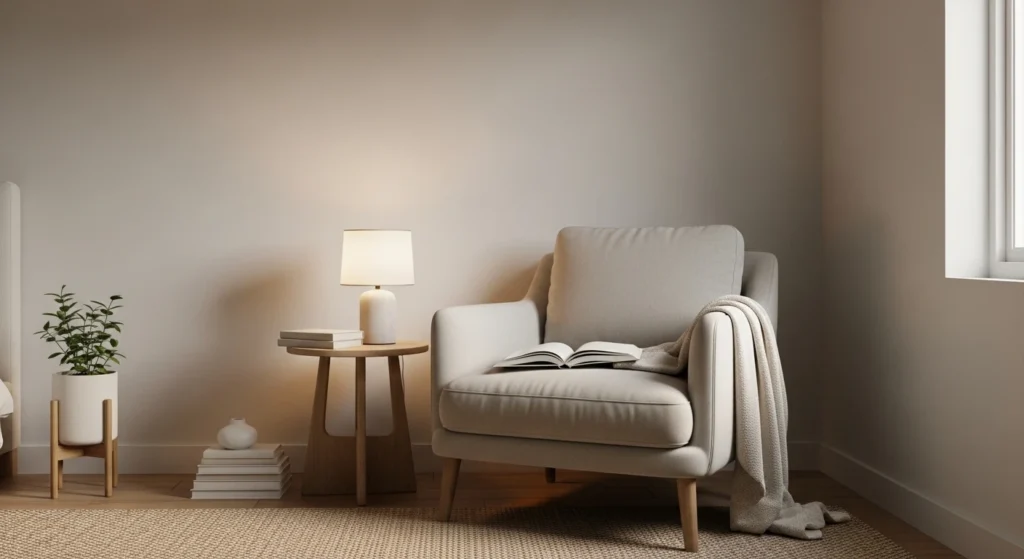
Palette & Paint (Ideas 1–5)
1. Switch to Rich, Warm Neutrals
Move past flat greige. 2026 leans into mocha, warm taupe, soft terracotta, and muted burgundy accents — tones that feel grounded rather than dramatic. These shades instantly warm a modern living room without overwhelming it.
Cost / time: paint + one day; mid-range budget.
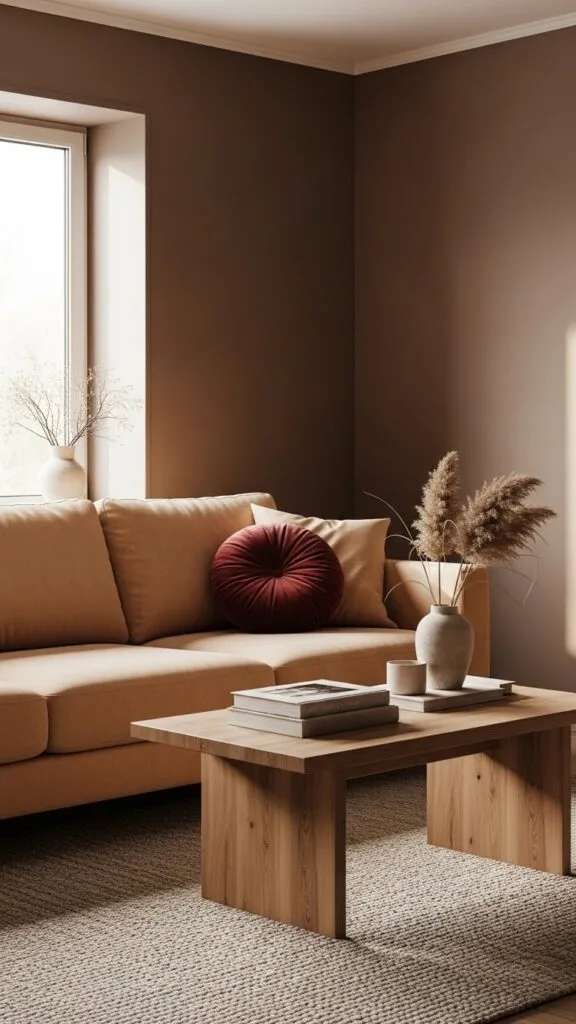
2. Accent Walls with Mood Washes
Instead of committing to a full room color, try a moody wash — olive, clay, or softened charcoal — on one long wall. It creates a cinematic backdrop for art and seating.
Tip: Always test at different times of day. Light changes everything.
3. Two-Tone Walls: Cap & Base
Paint the lower third of the wall a shade deeper than the top. This subtle shift adds architectural interest without adding trim or molding — a quiet, modern trick that feels intentional.
4. Large-Scale Color-Block Art
If you want impact without repainting, go big with art. One oversized piece in two or three harmonious tones can anchor the room. Echo those colors in cushions or ceramics to tie it together.
5. Textured Paints & Freehand Details
Hand-applied washes, limewash finishes, or subtle freehand plaster details are gaining ground in 2026. They add a human, imperfect edge — the kind that feels crafted rather than manufactured.
Layout & Furniture (Ideas 6–10)
6. Float the Seating
If space allows, pull the sofa away from the wall. Floating furniture creates conversation zones and improves circulation.
Cost / time: free; 30 minutes of rearranging.
7. Modular Seating for Flexibility
Modular sectionals or low modular benches adapt as life changes — guests, kids, workdays, movie nights. Flexibility equals longevity.
8. Curved Sofas & Rounded Edges
Curves continue to soften modern interiors. A curved sofa, rounded coffee table, or arched chair breaks up rigid lines and instantly makes a room feel more welcoming.
9. Dual-Function Pieces
Think ottomans with storage, benches that open, or side tables with shelves. These pieces keep surfaces clean and work especially well in smaller homes.
10. Artful Media Solutions
Swap bulky TV cabinets for floating consoles or built-in niches. Conceal cables, mount screens at seated eye level, or use frame-style TVs that disappear into art.
Materials & Textures (Ideas 11–16)
11. Layer Natural Textures
Wood, rattan, stone, linen, wool — texture does the heavy lifting when your palette is neutral.
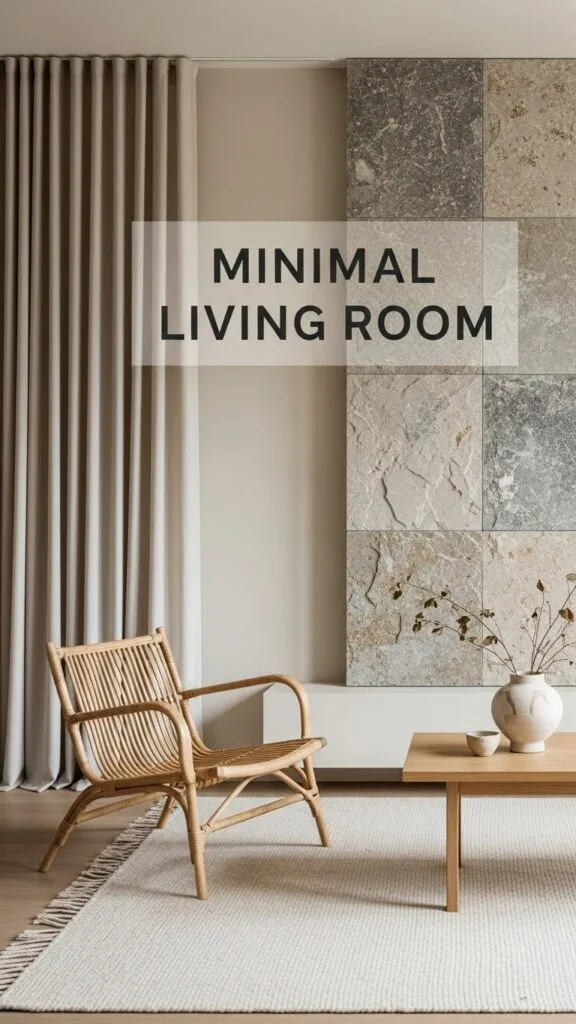
12. Large-Format Tiles or Stone Slabs as Fireplace Backdrops
Fewer seams mean a cleaner, more bespoke look — even in modest rooms.
13. Tactile Upholstery
Mohair, velvet, bouclé — use them on one chair or a few cushions. These fabrics add richness without overpowering the room.
14. Mix Metals, Purposefully
Brass handles with matte black legs, or brushed nickel paired with bronze. Stick to two finishes to keep it cohesive.
15. Sustainable, Patina-Ready Finishes
Reclaimed wood, waxed finishes, and low-VOC stains age beautifully. The goal isn’t perfection — it’s character.
16. Artisanal Accents
Woven panels, handmade ceramics, imperfect textures. Craft adds soul to modern spaces and prevents them from feeling sterile.
Lighting & Ambience (Ideas 17–21)
17. Layered Lighting Plans
Design with three layers: ambient, task, and accent. This gives you control over mood, time of day, and function.
18. Modular & Hybrid Lighting
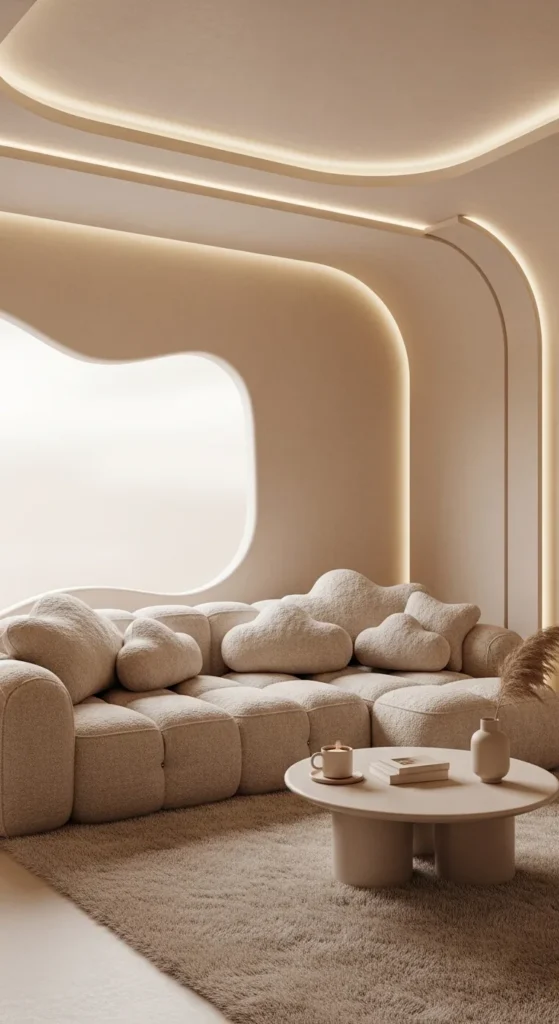
Track lighting paired with pendants or adjustable fixtures allows lighting to evolve as furniture moves.
19. Warm LEDs & Dimmable Scenes
Replace cool bulbs with warm, tunable LEDs. Dimmers let one room feel completely different at noon versus midnight.
20. Statement Pendants
One sculptural pendant — or a cluster of smaller ones — adds vertical drama without clutter.
21. Integrated Cove & Backlighting
Hidden lighting behind shelves or media units adds calm, expensive-looking depth.
Soft Furnishings & Styling (Ideas 22–26)
22. Rug Zoning
Large rugs anchor furniture and reduce echo, especially in open-plan spaces.
23. Scale Up Cushions
Larger cushions and layered throws read richer and cozier. Choose two or three textures and repeat them around the room.
24. Declared Minimal Accessories
One sculptural bowl or art book beats five small objects competing for attention.
25. Textile Installations
Fabric panels or draped textiles on walls add softness and drama without permanent commitment.
26. Seasonal Swap System
Rotate cushions and throws seasonally. It’s cheaper — and easier — than repainting.
Walls, Art & Display (Ideas 27–30)
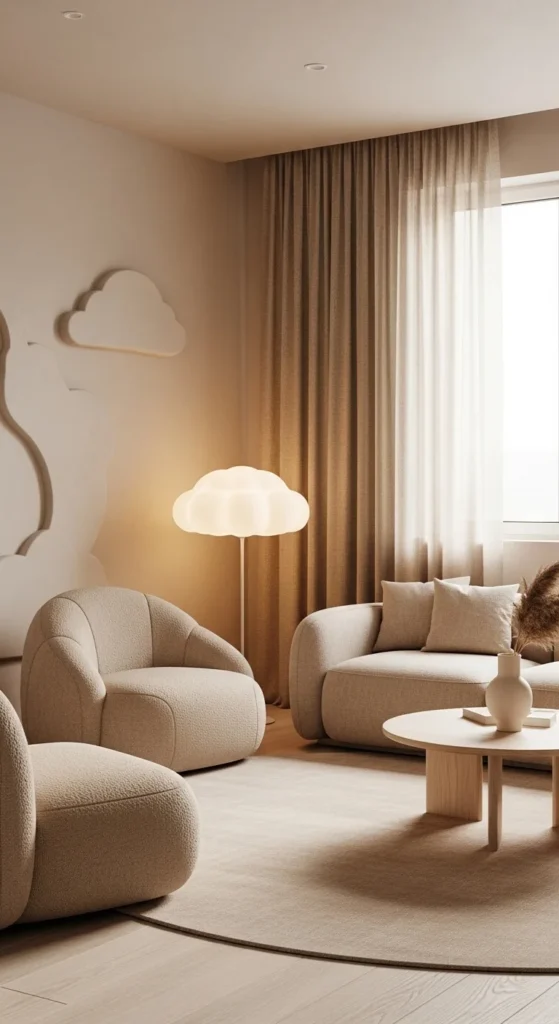
27. Go Big with Art
One large artwork often feels calmer and more editorial than many small frames.
28. Statement Trim & Molding
Simple trims painted the same color as the wall add subtle relief without feeling traditional.
29. Textured Wallcoverings
Grasscloth or soft plaster finishes add dimension without busy patterns.
30. Shelving as a Stage
Curate shelves with intention. Negative space is part of the design.
Greenery, Biophilia & Well-Being (Idea 31)
31. Large, Sculptural Plants
One tall plant — fig, palm, bird-of-paradise — makes more impact than many small ones and supports well-being.
Tech, Sound & Modern Conveniences (Idea 32)
32. Audio That Blends
Use built-in or paintable speakers and hide interfaces. Technology should disappear into the room, not dominate it.
Budget & Quick Wins (Ideas 33–35)
33. Swap Soft Furnishings First
Cushions, rugs, and bulbs offer the fastest mood upgrade.
Budget: roughly $200–$800 for noticeable change.
34. Paint Trim Instead of the Whole Room
A darker trim or color cap can redefine architecture at a fraction of the cost.
35. Declutter Day + Styling Hour
Give yourself a single focused day. Clear, edit, style. Momentum beats perfection every time.
Real-World Examples & Where to Spend vs. Save
Spend on: lighting, a quality sofa, durable rugs.
Save on: small décor, trend-driven accents, easily replaceable accessories.
High-impact mid-budget moves include a sculptural pendant, large-format fireplace tile, or custom paint wash — upgrades that read expensive without full renovation.
FAQs
Q1 — Fastest way to modernize a living room for 2026?
Swap lighting and add a large rug. They instantly change scale and mood.
Q2 — Which colors will date fastest?
Ultra-cold greys with glossy finishes. Warmth and texture are replacing them.
Q3 — How to make a small living room feel bigger?
Light warm paint, low-profile furniture, clear sightlines, and one large mirror or artwork.
Q4 — Are bold patterns back?
Yes — but used as statements, not everywhere.
Q5 — How to balance sustainability and modern style?
Buy fewer, better pieces. Choose materials that last and age gracefully.
Quick Styling Checklist (Printable)
- Choose base palette
- Measure room and sketch layout
- Replace bulbs with warm LEDs + dimmers
- Add one large rug and one statement art piece
- Introduce 1–2 textural elements
- Add one large plant
- Schedule declutter + styling session
Make 2026 Your Best Living Room Year
The modern living room of 2026 doesn’t feel staged — it feels lived in. Warmer neutrals, tactile layers, thoughtful lighting, and flexible furniture create spaces that work for real life, not just trends.