Small Living Rooms Aren’t a Problem, They’re a Design Test
After working with hundreds of apartments, studio flats, and compact family homes over the last 15+ years, I’ve learned one clear truth: small living rooms don’t struggle because of their size — they struggle because of the choices made inside them.
Most people panic and overfill small rooms in the name of “comfort.” Others do the opposite, stripping them back so far the space feels temporary or unfinished. Neither approach works for long.
The real magic sits in the middle — understanding proportion, light, movement, and visual flow. When those elements are respected, even the smallest living room can feel calm, welcoming, and intentional.
The 15 ideas below aren’t fluff. They’re strategies I’ve used again and again to help tight living rooms feel open, warm, and genuinely livable.
15 Expert-Approved Small Living Room Decor Ideas
1. Choose a Light, Neutral Color Palette
Light colors reflect light — and light creates space. Soft whites, warm beiges, pale greys, and muted pastels give a small living room breathing room.
That said, stark white can feel cold if your room lacks sunlight. In those cases, warmer whites or gentle neutrals work far better.
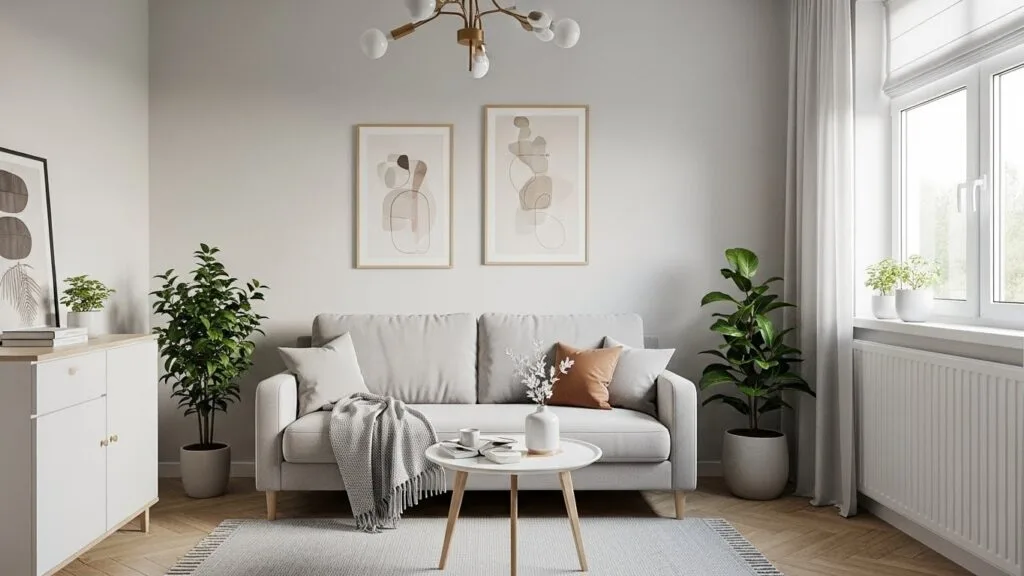
2. Use One Sofa, Not Multiple Seating Pieces
In small rooms, restraint is comfort.
One well-scaled sofa almost always works better than a mix of chairs and stools. Extra seating fragments the room and interrupts flow.
Pro tip: choose a sofa with exposed legs. When you can see the floor beneath furniture, the room instantly feels lighter and larger.
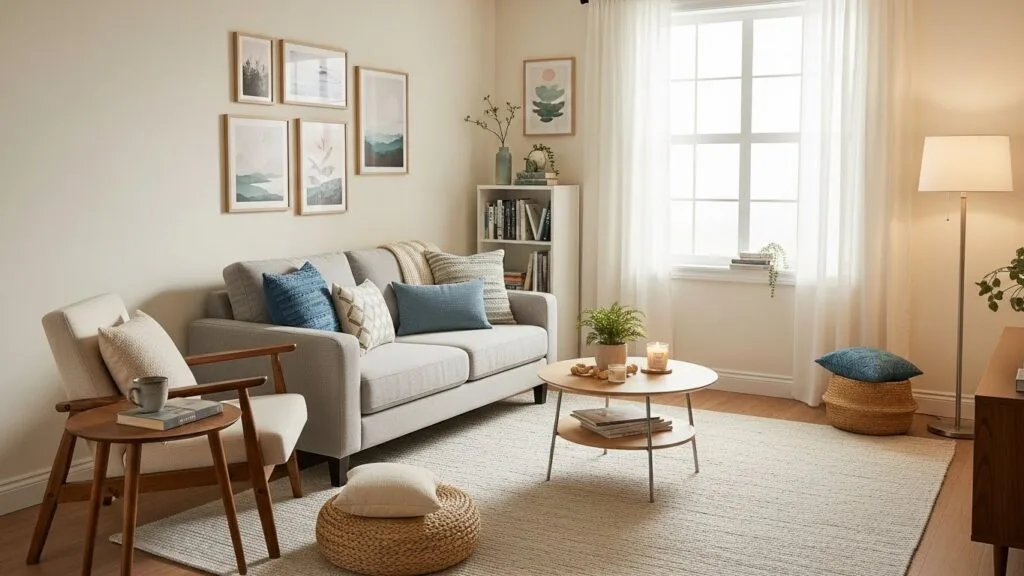
3. Keep Furniture Low-Profile
Low furniture makes ceilings feel higher — and that vertical illusion matters in compact spaces.
Look for:
- Low-back sofas
- Slim coffee tables
- Compact TV units
Avoid bulky armrests and oversized backs. They eat space visually, even when the measurements technically fit.
4. Float Furniture Away From the Walls (Yes, Really)
This surprises almost everyone.
Pushing everything tight against the wall often flattens a room. Even pulling the sofa 2–4 inches forward creates depth and improves circulation.
Small shifts make a big difference.
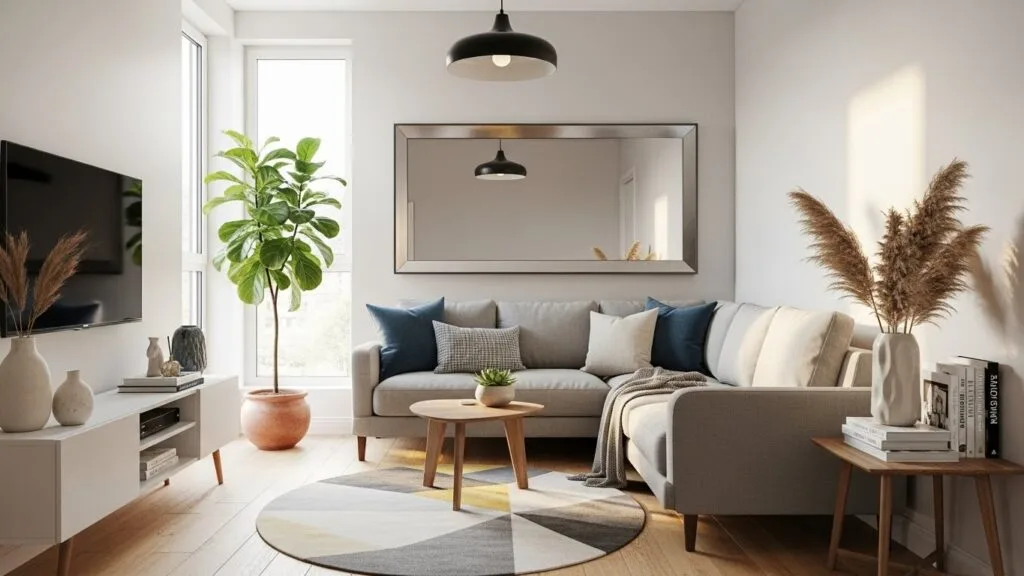
5. Use Mirrors Strategically
Mirrors are one of the most reliable small-space tools — when used thoughtfully.
Best placements:
- Opposite a window
- Behind the sofa
- On narrow or awkward walls
The goal isn’t decoration — it’s light and expansion.
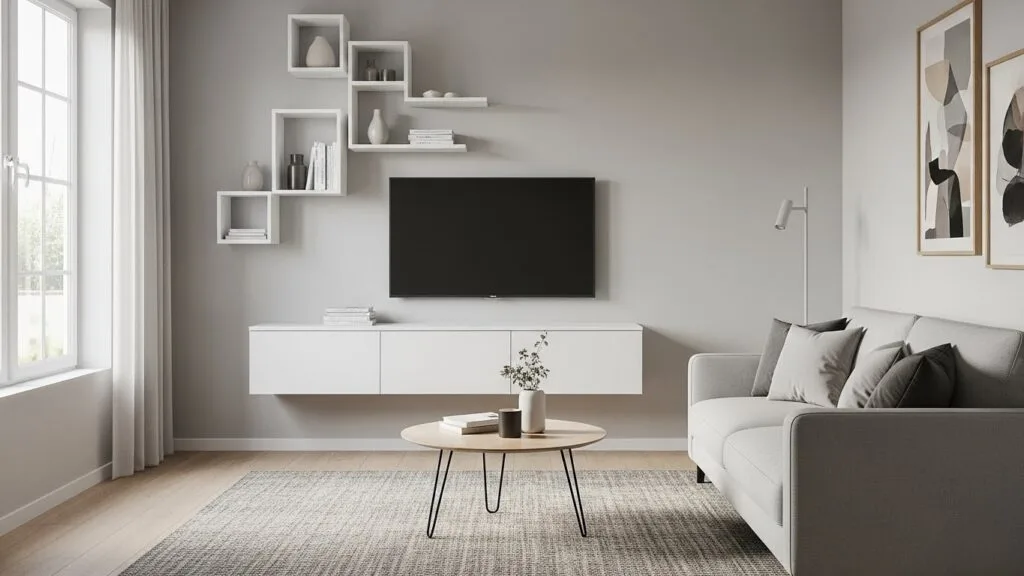
6. Opt for Multi-Functional Furniture
In a small living room, every piece should earn its place.
Smart options include:
- Storage ottomans
- Nesting tables
- Benches with hidden storage
These pieces reduce clutter without sacrificing comfort.
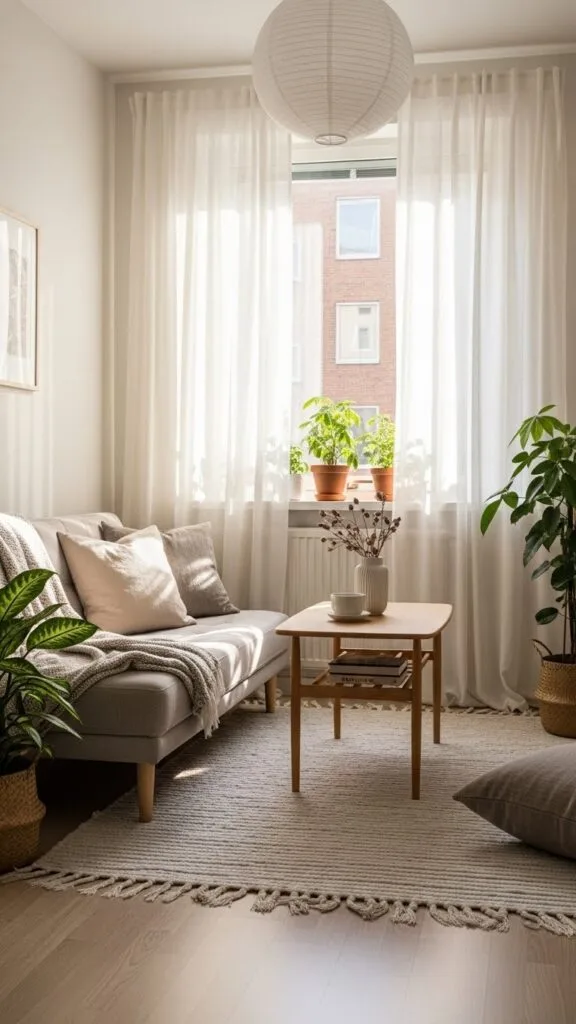
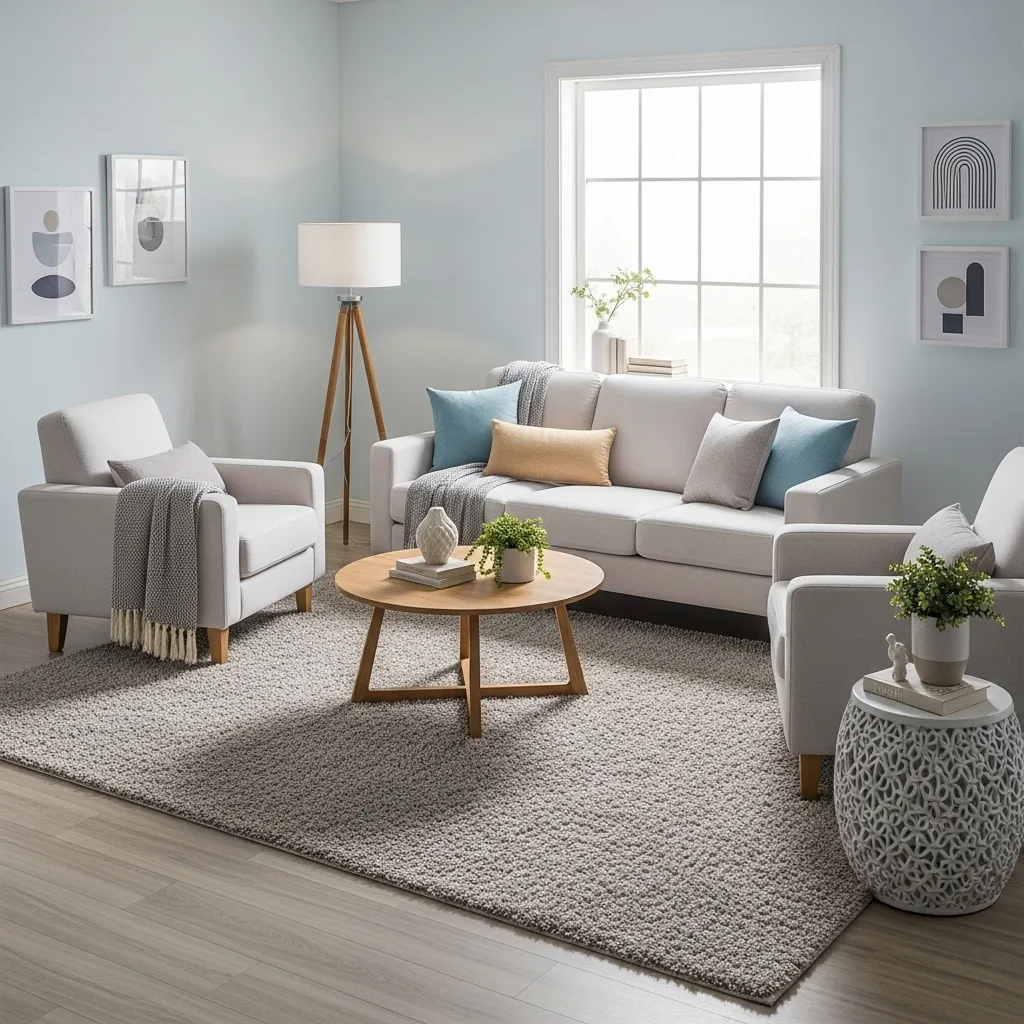
7. Choose the Right Rug Size (Bigger Is Better)
A rug that’s too small chops the room into pieces.
Rule of thumb: the front legs of the sofa should sit on the rug. Larger rugs visually unify the space — and make it feel bigger, not smaller.
8. Use Vertical Space for Storage & Decor
When floor space is limited, look up.
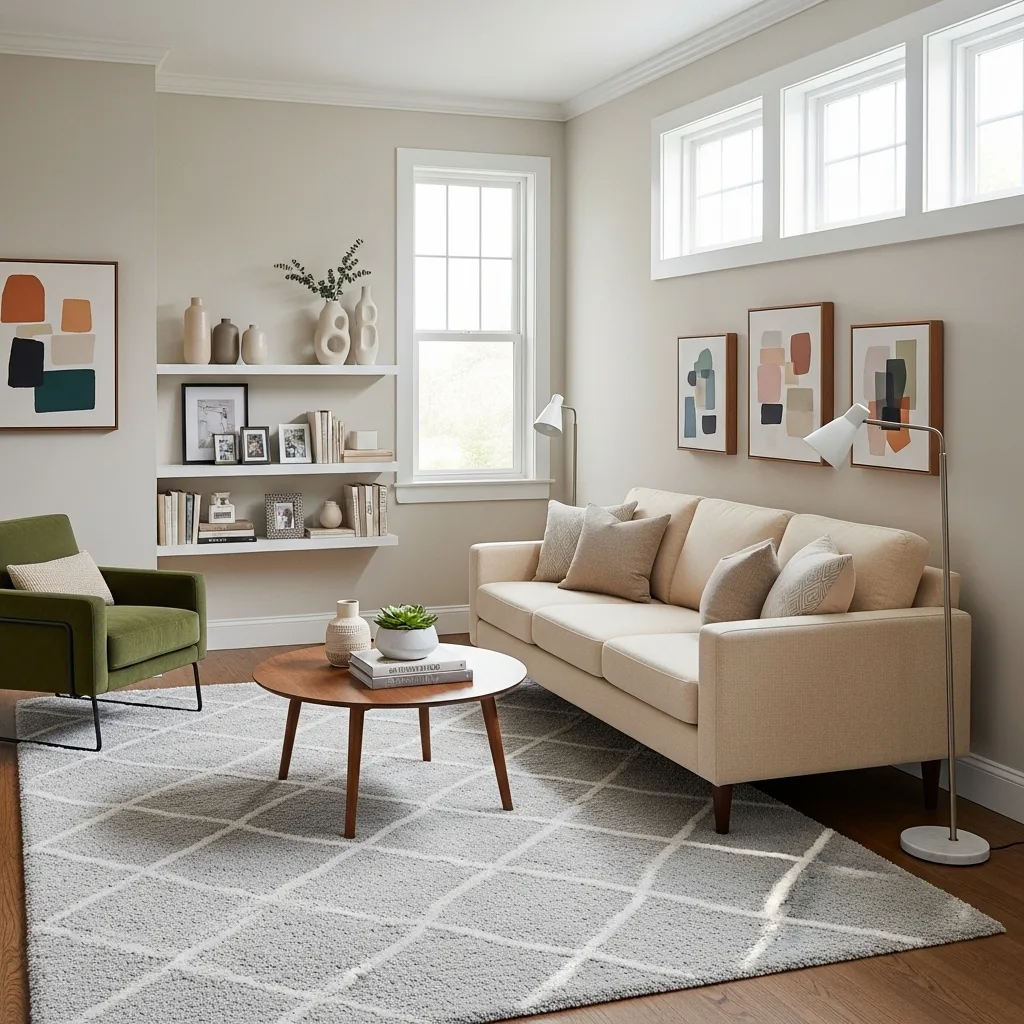
Floating shelves, tall bookcases, and wall-mounted lighting free up valuable real estate below. Just keep shelves curated — clutter at eye level shrinks a room fast.
9. Limit Decor to a Few Statement Pieces
Too many accessories make a small room feel busy and boxed in.
Instead, choose:
- One large artwork
- One plant
- One sculptural lamp
Negative space isn’t emptiness — it’s breathing room.
10. Embrace Sheer Curtains or Go Curtain-Free
Heavy curtains steal both light and space.
Better options:
- Sheer white curtains
- Roller blinds
- Roman shades
Hang curtains high and wide — this makes windows (and walls) feel larger.
11. Keep a Consistent Color Scheme
Too many colors visually fragment a small room.
Stick to:
- 2–3 main colors
- Texture variation instead of color overload
Consistency creates calm — and calm makes rooms feel bigger.
12. Add One Large Plant Instead of Many Small Ones
One tall plant in a corner adds life and softness without clutter.
Scattered small plants break visual flow and make a room feel fussy. Bigger, fewer elements always win in tight spaces. Watch LUXURY Mansion Tour
13. Use Wall-Mounted or Floating Furniture
Floating furniture lets the floor breathe.
Great choices include:
- Floating TV units
- Wall-mounted shelves
- Wall lamps instead of floor lamps
More visible floor = more visual space.
14. Keep Pathways Clear
A small living room should never feel like an obstacle course.
Design for:
- Clear walkways
- Smooth circulation
- No sharp corners blocking movement
Flow matters more than filling space.
15. Edit Regularly — Small Rooms Show Clutter Fast
What disappears in a large home shouts in a small one.
Every 3–4 months:
- Remove unused décor
- Re-evaluate furniture
- Clear surfaces
Small rooms demand discipline — but they reward you with clarity and calm.
Common Small Living Room Mistakes I See All the Time
❌ Oversized furniture
❌ Too many accent colors
❌ Rugs that are too small
❌ Heavy curtains
❌ Overdecorated shelves
Each one instantly makes a space feel tighter than it needs to be.
FAQs — Small Living Room Decor
Q1: Can a small living room still look stylish?
Absolutely. Small spaces often look more intentional when designed thoughtfully.
Q2: What sofa size works best for small rooms?
A compact 2- or 2.5-seater with slim arms and visible legs.
Q3: Should I use dark colors in small living rooms?
Only as accents. Let light walls dominate.
Q4: Are sectionals bad for small spaces?
Only oversized ones. Compact L-shaped sofas can work beautifully when scaled correctly.
Q5: How do I make my small living room cozy without clutter?
Use texture — rugs, cushions, throws — instead of adding more furniture.
Conclusion — Small Spaces Reward Smart Choices
A small living room doesn’t need more furniture, more décor, or more color.
It needs clarity, intention, and restraint.