Small Living Rooms Need Smarter Decor in 2026
After more than 15 years of working with compact apartments, city homes, and studio spaces, one truth comes up again and again: small living rooms don’t fail because they’re small, they fail because they’re designed with outdated logic.
In 2026, small living room decor is no longer about squeezing in more furniture or copying oversized showroom layouts. It’s about visual breathing room, emotional comfort, and flexible function. Every piece has a purpose. Every placement matters.
The 14 small living room decor ideas below aren’t theory fantasy. They’re practical, trend-aware strategies that hold up in real homes, day after day.
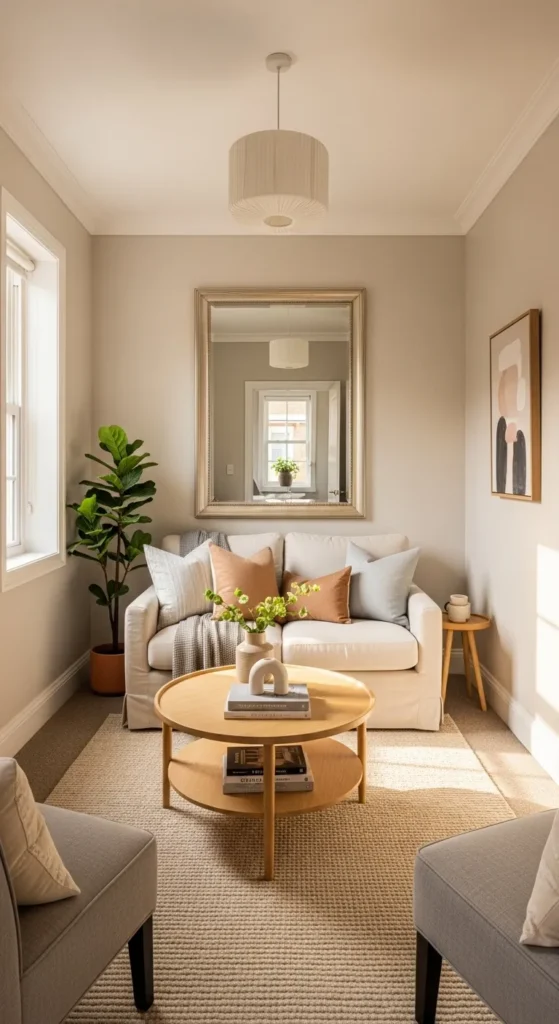
1. Use Warm Light Neutrals Instead of Stark White
Why Warm Neutrals Feel Bigger Than White
Pure white often looks crisp in photos, but in small living rooms it can feel cold, flat, and unforgiving. Warm neutrals reflect light more gently, creating depth instead of glare.
Best wall tones for 2026 include:
- Warm white
- Soft beige
- Light greige
- Pale taupe
These shades subtly recede, making walls feel farther away and the room more relaxed.
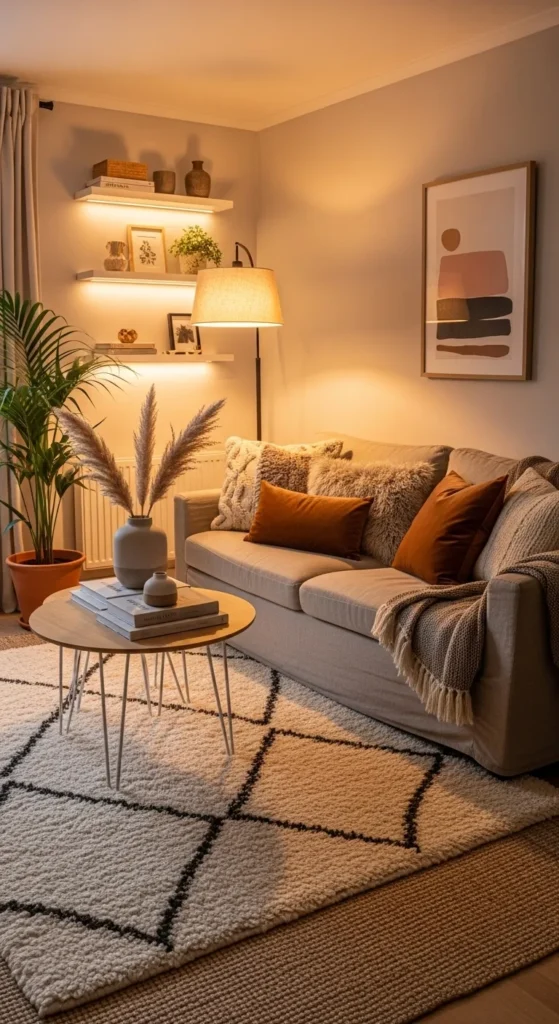
2. Choose Low-Profile Furniture to Increase Visual Height
Furniture Height Affects Space Perception
Furniture that sits low to the ground exposes more wall and window area, which instantly makes ceilings feel higher.
Look for:
- Low backs
- Slim arms
- Exposed legs
Avoid bulky, overstuffed designs — they visually compress the room and block sightlines.
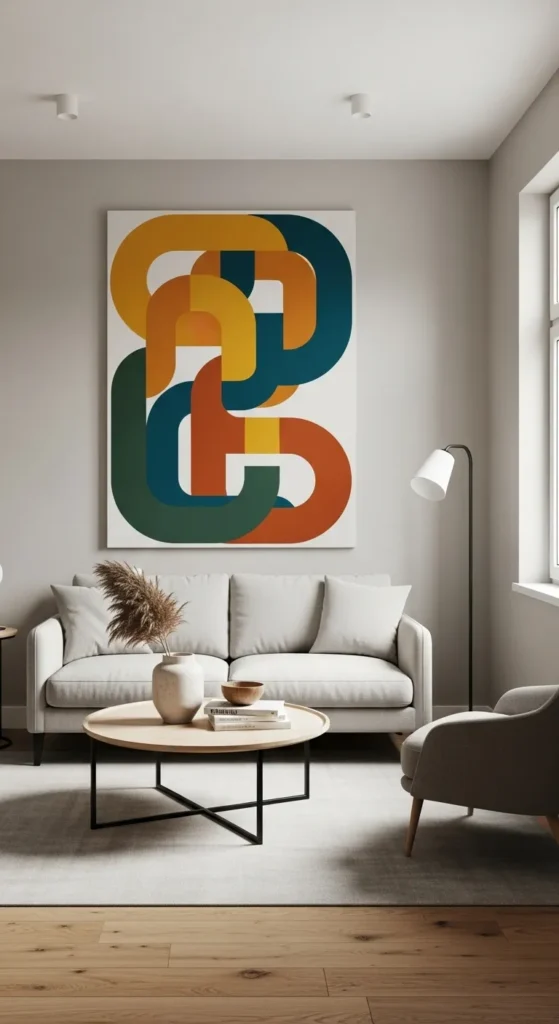
3. Stick to One Sofa, Not Multiple Seating Pieces
Fewer Pieces = Better Flow
Small living rooms quickly feel crowded when seating is broken into too many pieces.
A better approach:
- One well-scaled sofa
- Add poufs or ottomans only if needed
This keeps movement fluid and the layout visually calm.
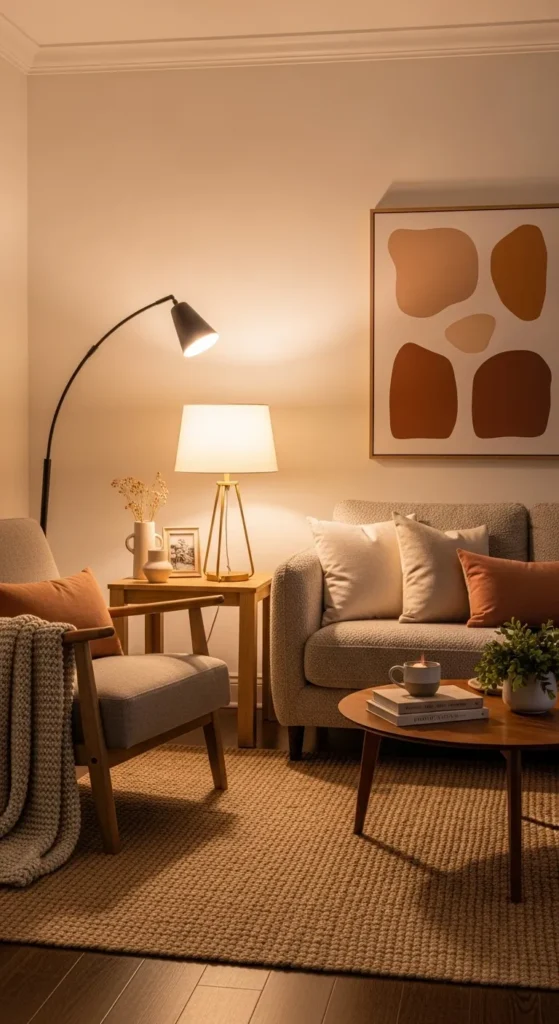
4. Float Furniture Slightly Away From Walls
A Counter-Intuitive Space Trick
It feels logical to push everything against the wall, but that often makes a room feel tighter.
Leaving just 2–4 inches behind the sofa creates depth, improves circulation, and makes the room feel more intentional.
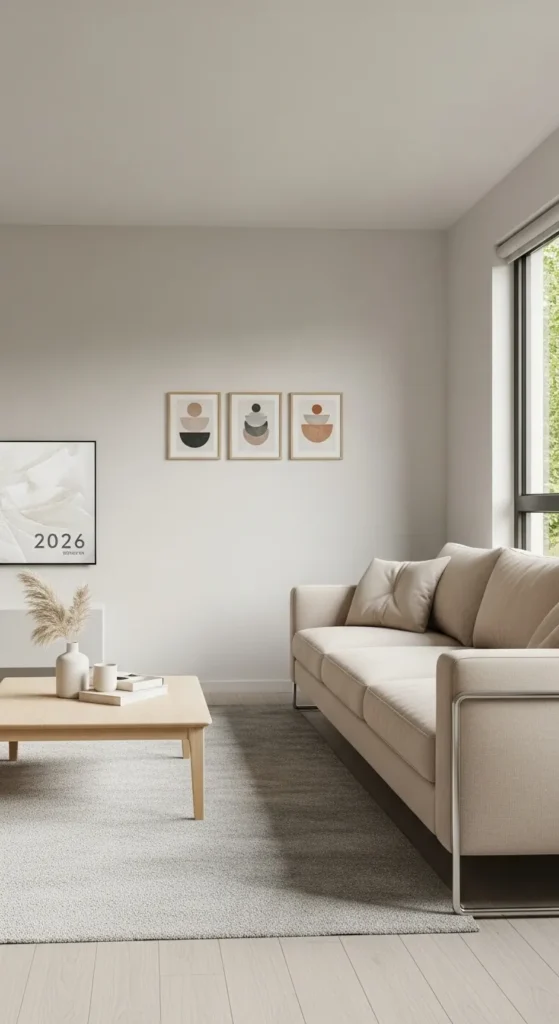
5. Oversized Rugs That Unify the Room
Rug Scale Is More Important Than Pattern
A rug that’s too small visually chops the room into pieces.
The correct rule:
- Front legs of the sofa should sit on the rug
- The rug should extend beyond the furniture edges
This creates one cohesive visual zone instead of many fragments.
6. Use Vertical Storage Instead of Floor Storage
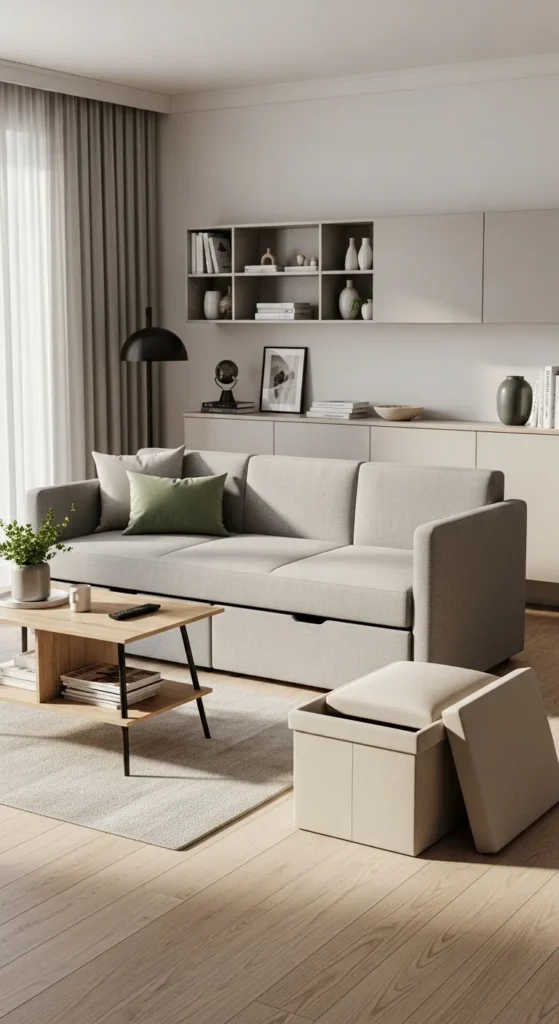
Go Up, Not Out
Floor clutter shrinks small rooms instantly. Vertical storage keeps the footprint light and open.
Best options:
- Floating shelves
- Tall bookcases
- Wall-mounted TV units
Keep styling minimal, visual weight matters just as much as physical space.
7. Mirrors to Multiply Light and Depth
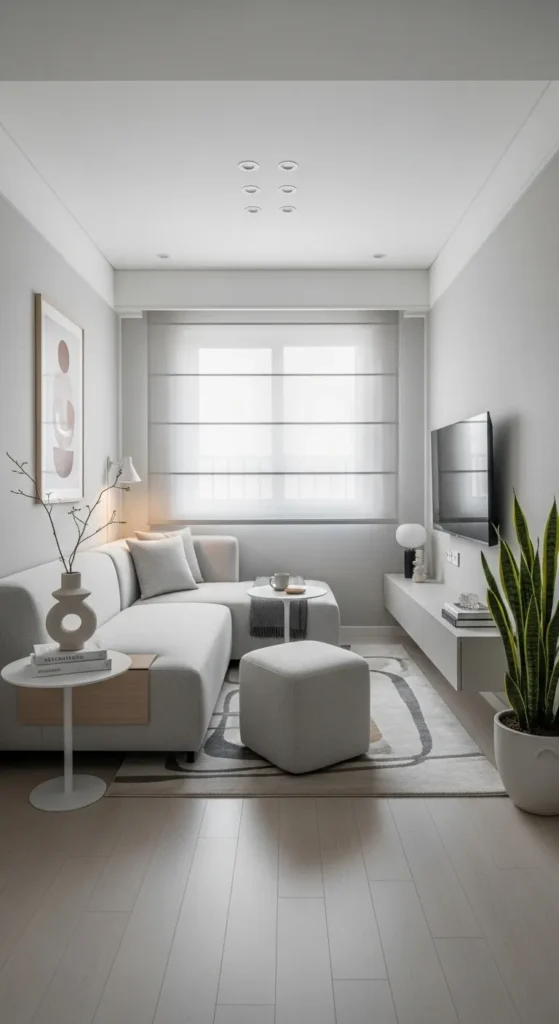
Strategic Placement Matters
Mirrors work best when they reflect light or openness, not clutter.
Ideal placements:
- Opposite windows
- Above low consoles
- On narrow walls
Done right, a mirror can feel like an extra window.
8. Keep a Consistent Color Palette
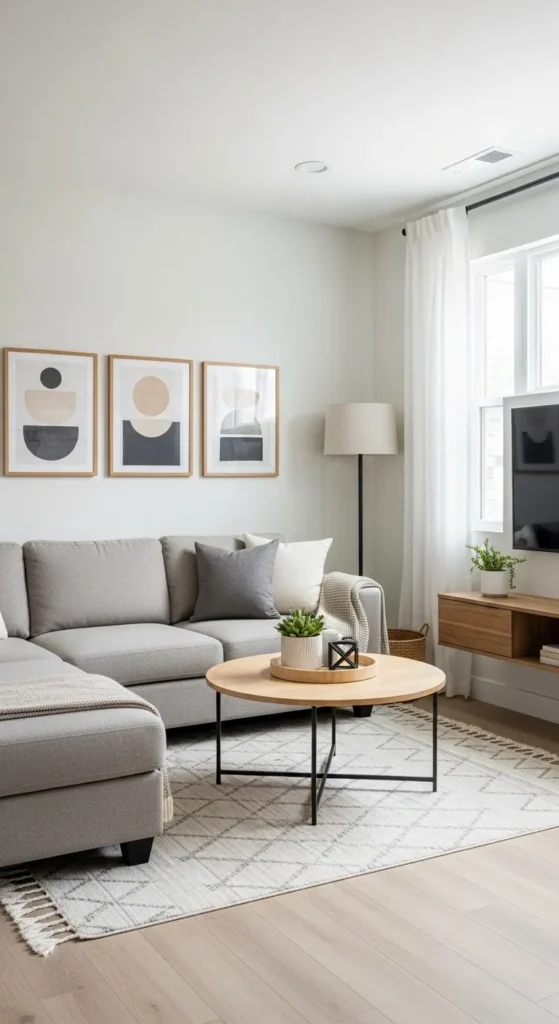
Visual Calm Makes Rooms Feel Larger
Too many colors interrupt the eye and shrink the space.
The 2026 color formula:
- 1 base color
- 1 accent tone
- 1 neutral material (wood, black, stone)
Consistency creates openness and makes the room feel composed.
9. Layer Lighting Instead of Relying on One Fixture
Lighting Adds Depth to Small Rooms
Single overhead lights flatten a room and exaggerate its size limits.
Layer lighting with:
- A ceiling light
- A floor or table lamp
- Soft accent lighting
Warm light adds depth, softness, and emotional comfort.
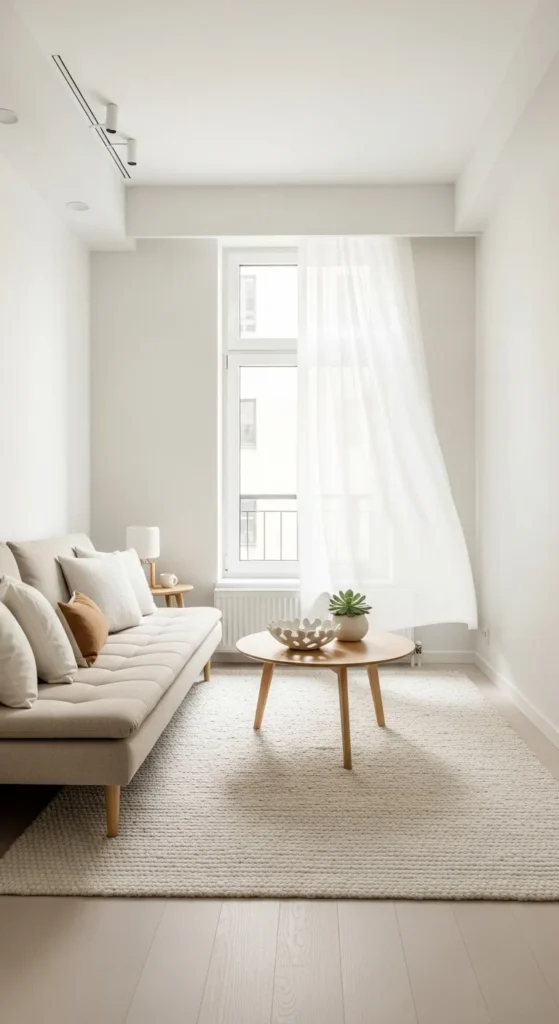
10. Use One Strong Focal Point
Less Decor, More Impact
Instead of many small accessories competing for attention, anchor the room with one statement.
Good options:
- One large artwork
- One statement lamp
- One sculptural coffee table
A clear focal point gives the room structure.
11. Opt for Visually Light Furniture
Reduce Visual Weight
Furniture that looks lighter helps rooms feel more open, even if it serves the same function.
Examples:
- Glass or slim coffee tables
- Open-leg chairs
- Thin metal frames
These designs don’t block sight-lines or visual flow.
12. Add Texture Without Adding Bulk
Texture Replaces Extra Furniture
You don’t need more furniture to add warmth.
Use:
- Cushions
- Throws
- Rugs
Texture creates comfort and depth without crowding the space.
13. Keep Walkways Clear
Flow Is Essential in Small Rooms
A room that’s easy to move through always feels larger.
Avoid blocking:
- Entry paths
- Window access
- Door swings
Flow matters more than filling every corner.
14. Edit Regularly to Maintain Spaciousness
Maintenance Is Part of Decor
Small rooms show clutter faster than large ones.
Every few months:
- Remove unused items
- Clear surfaces
- Reassess furniture placement
Design is an ongoing practice, not a one-time task.
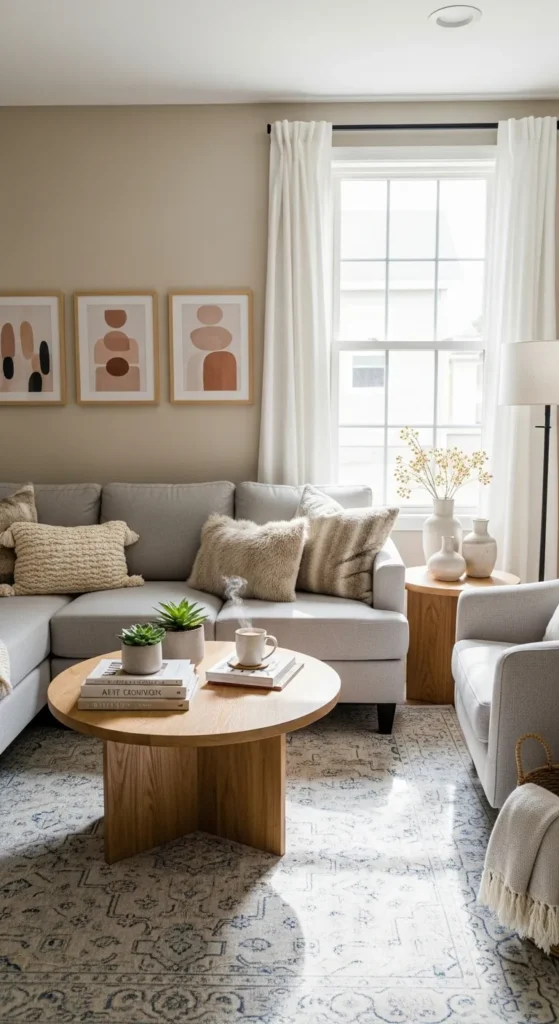
Common Small Living Room Decor Mistakes in 2026
❌ Oversized furniture
❌ Small rugs
❌ Cool, harsh lighting
❌ Too many decor pieces
❌ Inconsistent color schemes
Avoiding these mistakes is half the solution.
FAQs : Small Living Room Decor Ideas 2026
Q1: Can small living rooms really feel spacious?
Yes — layout, light, scale, and simplicity dramatically change perception.
Q2: What’s the biggest small living room trend in 2026?
Warm minimalism paired with comfort-focused furniture and layered lighting.
Q3: Should I avoid dark colors completely?
No — use them sparingly as accents, not dominant surfaces.
Q4: Are sectionals good for small living rooms?
Compact, well-scaled sectionals can work beautifully.
Q5: What’s the fastest decor upgrade for small spaces?
Lighting and rug size offer immediate improvement.
Conclusion : Small Spaces Thrive on Smart Choices
The 14 small living room decor ideas that work in 2026 prove one thing:
Spaciousness is a design decision, not a square-footage issue.
When light, layout, scale, and restraint work together, even the smallest living room can feel calm, modern, and welcoming.
Start with one change this week.
Small improvements compound beautifully.