Gray bedrooms aren’t just trending—they’re revolutionizing how we think about bedroom design, creating spaces that feel both sophisticated and sanctuary-like, proving that neutral doesn’t mean boring when you master the art of layering textures, playing with undertones, and balancing light and shadow.
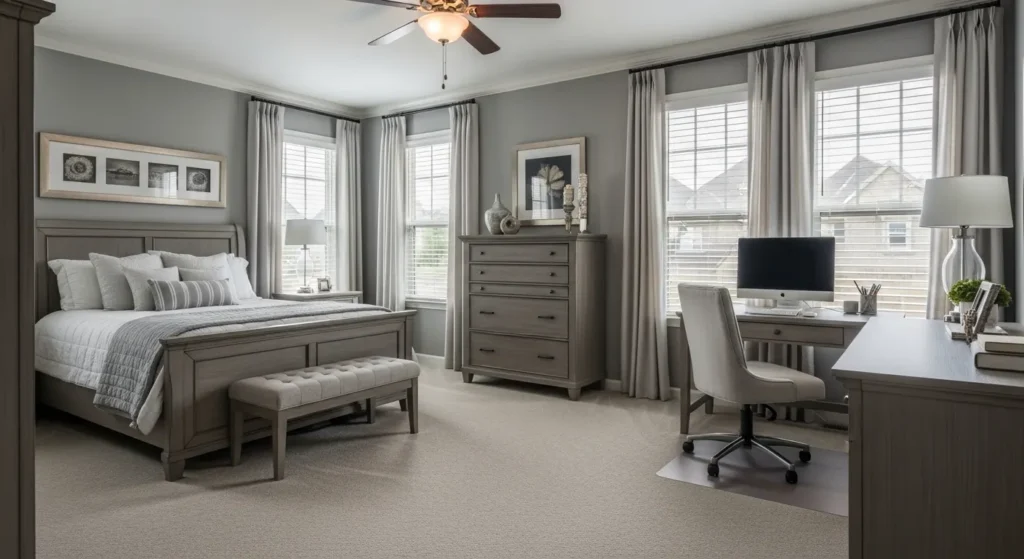
The Timeless Appeal of Gray Bedrooms in Modern Design
Gray has emerged as the ultimate bedroom color choice for 2026, and interior designers worldwide are embracing its versatility. Unlike stark white or bold colors that can feel overwhelming in intimate spaces, gray offers the perfect balance of tranquility and sophistication.
This neutral powerhouse works seamlessly across design styles, from minimalist Scandinavian to industrial loft aesthetics. Gray bedrooms create a calming backdrop that promotes better sleep while maintaining visual interest through texture and tone variations.
The psychology behind gray in bedrooms is fascinating. Studies show that soft gray tones reduce cortisol levels and promote relaxation, making them ideal for spaces dedicated to rest and rejuvenation. Professional designers consistently choose gray because it photographs beautifully, adapts to changing light throughout the day, and provides a timeless foundation that won’t look dated in five years.
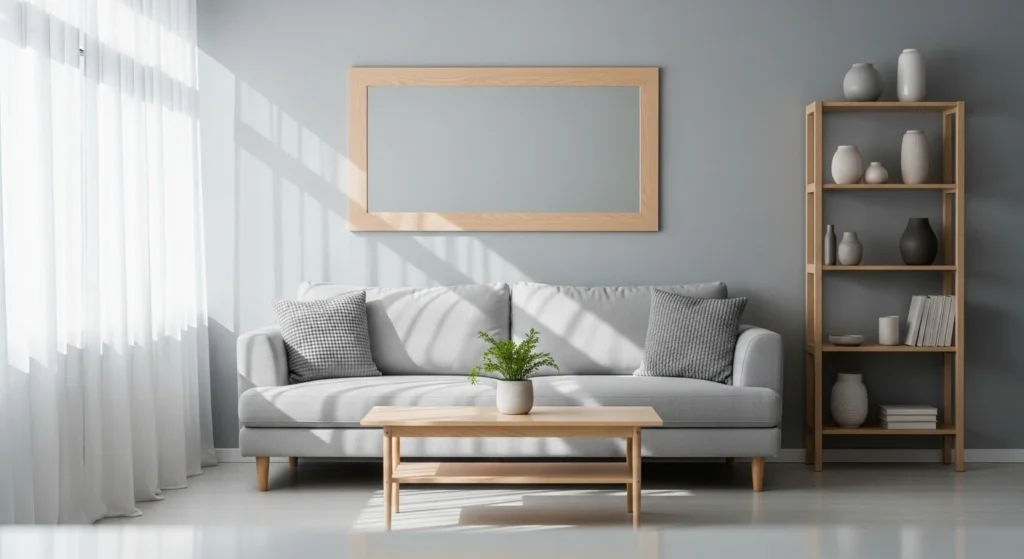
Essential Color Palettes That Make Gray Bedrooms Shine
Warm Gray vs. Cool Gray: Choosing Your Foundation
Understanding undertones transforms your entire bedroom design approach. Warm grays contain subtle hints of beige, taupe, or cream, creating cozy, inviting atmospheres perfect for north-facing rooms that receive limited natural light. Popular warm gray paint colors include Benjamin Moore’s “Classic Gray” (OC-23) and Sherwin Williams’ “Agreeable Gray” (SW 7029).
Cool grays feature blue, green, or purple undertones, delivering crisp, contemporary feels ideal for south-facing bedrooms with abundant sunlight. Top cool gray choices include Farrow & Ball’s “Pavilion Gray” and Benjamin Moore’s “Stonington Gray” (HC-170).
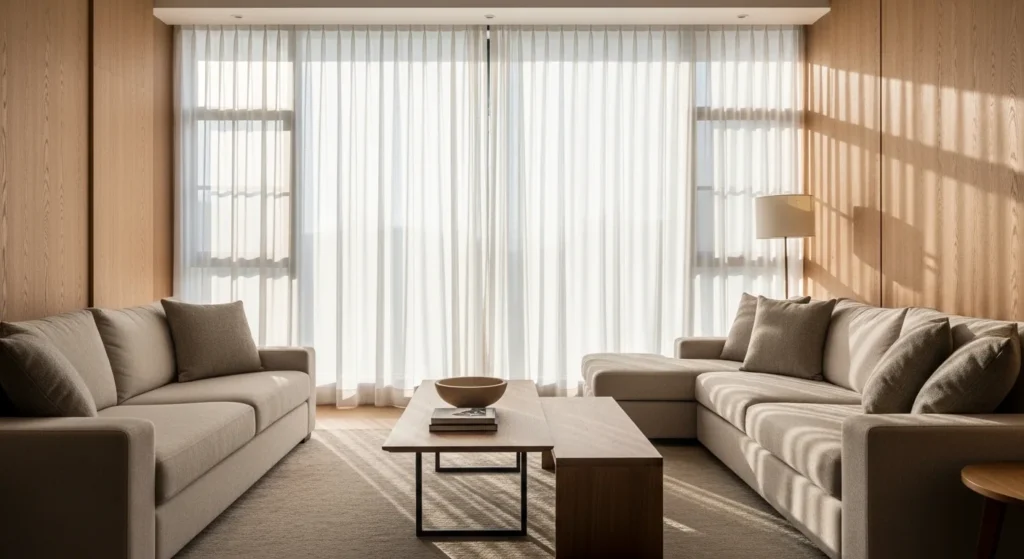
Monochromatic Magic with Texture Play
Monochromatic gray schemes rely entirely on texture and pattern variation to create visual depth. Layer different gray tones from charcoal (darkest) to dove gray (lightest), incorporating materials like linen, wool, silk, and cotton to prevent monotony.
Essential texture elements include:
- Chunky knit throw blankets
- Smooth marble or concrete accent pieces
- Rough jute rugs
- Glossy ceramic table lamps
- Matte painted walls
Gray and White: Classic Elegance
This timeless combination works across all budgets and room sizes. Use a 70-30 ratio—70% gray as the dominant color with 30% white accents through bedding, trim, and accessories. This palette feels fresh without being stark.
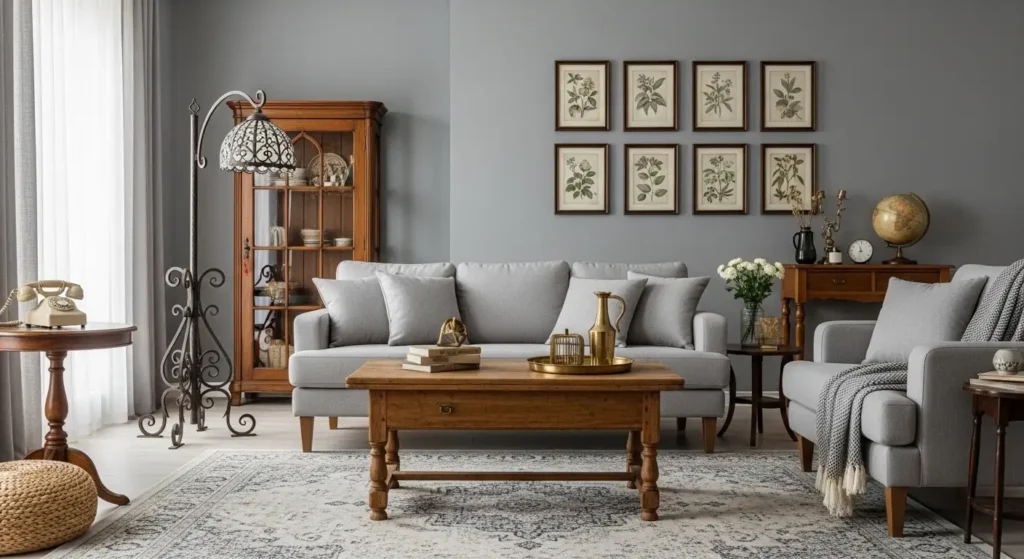
Gray and Blush: Romantic Modern
Soft pink undertones warm gray bedrooms beautifully. Incorporate blush through throw pillows, artwork, or a single accent wall. This combination works particularly well in feminine spaces or guest bedrooms.
Gray and Navy: Sophisticated Drama
Deep navy creates striking contrast against light gray walls. Use navy in bedding, window treatments, or upholstered furniture pieces. This palette feels masculine yet refined, perfect for master bedrooms.
13 Trendy Gray Bedroom Ideas for Every Style and Budget
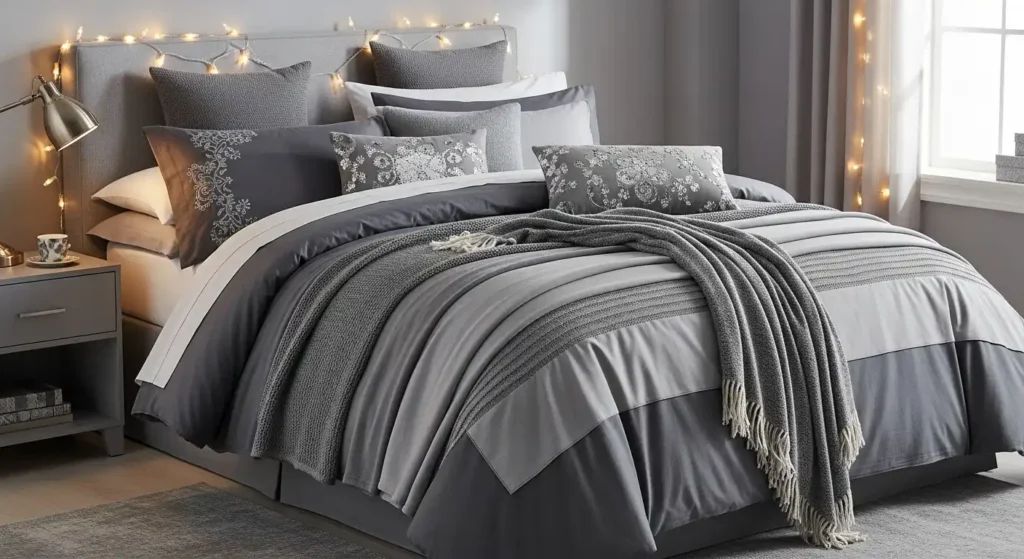
1. Charcoal Accent Walls with Light Gray Base
Budget: Mid-range ($800-2000)
Create dramatic focal points using charcoal gray accent walls behind bed headboards. Paint three walls in light gray (Benjamin Moore’s “Gray Owl” OC-52) and one feature wall in deep charcoal (Benjamin Moore’s “Wrought Iron” 2124-10).
This technique works best on walls measuring 8-12 feet wide. Pair with white bedding and brass lighting fixtures for balance. Total paint cost runs $150-250 for average bedrooms.
2. Textured Gray Headboards as Statement Pieces
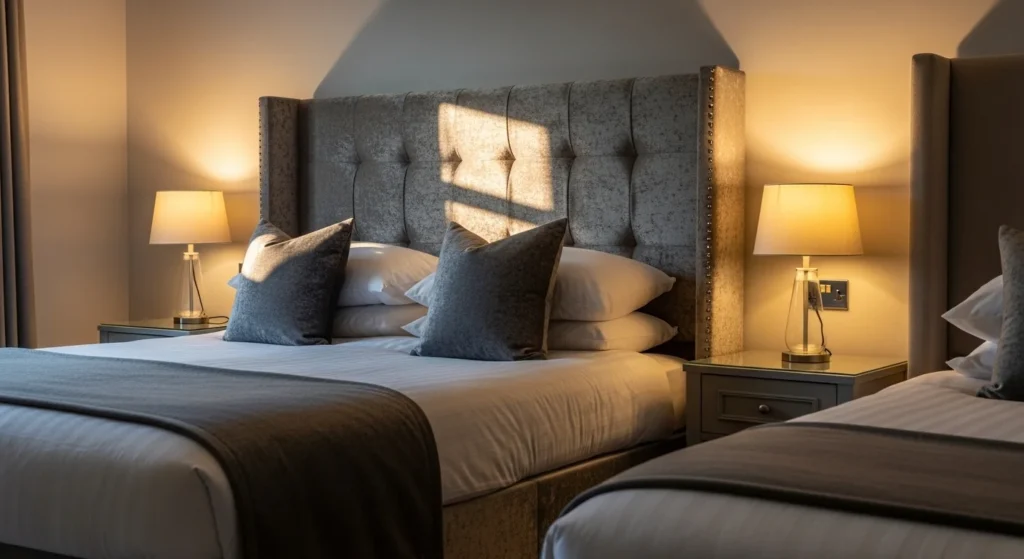
Budget: Luxury ($1500-4000)
Upholstered headboards in textured gray fabrics become room centerpieces. Choose materials like bouclé, velvet, or linen in dimensions matching bed width plus 4-6 inches on each side.
For queen beds (60″ wide), select 72″ wide headboards. King beds (76″ wide) need 88″ wide headboards. Custom upholstery costs $800-2500, while high-end retail options range $1200-3500.
3. Layered Gray Bedding with Metallic Accents
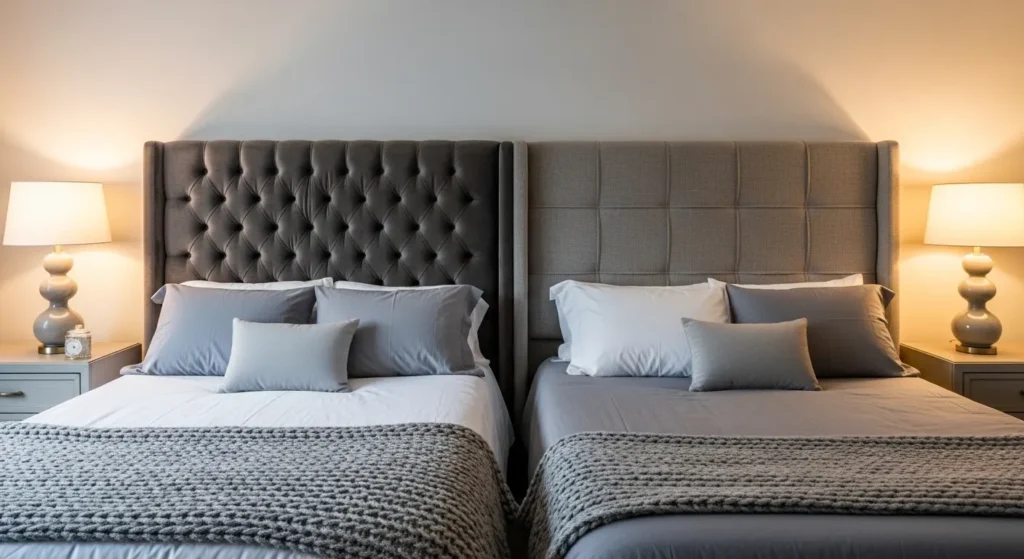
Budget: Budget-friendly ($200-600)
Master the art of layering different gray textiles. Start with light gray sheets, add a medium gray duvet, incorporate a dark gray throw, and finish with metallic accent pillows in gold, silver, or copper.
Recommended layering formula:
- Base: 300+ thread count light gray sheets ($80-150)
- Middle: Medium gray duvet cover ($100-200)
- Top: Chunky knit throw in charcoal ($60-120)
- Accents: Two metallic pillows ($40-80 each)
4. Gray Built-in Storage Solutions
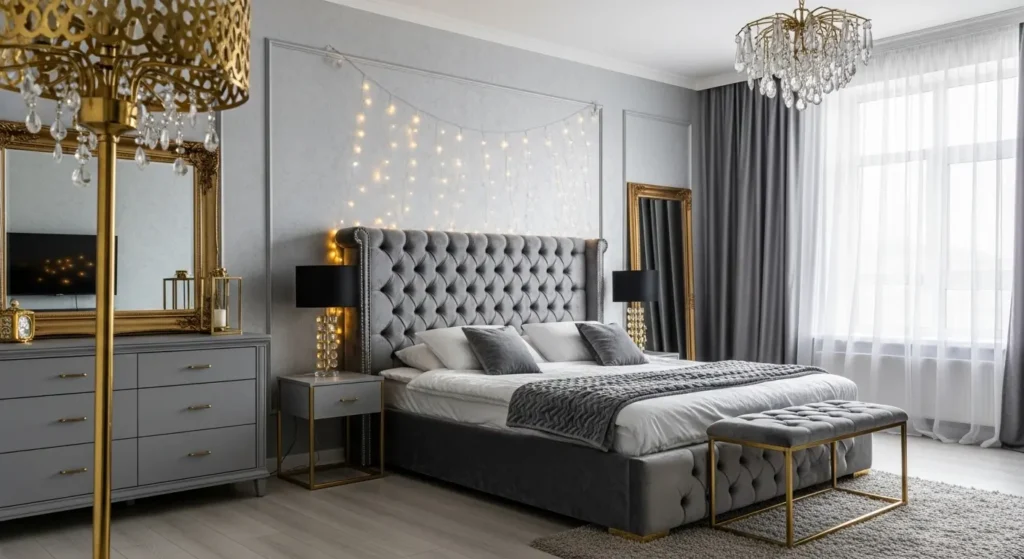
Budget: Luxury ($3000-8000)
Custom built-in wardrobes and window seats in gray finishes maximize storage while maintaining sleek aesthetics. Use light gray painted MDF or natural wood stained in gray tones.
Built-ins work exceptionally well in rooms with architectural features like alcoves or under-utilized corners. Professional installation typically costs $150-300 per linear foot.
5. Industrial Gray with Exposed Elements
Budget: Mid-range ($1000-2500)
Combine gray walls with exposed brick, concrete, or metal elements. Paint existing brick in light gray or add faux concrete wall panels. Include industrial lighting fixtures in black metal or aged brass.
Key elements include:
- Concrete-look wall panels ($15-25 per sq ft)
- Metal bed frames ($400-800)
- Edison bulb pendant lights ($150-300)
- Reclaimed wood floating shelves ($50-150 each)
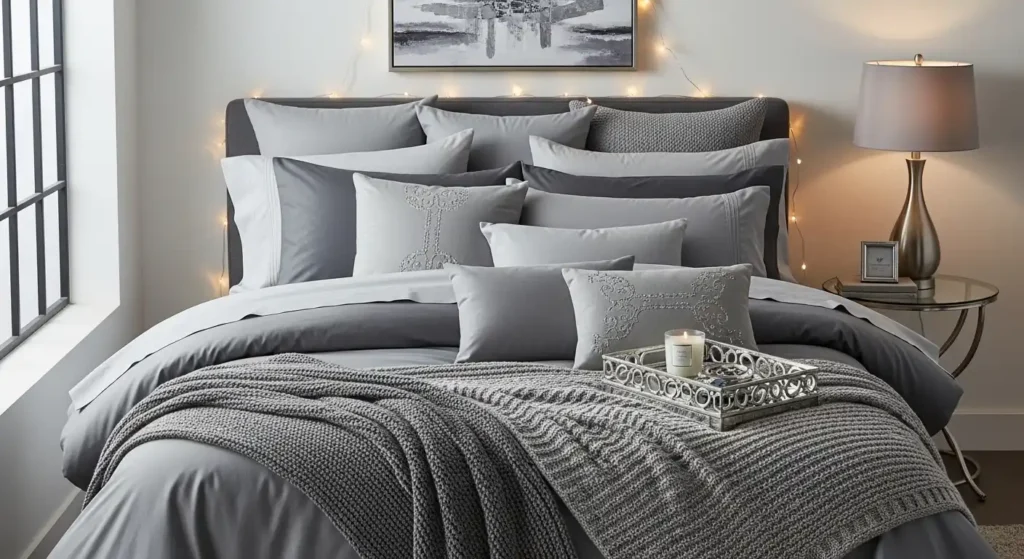
6. Scandinavian Gray Minimalism
Budget: Budget-friendly ($300-800)
Embrace simplicity with light gray walls, natural wood furniture, and minimal accessories. Focus on functionality and clean lines. Choose furniture with blonde wood tones like birch or pine.
Essential pieces include:
- Platform bed with built-in storage ($200-500)
- Simple wood nightstands ($80-150 each)
- Natural fiber rug in cream or white ($100-250)
- Single statement plant ($20-50)
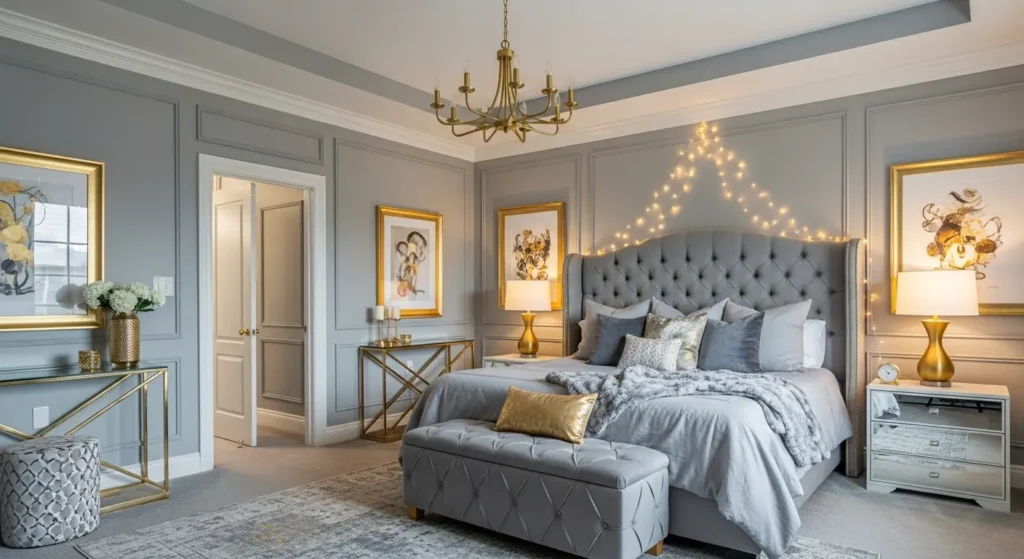
7. Gray Wallpaper Feature Walls
Budget: Mid-range ($400-1200)
Wallpaper adds instant sophistication to gray bedrooms. Choose subtle patterns like grasscloth textures, geometric designs, or botanical prints in gray colorways.
Popular patterns for 2026:
- Textured grasscloth wallpapers ($80-150 per roll)
- Subtle stripe patterns ($60-120 per roll)
- Modern floral designs ($100-200 per roll)
Average bedrooms require 3-5 rolls plus professional installation ($300-600).
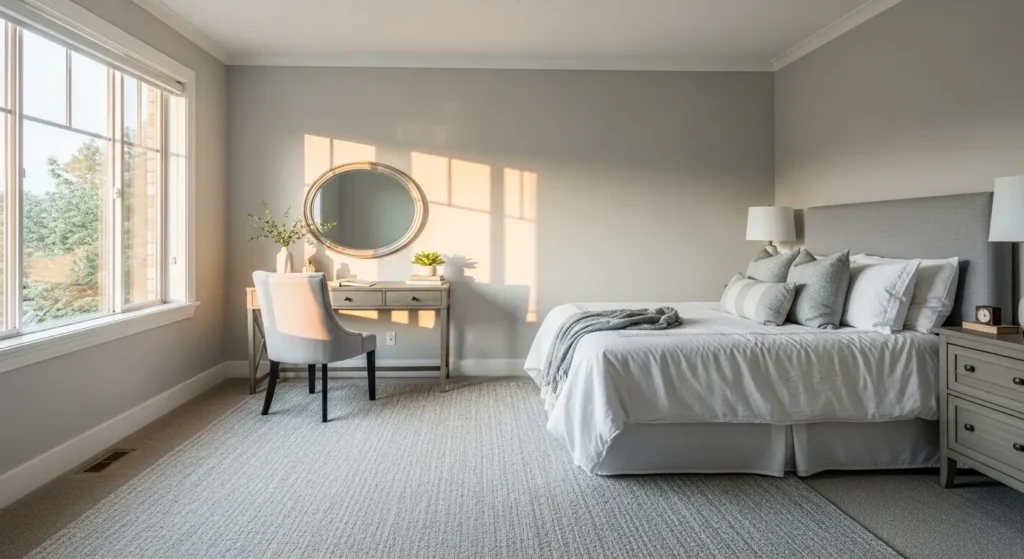
8. Vintage Gray with Antique Touches
Budget: Mid-range ($800-2000)
Blend gray backdrops with vintage furniture pieces and antique accessories. Hunt for weathered wood dressers, vintage mirrors, and aged metal lighting fixtures.
Mix new gray paint with authentic vintage finds:
- Antique brass mirrors ($150-400)
- Vintage wood dressers ($300-800)
- Aged metal table lamps ($100-250)
- Antique textile throws ($80-200)
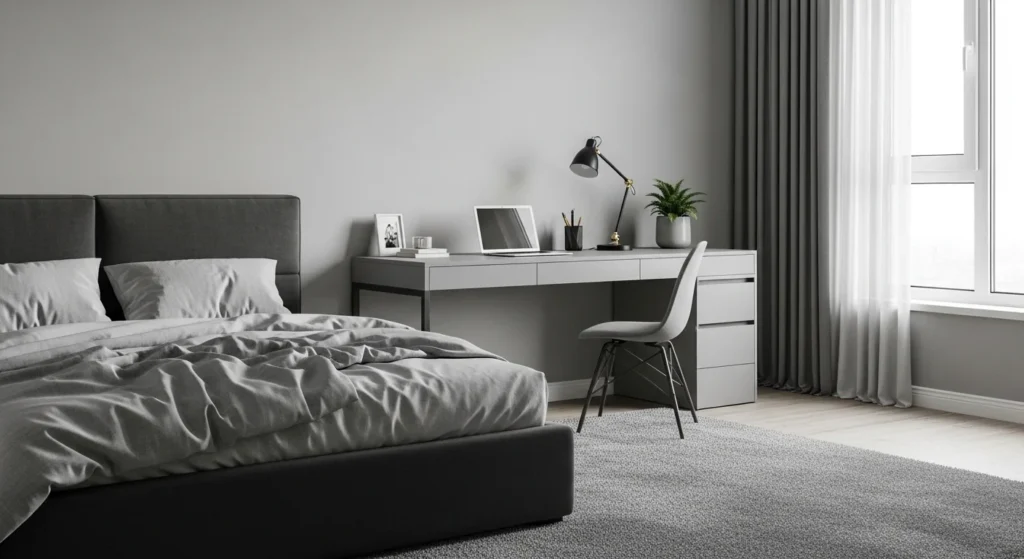
9. Gray and Gold Glamour
Budget: Luxury ($2000-5000)
Elevate gray bedrooms with gold accents and luxurious textures. Incorporate gold through lighting fixtures, picture frames, and decorative objects.
Luxury elements include:
- Velvet gray upholstered bench ($400-800)
- Gold-framed mirrors ($200-600)
- Silk gray curtains with gold tiebacks ($300-700)
- Crystal chandelier with gold accents ($800-2500)
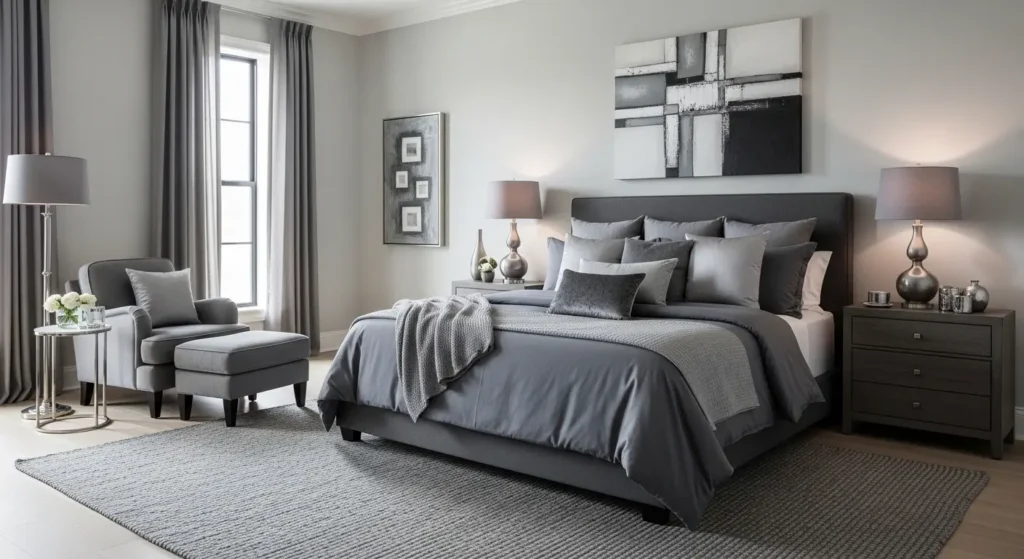
10. Moody Dark Gray Sanctuaries
Budget: Mid-range ($600-1500)
Create cocooning effects with deep charcoal or slate gray walls. Balance darkness with ample lighting and light-colored bedding.
Essential lighting includes:
- Bedside table lamps with warm bulbs ($100-250 each)
- Overhead pendant or chandelier ($200-600)
- Floor lamps for ambient lighting ($150-400)
- LED strip lighting behind headboards ($50-150)
11. Gray and Natural Wood Combinations
Budget: Mid-range ($1000-2500)
Pair gray walls with natural wood furniture for organic warmth. Choose wood tones that complement gray undertones—walnut for cool grays, oak for warm grays.
Recommended wood furniture:
- Solid wood platform beds ($600-1500)
- Matching nightstands ($200-400 each)
- Wood-framed mirrors ($150-350)
- Floating wood shelves ($75-200)
12. Soft Gray Nursery Transformations
Budget: Budget-friendly ($400-1000)
Design nurseries that easily transition to big-kid rooms using soft gray foundations. Choose washable paint finishes and durable furniture pieces.
Nursery-specific elements:
- Non-toxic gray paint in eggshell finish ($100-200)
- Convertible cribs in white or natural wood ($300-700)
- Soft gray area rugs ($100-250)
- Blackout curtains in light gray ($80-150)
13. Gray Bedroom Office Combinations
Budget: Mid-range ($1200-3000)
Create dual-purpose spaces combining bedrooms with home offices. Use gray as a unifying color throughout both zones.
Functional furniture includes:
- Murphy beds or daybeds ($800-2000)
- Built-in desk solutions ($600-1500)
- Storage ottomans doubling as seating ($150-300)
- Room dividers in gray finishes ($200-600)
Expert Tips for Styling Gray Bedrooms by Room Size
Small Bedrooms (Under 120 sq ft)
Light gray walls reflect available light, making compact spaces feel larger. Avoid dark grays that absorb light and create claustrophobic feelings.
Space-maximizing strategies:
- Use mirrors to double visual space
- Choose furniture with built-in storage
- Mount bedside lighting to free up surface space
- Select light gray bedding with minimal patterns
Medium Bedrooms (120-200 sq ft)
Medium-sized bedrooms handle both light and medium gray tones beautifully. Experiment with accent walls or two-tone painting techniques.
Balanced design approaches:
- Create reading nooks with comfortable seating
- Add full-length mirrors for functionality
- Include artwork galleries on available wall space
- Incorporate plants for natural color contrast
Large Master Bedrooms (200+ sq ft)
Spacious bedrooms support bold gray design choices, including dark accent walls and dramatic lighting fixtures.
Luxury elements for large spaces:
- Sitting areas with gray upholstered chairs
- Walk-in closets with gray built-ins
- Statement lighting like oversized chandeliers
- Multiple gray rugs defining different zones
Budget Breakdown: DIY vs. Buy Recommendations
DIY Projects Under $200:
- Painting walls and trim ($100-150)
- Creating throw pillow covers ($30-60)
- Building floating shelves ($50-100)
- Installing peel-and-stick wallpaper ($80-150)
Professional Services Worth the Investment:
- Custom built-in storage ($3000+)
- Electrical work for new lighting ($500-1500)
- Window treatment installation ($200-600)
- Flooring installation ($1500-4000)
Mid-range Purchases ($200-800):
- Quality mattresses and bed frames
- Window treatments and hardware
- Area rugs and lighting fixtures
- Storage furniture pieces
Mixing Styles: How to Blend Gray with Other Design Elements
Gray serves as an excellent foundation for style mixing. Its neutral nature allows bold pattern introduction without overwhelming spaces.
Successful style combinations include:
- Gray + Scandinavian minimalism through natural textures
- Gray + Industrial elements via metal accents
- Gray + Traditional pieces through classic furniture shapes
- Gray + Bohemian touches using layered textiles
Balance remains key when mixing styles. Stick to 70% gray foundation with 30% accent style elements to maintain cohesion.
Frequently Asked Questions
Q: What’s the difference between warm and cool gray paint colors for bedrooms?
A: Warm grays contain beige, cream, or yellow undertones, creating cozy atmospheres perfect for north-facing rooms. Cool grays have blue, green, or purple undertones, delivering crisp, contemporary feels ideal for sunny, south-facing bedrooms. Test paint samples in different lighting conditions before committing.
Q: How do I prevent a gray bedroom from looking too cold or sterile?
A: Layer warm textures like wool throws, wood furniture, and soft lighting. Add natural elements including plants, woven baskets, and organic shapes. Incorporate warm metallics like brass or copper, and include at least one warm accent color like cream, soft yellow, or blush pink.
Q: What colors work best with gray bedrooms for accent walls?
A: Navy blue creates sophisticated contrast, while soft blush adds romantic warmth. Deep forest green brings natural tranquility, and warm white provides classic elegance. Charcoal gray on one wall with lighter gray on remaining walls creates dramatic depth without color commitment.
Q: Can I use dark gray in a small bedroom without making it feel cramped?
A: Yes, but strategically. Use dark gray on one accent wall only, ensure adequate lighting with multiple sources, include large mirrors to reflect light, and balance with light-colored bedding and furniture. Rooms under 100 square feet should stick to light gray tones.
Q: What’s the best gray paint color for bedrooms that face north?
A: Choose warm grays like Benjamin Moore’s “Revere Pewter” (HC-172), Sherwin Williams’ “Agreeable Gray” (SW 7029), or Farrow & Ball’s “Elephant’s Breath.” These colors contain warm undertones that prevent north-facing rooms from feeling cold or dreary.
Q: How do I choose bedding colors that complement gray walls?
A: White and cream bedding creates classic elegance, while navy adds sophistication. Soft pink or blush tones warm cool grays beautifully. For textural interest, layer different gray shades from light to charcoal. Metallic accents in gold, silver, or copper add luxury touches.
Key Takeaways
• Master undertones first – Understanding warm vs. cool gray undertones determines your entire color palette and ensures cohesive design throughout your bedroom space.
• Layer textures extensively – Gray bedrooms require multiple texture variations including smooth silk, chunky knits, rough jute, and glossy ceramics to prevent monotonous appearances.
• Balance light strategically – Incorporate multiple lighting sources including ambient, task, and accent lighting to prevent gray spaces from feeling dark or unwelcoming.
• Choose quality over quantity – Invest in fewer, higher-quality gray pieces like upholstered headboards or custom built-ins rather than numerous cheaper decorative elements.
• Test paint colors thoroughly – Gray paint colors shift dramatically in different lighting conditions, so test large swatches for at least 48 hours before final decisions.
• Mix styles confidently – Gray foundations support successful style mixing when you maintain 70% neutral base with 30% accent style elements for balanced, sophisticated results.