A Quiet Room, A Busy Mind at Peace
Imagine this: you step into your home office after a long, demanding day. The floor is clear. The desk — once buried under papers and tangled chargers — now holds only what you need. Soft daylight stretches across the tabletop, and the faint whir of your computer is the only sound. You sit, and for a moment, there’s a kind of stillness that feels like an exhale.
No clutter tugging at your attention. No visual chaos reminding you of unfinished tasks. Just space — and the mental quiet that comes with it.
Across my 15 years working in interior styling and content strategy, I’ve watched countless people try to transform spare rooms into offices by filling them with everything they might need: too many organizers, too many gadgets, stacks of books “for later,” decorative pieces that become dust collectors. Ironically, what begins as a well-intention workspace often turns into the very thing that drains focus and energy.
But I’ve also helped people reclaim those rooms — turning them into calm, minimalist home offices where productivity feels natural, and the workday no longer begins with a sigh. In this guide, I’ll walk you through how to build a workspace that feels serene, intentional, and quietly powerful.
A home office where your mind — finally — has room to breathe.
Why a Minimalist Home Office Works for Focus & Well-Being
Less Clutter, More Mental Clarity
A cluttered workspace doesn’t just affect what you see — it affects how you think. Visual noise forces your brain to multitask, even when you don’t realize it. A clean, minimal workspace removes the small, constant distractions that chip away at focus.
When you open your laptop to a clear desk, your mind isn’t negotiating with loose papers or yesterday’s coffee mug. The space itself cues you: this is where we focus… and nothing is competing for attention.
Minimalism becomes a mental reset.
Every Element Serves a Purpose — Function Over Frills
Minimalism has never been about owning less for the sake of it. It’s about intentional living — keeping items that support your work and letting go of the rest.
In a home office, that means choosing pieces that genuinely help you: an ergonomic chair that cares for your back, a desk that supports your workflow, storage that makes order effortless.
When everything in the room has a job, nothing becomes visual clutter. Purpose becomes its own kind of beauty.
Clean Lines, Neutral Palette & Light — Calm for Eyes and Mind
Your home office doesn’t need bold colors or layers of decor to feel inspiring. In fact, the opposite is often true.
Soft neutrals, simple lines, and clean surfaces soothe the senses. They prevent over stimulation and make it easier for your brain to anchor on the task at hand. Add in natural light — or warm artificial light when the sun isn’t cooperating — and suddenly the room feels less like a “work cage” and more like a personal sanctuary for your thinking.
It’s amazing how calming a room can feel when it isn’t shouting for attention.
Core Principles of a Calm Minimalist Home Office
Before choosing a desk or chair, these are the principles I ask every client to commit to. They’re not trendy ideals — they’re the backbone of minimalist workspaces that last.
- Declutter first — keep only what you truly need.
- Embrace a neutral palette with soft, restrained accent colors.
- Choose functional, ergonomic furniture that supports real work.
- Use smart, hidden storage to keep surfaces visually clean.
- Prioritize open layout — nothing blocking movement or light.
- Balance natural daylight with warm ambient lighting.
- Add personal touches sparingly — meaningful, not excessive.
Follow these, and the rest becomes astonishingly easier.
Step-by-Step Guide: Build Your Calm Minimalist Home Office
Step 1: Declutter, Clear & Clean — Treat It as a Blank Canvas
Begin by removing everything from the space — the stacks of papers, the abandoned tech, the decor that lost meaning long ago. Yes, it’s tedious. Yes, it’s worth it.
Once the surfaces are bare, clean thoroughly: shelves, windows, floors, corners. A refreshed room resets your perspective. It reveals what the space could be, instead of what it has been.
Then ask yourself:
What do I truly need to work well?
Usually, the essentials are surprisingly simple:
A desk. A chair. Light. A few tools you use daily. Everything else is optional — or clutter.
Minimalism begins with honesty.
Step 2: Choose Neutral Colors & Soothing Textures
Neutrals are the quiet heroes of effective home offices — whites, soft greys, muted beiges, warm neutrals. They remove visual tension and create an atmosphere of steady calm.
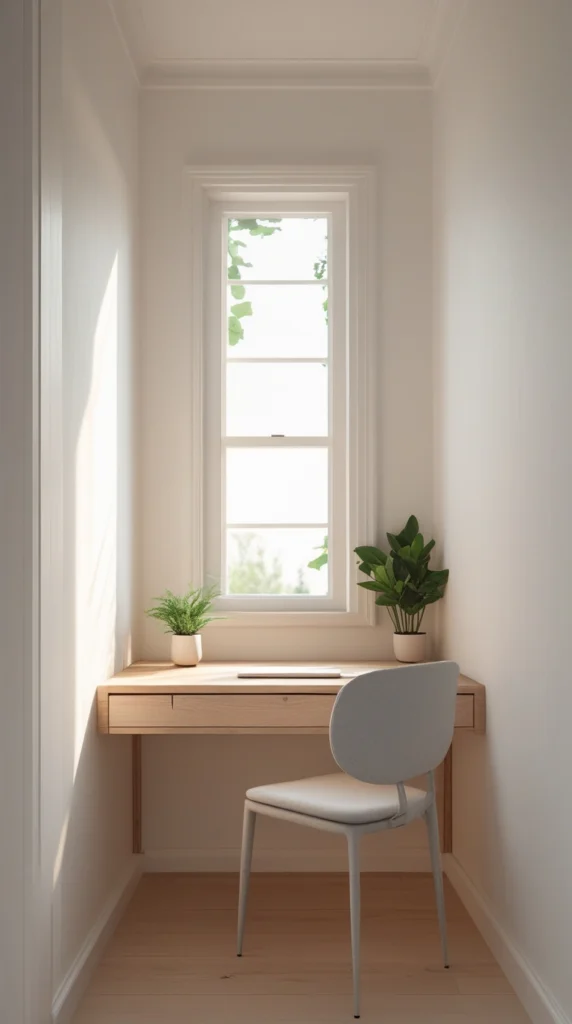
To keep the space from feeling stark, layer gentle textures: a soft rug, linen curtains, a cushioned chair. These subtle details warm the room without stealing attention.
Step 3: Pick Clean, Functional Furniture — And Prioritize Ergonomics
Your desk and chair will shape the entire experience of your workspace, so choose with care.
Desk: Look for simplicity — clean lines, a roomy surface, and ideally some hidden storage or cable management to maintain visual calm. Wall-mounted or slim-leg desks can make small rooms feel more open.
Chair: Never underestimate the value of comfort. A good ergonomic chair supports your posture, reduces fatigue, and helps you stay productive longer. Choose one with a silhouette that aligns with your minimalist aesthetic.
Storage: Closed cabinets, drawers, or minimal shelving keep the essentials nearby but out of sight. Every item tucked away is one less distraction on your desk.
Minimalism is sustained by systems — not willpower.
Step 4: Embrace Light — Natural & Ambient
Place your desk as close to natural light as possible. Daylight lifts mood, eases eye strain, and boosts focus. A window beside or in front of your desk can completely change how a room feels.
For late work sessions or overcast days, swap harsh overhead lights for warm, layered lighting — a desk lamp, a soft wall light, or a floor lamp. Warm light calms the mind, creating a cocoon of focus.
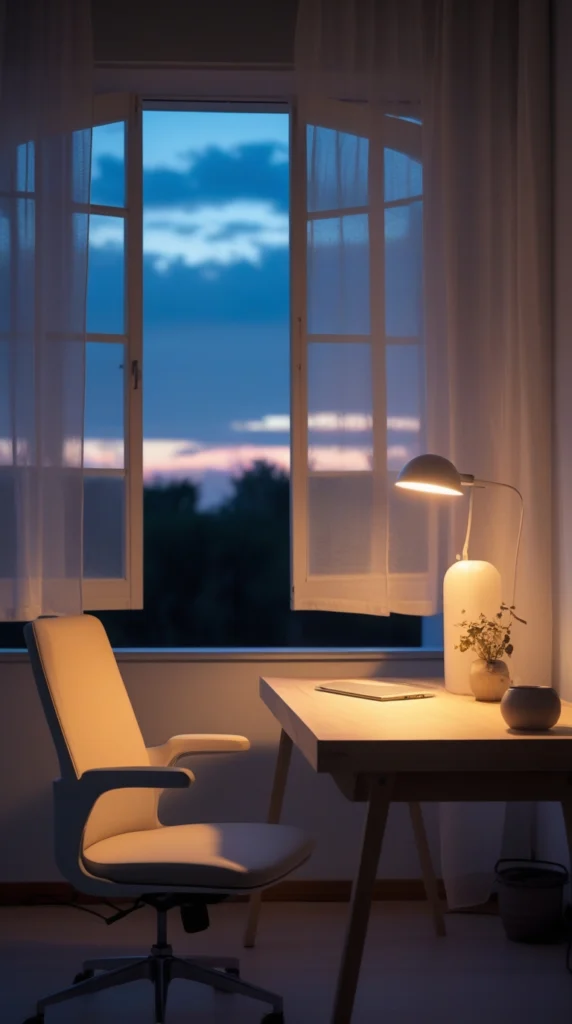
Lighting isn’t decoration — it’s emotion.
Step 5: Smart Layout & Clear Workflow — Let Space Breathe
A room becomes calm not by accident, but by arrangement.
Keep pathways clear. Avoid oversized furniture that blocks flow or light. Maintain a “mostly empty desk” policy: your daily essentials belong there — everything else has a home in storage.
This simple rule reduces decision fatigue and keeps your workspace mentally open.
Décor should be minimal, too. Instead of filling your walls or desk with small objects, choose one or two intentional pieces that quietly inspire you.
Step 6: Add a Touch of Life — Plants, Personal Accents, Soft Textures
Minimal doesn’t mean sterile. The right touch brings soul to the space: a small potted plant, a soft rug beneath your chair, a simple framed print, a favorite notebook.
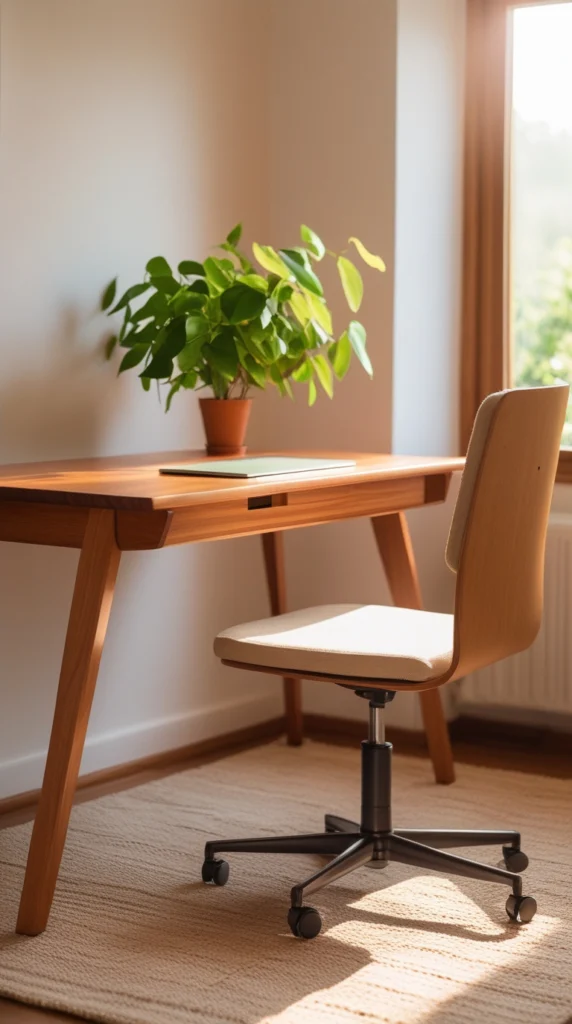
These small accents make the office feel lived-in — a place that supports you rather than just stores your equipment.
Step 7: Establish a Maintenance Routine — Keep It Calm Long-Term
A minimalist office stays minimalist because of habits, not luck.
Spend five minutes at the end of each workday clearing your desk. Put items back in drawers. Straighten cables. Close out your physical space the way you close your laptop.
This daily ritual prevents tomorrow from inheriting yesterday’s chaos.
Common Mistakes & How to Avoid Them
Mistake: Overdecorating to “Make It Cozy” — Ending with Clutter
Adding warmth doesn’t mean adding more. Many people try to “fix” sterility by piling on décor — but too much quickly becomes distracting.
Solution: Choose a few meaningful, functional items. Let empty space do its quiet work.
Mistake: Cheap, Uncomfortable Furniture — Killing Productivity
A beautiful desk is useless if your chair makes your back ache. Cheap furniture often looks minimal but feels miserable.
Solution: Invest thoughtfully. Minimalism rewards quality over quantity.
Mistake: Ignoring Lighting & Layout — Just Putting Furniture Wherever
A desk in a dark corner or a chair blocking light can make even the prettiest room feel wrong.
Solution: Start with light and flow — and place furniture accordingly.
Mistake: Treating Minimalism as One-Time — Not Habit
Clutter always returns unless habits change.
Solution: Build small maintenance rituals. Minimalism is a practice.
Why This Approach Works: The Science & Psychology Behind Minimalist Workspace
Research supports what many of us feel intuitively: clutter competes for our attention. A clean, neutral workspace reduces mental load and frees cognitive energy for meaningful work.
A visually quiet environment also signals to the brain:
“This is where we focus.”
Neutral colors lower sensory strain. Organized surfaces reduce decision fatigue. Decluttered layouts help your mind settle, making deep work more attainable.
In my work with clients, I’ve watched people regain their creativity, their patience, and even their enjoyment of work simply by reshaping the space around them.
Minimalism isn’t just an aesthetic — it’s a kind of mental hygiene.
Sample Layout Ideas & Setup Themes
Compact Corner Setup (for small rooms / apartments)
- Light-wood floating or wall-mounted desk
- Slim ergonomic chair
- Simple shelf above desk for minimal storage
- Neutral paint + small rug
- A plant + compact desk lamp
A small footprint that still feels intentional and airy.
Mid-Size Room Setup with Soft Comfort
- Desk positioned near window
- Ergonomic chair + small side table
- Closed cabinet or drawer unit for clutter control
- Soft curtains, area rug, warm floor lamp
- One or two plants + simple wall art
The perfect middle ground between function and comfort.
Spacious Multi-Purpose Office Setup
- Larger desk (dual monitors if needed)
- Ergonomic chair
- Built-in or freestanding storage
- Small reading nook or idea corner
- Balanced multi-source lighting
- Subtle décor + natural materials for warmth
Ideal for creatives, remote workers, or anyone who spends long hours thinking.
FAQs — Common Questions About Minimalist Home Office Design
Q1: I live in a small apartment — is it still possible to create a calm minimalist office?
Absolutely. Minimalism thrives in small spaces. With smart furniture, hidden storage, and a light palette, even tiny corners can become meaningful work zones.
Q2: Won’t minimal décor feel cold or uninspiring over time?
Not if you balance it with warmth — soft textures, natural light, and one or two personal accents. Minimalism is intentional, not sterile.
Q3: How often do I need to “tidy up” to keep the space minimal and calm?
Five to ten minutes at day’s end is often enough. Small habits prevent big clutter.
Q4: What color palette works best for focus and calm?
Soft neutrals: off-white, grey, beige, greige. They reduce distraction and help your mind settle.
Q5: Is spending more on ergonomic furniture worth it in a minimalist office?
Without question. In a minimal office, every item carries real weight. Comfort and durability matter.
Conclusion — Simple Space, Clear Mind, Productive Days
Creating a calm minimalist home office isn’t about stripping life from a room — it’s about designing a space that supports you with clarity and ease.
When you clear clutter, choose pieces with purpose, embrace warm light, and maintain gentle order, you give yourself more than a workspace. You create a refuge where ideas can flow and focus feels natural.
If your current setup feels heavy or chaotic, start small: clear a single shelf, open the curtains, choose a desk lamp that feels soothing at dusk. Bit by bit, your home office will shift from a place you tolerate… to a place that quietly empowers you.
Because when your environment speaks in calm tones, your mind answers in kind.
Here’s to clearer desks, calmer minds, and workdays that feel just a little more peaceful. 🕊️