Why “Minimalist” and “Cozy” Should Be Best Friends, Not Opponents
I still remember standing inside one of the first apartments I helped redesign more than a decade ago. The living room was spotless, almost austere. Once the freshly painted white walls dried and the simple furniture was set into place, the room looked… correct. Everything “matched.” Everything was clean. And yet, the moment we stepped back, it felt like a space holding its breath — cold, quiet, and a little lonely.
That moment taught me something foundational: minimalism by itself can’t carry the emotional weight of a room. Strip a space down too far and you lose the warmth that makes a living room feel alive. Over the years — from tiny walk-ups to sprawling suburban homes — I’ve learned that the real magic happens where clarity meets comfort. Minimalism gives you space to breathe; coziness gives you a reason to stay.
Minimal + cozy isn’t a contradiction. It’s a partnership. When done well, a minimalist living room doesn’t feel bare — it feels intentional. It feels calm. And yes, it feels wonderfully inviting.
In this guide, I’ll walk you through the principles and techniques I use with clients to create living rooms that feel both uncluttered and deeply comforting. Clean lines, yes — but also soft textures, warm light, and personal touches that make a space feel like home.
Let’s build that balance together.
The Principles Behind a Cozy Minimalist Living Room
Before choosing a sofa or debating rug sizes, it helps to understand the philosophy behind the look. Whether I’m working with a 300-square-foot studio or a generous family living room, these principles always guide my decisions.
Minimalism Is About Intentionality, Not Emptiness
Minimalism has never meant “own as little as possible.” It’s about choosing with purpose — keeping the pieces that serve you, support your routines, or genuinely bring joy. When you walk into a minimalist living room, you should feel clarity, not vacancy.
Think of it as editing, not erasing. Every piece should earn its place, whether through usefulness or meaning. Custom shelving that actually fits what you own, furniture that plays double duty, layouts that support your habits — these choices create simplicity with soul. When intention leads design, minimalism becomes warm, not rigid.
Cozy = Texture, Light & Selective Layers
Once you pare back the excess, the room finally has space to breathe — and that’s when coziness can shine.
Cozy minimalism is all about replacing clutter with comfort. A wool rug beneath your feet, linen curtains softening the daylight, a gentle throw across the sofa, warm light pooling in corners during the evening — these touches add depth that doesn’t disrupt the minimalist calm.
When you rely on texture and light instead of more objects, your living room gains warmth without sacrificing simplicity.
Thoughtful Layout & Spatial Flow — Let the Room Breathe
One of the most common mistakes I see is people forcing in every piece of furniture they already have. A cozy minimalist living room honors negative space — the pauses between pieces that let the room feel open and breathable.
Furniture with clean lines and elevated legs can give the illusion of more floor space. Appropriate scale prevents a room from feeling crowded. When paths are clear and the eye can travel easily across the room, the entire space feels calmer.
Minimalism isn’t just visual — it’s spatial.
Natural Materials & Light — The Soft Foundations of Warm Minimalism
If stark metal, glossy plastics, or cold concrete dominate a room, it’s easy for minimalism to slip into sterility. Natural materials, on the other hand, ground a space. Wood brings warmth; linen and cotton add softness; wool introduces texture; stone adds a sense of quiet permanence.
Pair these materials with natural light or warm-toned artificial lighting, and even the simplest room starts to feel lived in and human. These foundations are subtle, but they shape how a space feels before you ever add décor.
Step-by-Step: Build Your Cozy Minimalist Living Room
When I work with clients, we follow a clear process — one that balances function, emotion, and aesthetics. Here’s the roadmap I use whether we’re refreshing an old space or designing a new one.
Step 1: Declutter & Plan — Start with a Blank Canvas
Start by removing the pieces that no longer serve you: the bulky chair no one sits in, the mismatched decor that collects dust, the old magazines multiplying on your coffee table. Clearing space isn’t about minimalism for minimalism’s sake — it’s about giving yourself room to design thoughtfully.
Ask yourself:
What do I want this living room to support?
Reading? Movie nights? Conversation? Working from the sofa occasionally?
Knowing the room’s purpose keeps clutter from creeping back in.
Then measure — truly measure. Note the dimensions, the height of windows, where daylight enters, how you walk through the room. Many design frustrations stem from “eyeballing.” Accurate measurements make every decision easier: sofa size, rug placement, lighting layout, everything.
Step 2: Choose a Neutral or Soft Palette — Let Color Whisper, Not Shout
Neutral tones are the quiet backbone of cozy minimalism: soft whites, warm beiges, gentle greiges, muted pastels if you prefer a hint of color.
These shades aren’t boring — they’re calming. Think of them as a soft canvas where texture, shape, and light take center stage.
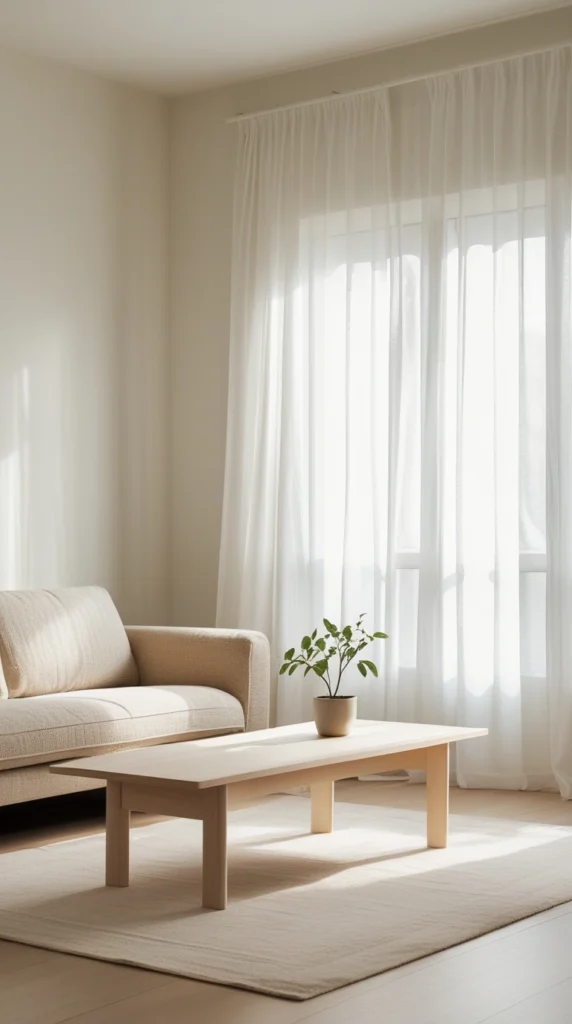
A neutral palette lets your materials and textures become the stars and keeps the room from feeling visually heavy.
Step 3: Pick Clean, Functional Furniture — But Keep Comfort in Mind
Minimalist furniture shines when it’s both visually light and genuinely comfortable. Look for clean lines, smooth shapes, and simple profiles — sofas with visible legs, airy shelving, slim tables that don’t weigh down the space.
If your living room is small, multipurpose furniture becomes your greatest ally: storage benches, coffee tables with hidden compartments, slim cabinets that tuck clutter out of sight. Minimalism thrives when every item has a home.
Choose materials that feel warm to the touch: matte wood, linen upholstery, soft performance fabrics, or natural fibers. A minimalist room shouldn’t feel cold when you sink into it.
Step 4: Layer Soft Textures — Rugs, Throws, Cushions, Curtains
This is where the heart of cozy minimalism really comes alive. With fewer decorative objects in the room, texture steps forward as the main form of warmth.
A thick wool rug under a coffee table. A linen throw draped casually over the arm of a sofa. Lightweight curtains that catch sunlight in a soft glow. Cushions in cotton, boucle, or linen that invite you to lean back.
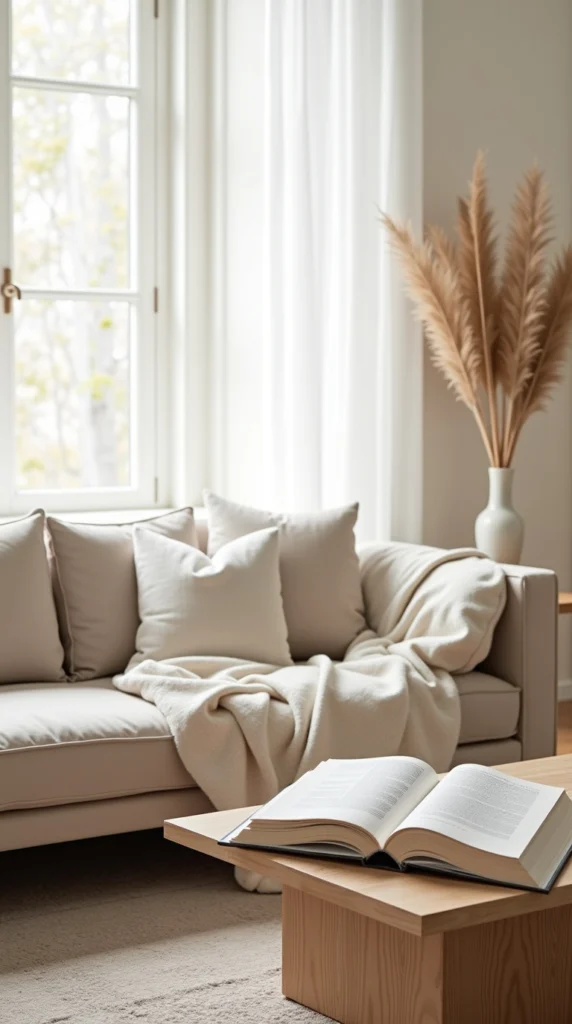
You don’t need many pieces — just the right ones. A single beautiful textile can do more for warmth than an entire shelf of décor.
Step 5: Light & Ambience — Use Light as Décor
Natural light is one of your greatest assets. Keep windows unobstructed. Choose sheer or light-filtering curtains that allow sunlight to spill softly into the room. A minimalist space feels instantly more alive when daylight can travel freely.
At night, think in layers rather than relying on one overhead light. A floor lamp in a corner, a table lamp near the sofa, a soft glow near a bookshelf — these pockets of warmth make a room feel collected and intimate. Lighting isn’t just functional; it’s emotional.
Step 6: Add Minimal but Personal Details — Meaning Over Clutter
Minimalism doesn’t mean stripping away identity. It means being intentional about what you display.
Choose a small handful of meaningful décor — a ceramic vase you love, a plant that thrives in your space, a framed print that makes you smile, a few well-chosen books. These personal touches give a room soul without overwhelming it.
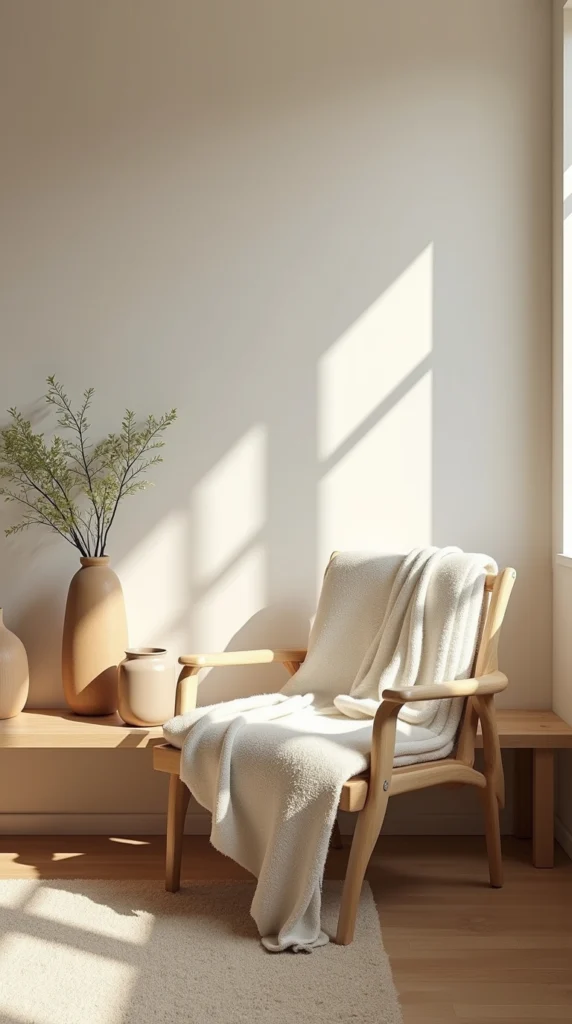
The goal isn’t to fill every surface but to curate small moments that quietly tell your story.
Step 7: Maintain the Calm — Systems Over Stuff
A minimalist-cozy living room stays peaceful because of habits, not luck.
A quick tidy at the end of the day. A designated drawer for remote controls. A small basket for throw blankets. The discipline of resisting impulse purchases unless something truly belongs in your home.
Minimalism is a lifestyle of editing — not a one-time event.
Common Mistakes & How I’ve Learned to Avoid Them
After years of walking into spaces people described as “minimalist,” I’ve noticed certain missteps that consistently lead to cold or visually chaotic rooms. Here’s how to avoid them.
Mistake: “Minimal” Becomes “Empty & Cold”
Some people declutter with such enthusiasm that they remove not just the unnecessary, but the comforting. No rug, no throws, no softness, no layers — and suddenly the room feels like a waiting area rather than a living space.
Fix: Always reintroduce texture and warmth. Minimalism should soothe, not freeze.
Mistake: Choosing Cheap, Flat Furniture — Losing Comfort
Minimalist doesn’t mean disposable. Flat, inexpensive furniture often looks good online but feels uncomfortable and quickly loses shape. A sagging sofa or flimsy table drains a room of its charm.
Fix: Choose fewer pieces, but invest in quality. Minimalism makes each item more important — so let them be items you love living with.
Mistake: Over-decorating to “Warm Up” the Space — Ending in Clutter Again
After realizing a space feels cold, many people rush to overcompensate with baskets, books, and decorative objects — until the room becomes busy again.
Fix: Be selective. A few meaningful, well-placed items bring warmth without the noise.
Mistake: Ignoring Light & Layout — Just Filling It Up
A room isn’t cozy simply because it contains things. If the layout ignores natural light, walkway flow, or scale, the room can feel awkward no matter how pretty the pieces are.
Fix: Start with layout. Start with light. Everything else is secondary.
My Favorite Cozy Minimalist Living Room “Recipes” (Real-Life Inspirations)
Over the years, I’ve noticed certain combinations that almost always result in warm, minimalist spaces. Think of these as flexible design formulas — starting points you can make your own.
Recipe 1: Scandinavian Soft Minimal
- Off-white or soft grey walls
- Light-wood furniture with simple, elevated profiles
- Linen or cotton sofa fabrics + a single wool rug
- Large windows with sheer curtains & warm-toned floor lamp
- A couple of plants + one understated art piece
Recipe 2: Warm Earthy Minimal
- Warm beige, taupe, or greige palette
- Low-profile sofa with soft curves
- Oak or walnut coffee table
- Jute or wool rug + chunky knit throw
- Candlelight or lantern-style lighting for ambience
- One natural décor piece (woven basket, ceramic vase)
Recipe 3: Minimal-Modern with Velvet / Texture Accent
- White or pale grey walls
- Black or metal-framed furniture for contrast
- A single velvet or boucle accent chair or pillows
- Light flooring with a small area rug
- Warm floor lamp + minimal overhead light
- A simple green plant & one framed artwork
Each “recipe” creates a different mood, but they all follow the same philosophy: fewer pieces, chosen with care.
Frequently Asked Questions (FAQ)
Q1: Does a minimalist living room feel too empty or boring?
A minimalist living room only feels empty when it lacks texture, warmth, and thoughtful lighting. Add soft materials, natural elements, and a few meaningful pieces, and minimalism becomes both soothing and inviting.
Q2: My living room is small — can I still make it cozy & minimalist?
Absolutely. Small spaces often benefit the most. Clean lines, compact furniture, smart storage, and light colors can make a small living room feel open, calm, and comfortable.
Q3: How many decorative items or accessories are too many?
There’s no perfect number — but ask yourself:
Does this add meaning, comfort, or function?
If the answer is no, let it go. Cozy minimalism is about intention, not quantity.
Q4: What materials give the best cozy feel without clutter?
Natural materials — wood, linen, cotton, wool, jute, ceramics. Pair them with soft fabrics and natural light. These elements add depth without overwhelming the room.
Q5: Should I paint walls white or use warmer tones for cozy minimalism?
Both can work beautifully. Soft whites create brightness and openness, while warm neutrals lend subtle coziness. Let your light, climate, and personal mood guide your palette.
Conclusion — Minimalism with Heart: A Living Room That Breathes & Hugs
Minimalism doesn’t have to feel like a showroom. When you pair clean lines with soft textures, warm light, natural materials, and a handful of personal touches, your living room takes on a new personality — calm, grounded, and welcoming.
Designing a home that feels like you takes intention. It takes editing. It takes knowing when to stop and when to soften. But the payoff is a room that greets you gently at the end of the day — a space that breathes, comforts, and quietly says, “you’re home.”
If clutter has been weighing you down, start small. Clear one corner. Add one soft rug. Open the curtains and let light guide your choices. Slowly, your living room will transform — not into something minimal for minimalism’s sake, but into something warm, simple, and deeply yours.
Here’s to calm, cozy, minimalist living. 🌿